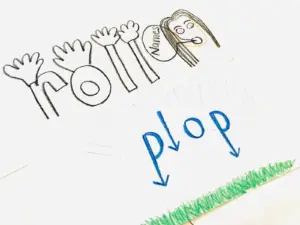

From turning snakes into spaghetti and clouds into cotton balls, writing poetry is absolutely magical! Students use their five senses and figurative language to create poems that break all the rules (punctuation, capitalization, directionality) they’ve been learning all year & make something is truly magical.


After our initial kick-off day, we began a weekish exploring our senses to write awesome poetry. During this week, we smelled candles, listened to Duke Ellington (click here to read more about this), felt our room, tasted marshmallows, and observed Picasso’s Woman with a Flower. This week was all about incorporating the arts and we listened to must-know artists [as classified by ME] while we wrote. We listened to Mozart, Beethoven, Yo-Yo Ma, Chopin, and Duke Ellington via Teacher Tube. 🙂 On our first day of writing poetry, one my friends produced this treasure in response to Mozart – “When I hear the flute, it flows through my ears…” Wow!


As students explore their senses, we took five days to learn about adjectives associated with each sense. Having students explore concrete objects and then, write about them was a perfect way to start. Plus, our class anchor charts quickly became a fabulous resource while students were writing. I ended up taking pictures of each anchor chart and students glued copies into their writing journals as a reference!

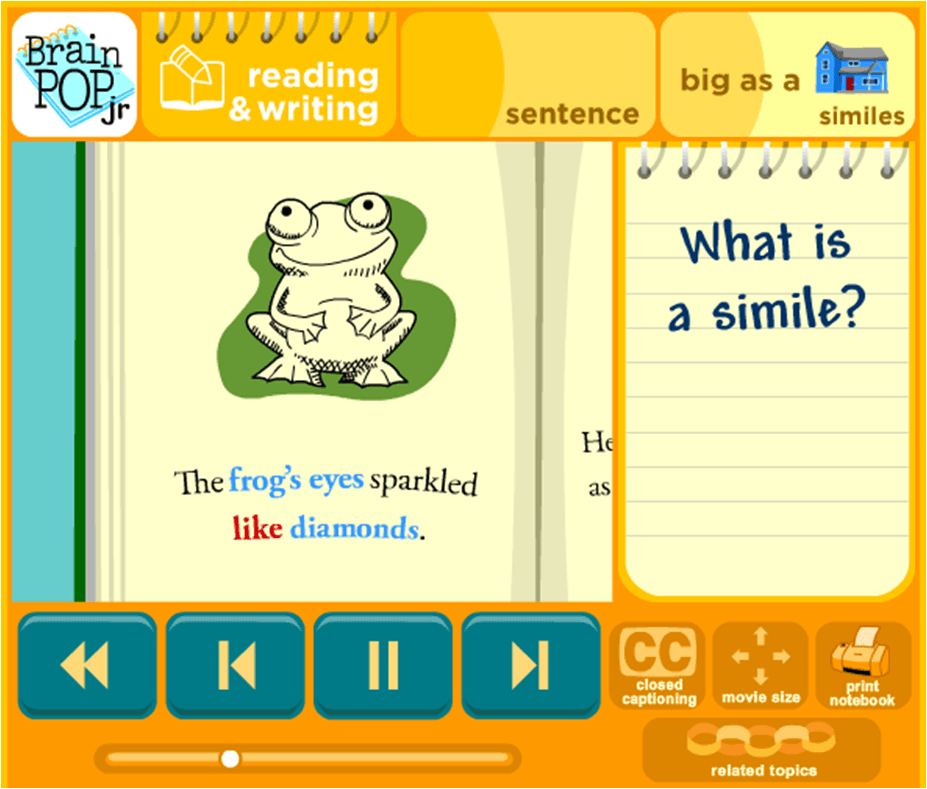
Our second-thirdish weeks have been spent on learning about different types of figurative language and then, students applying them to their current poems. We specifically focused on alliteration, personification, onomatopoeia, simile, and metaphor. During this week we read some awesome poems. My favorite is The Cafeteria which was written by a group of elementary students. My friends loved the idea that the cafeteria was a jungle and they were the wild animals! 🙂 As we studied similes, we also read Quick as a Cricket and as we studied alliteration, we created our own very silly name poems!


Then, in our third week, we focused on fine tuning our poems noticing things such as line breaks, removing extra words, adding powerful –ing verbs, and poem vs. story. Poem vs. Story has definitely been our toughest battle. One morning, I handed each table group the same set of words and asked them to make a poem. Very simple instructions; a very cool task. Students worked for 20-30 minutes as groups deciding the just-right places for words and line breaks. It was so fun to hear my friends ask “What if I do want to use ‘a’?” To which I said “Throw it out!” They felt like real poets making important decisions about word choice and placement. After all the poems were finished, friends practiced chorus reading and then, at the end of the construction block students shared their poems with the class. It was really neat to hear 5 totally different poems and hit home the idea that word placement and line breaks matter! [My only caution to you when doing this activity would be to use few words. I choose to use 25 words and it was A LOT! Next time, I would definitely try 10-15].

Throughout the week, we also kept some great books by our side. Here are some of my favorites and Amazon affiliate links to just a few of the mentors texts that we used: I Am the Book, I’m Still Here in the Bathtub, Super Silly School Poems, and A Stick is an Excellent Thing.

Of course, no unit of study would be complete without one of my favorite resources – Brain Pop Jr. We really gave it a workout and spent some quality time with Annie and Moby learning about Poems, Similes, and Our Senses. If you do not use Brain Pop or do not have a subscription, start lobbying now that your district or school buys a subscription for next year!
In the video realm, we listened to Shel Silverstien read his Sarah Cynthia Sylvia Stout and Spoiled Brat on YouTube. Plus, make sure to check out this cute onomatopoeia video that Katie King (Queen of the First Grade Jungle) shared on her Facebook Page!
Well, friends. I hope you have collected some ideas for teaching poetry. If you have already covered poetry, feel free to pin any of these resources so you can grab them next year. If you enjoyed the posters and organizers you saw, click here to grab your copy of Poetry is Magic! 🙂

7 Responses
Thank you so much for the video link and poetry book suggestions. Your unit looks like it has been loads of fun. I love the line break & word placement activity.
Looking From Third to Fourth
This looks great! We do a poetry writing unit every year and end it with a Coffee House Poetry day. We usually do our in Jan-Feb. though. Here is a link to the post if you are interested in Coffee House Poetry day…
Hilary
Second Grade is Out of This World!
Your poetry unit looks amazing!! We do it at the end of the year, so I am gearing up with some plans. I'm going to have to "borrow" some of your ideas. Thanks so much for sharing! 🙂
Kelly
First Grade Fairytales
Great ideas…already downloaded the videos to use at school! I love playing with language in poetry! Thank you for sharing.
I found you on a TPT forum. I love your poetry unit! I'm hoping to do an exciting poetry unit very soon! I will have to use the line break activity with my students. Thanks for sharing.
Andrea
Bouncing through 3rd grade
This looks great Catherine! Thanks for the video link. I'll be using that this week.
✿ Shari
Keeping It Fresh in 6th Grade
HI Katherine this unit looks great, I would like to know if the words for the break up lines comes in your TPT poetry unit? Thanks so much for all your wonderful ideas!