Hello, friends! It’s been several weeks since I posted a guided-math update, so I wanted to share some of the learning that has been happening in 1st grade. With our guided-math structure, students visit 3 rotations each day – teacher table, technology, and a center. We start our math block with a short number-talk and immediately break into groups. You can read more about our routine here.
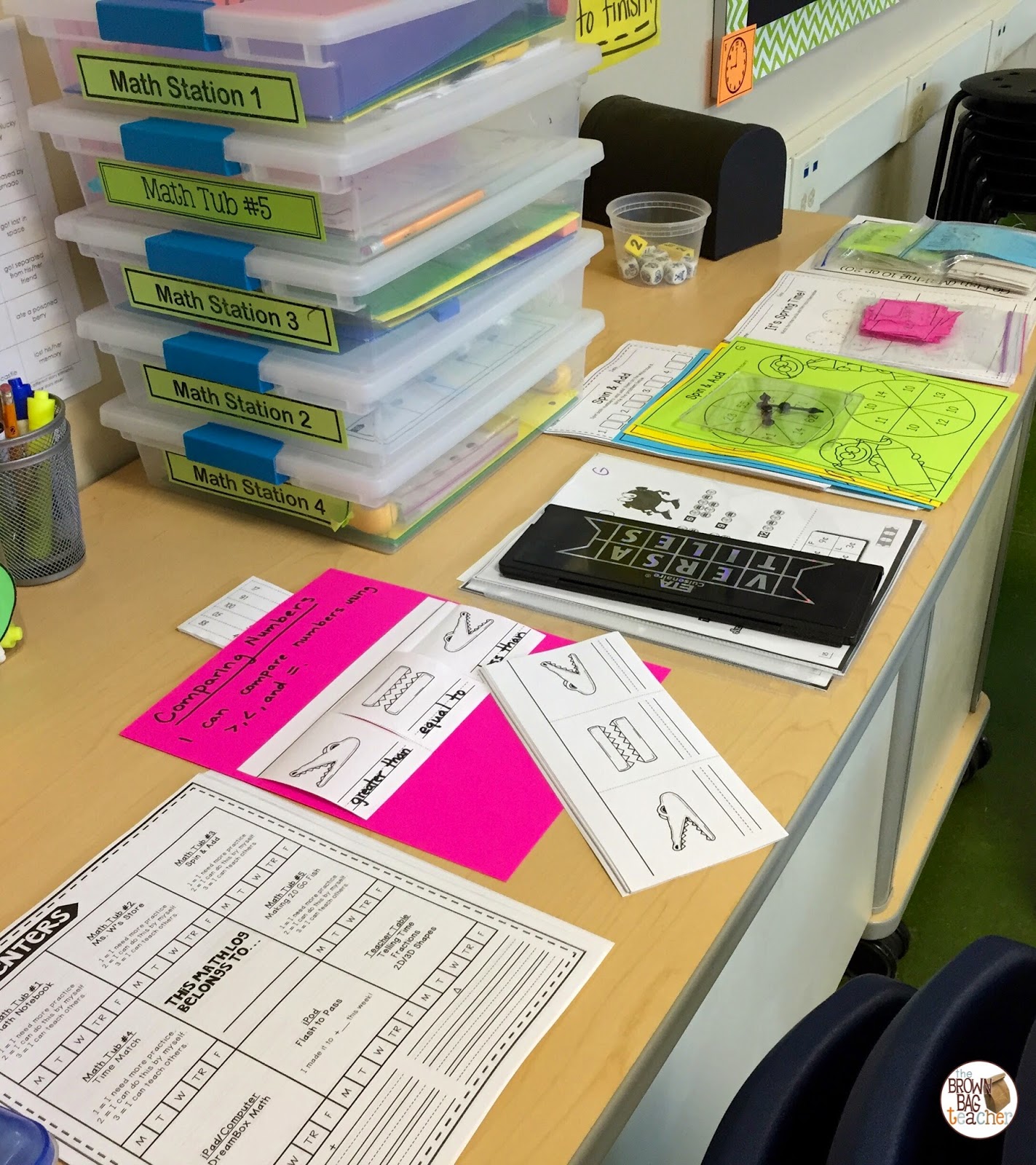
This is what life looks like when I switch-out centers. A set of centers typically lasts 5-6 days depending on the number of interruptions to our math block.
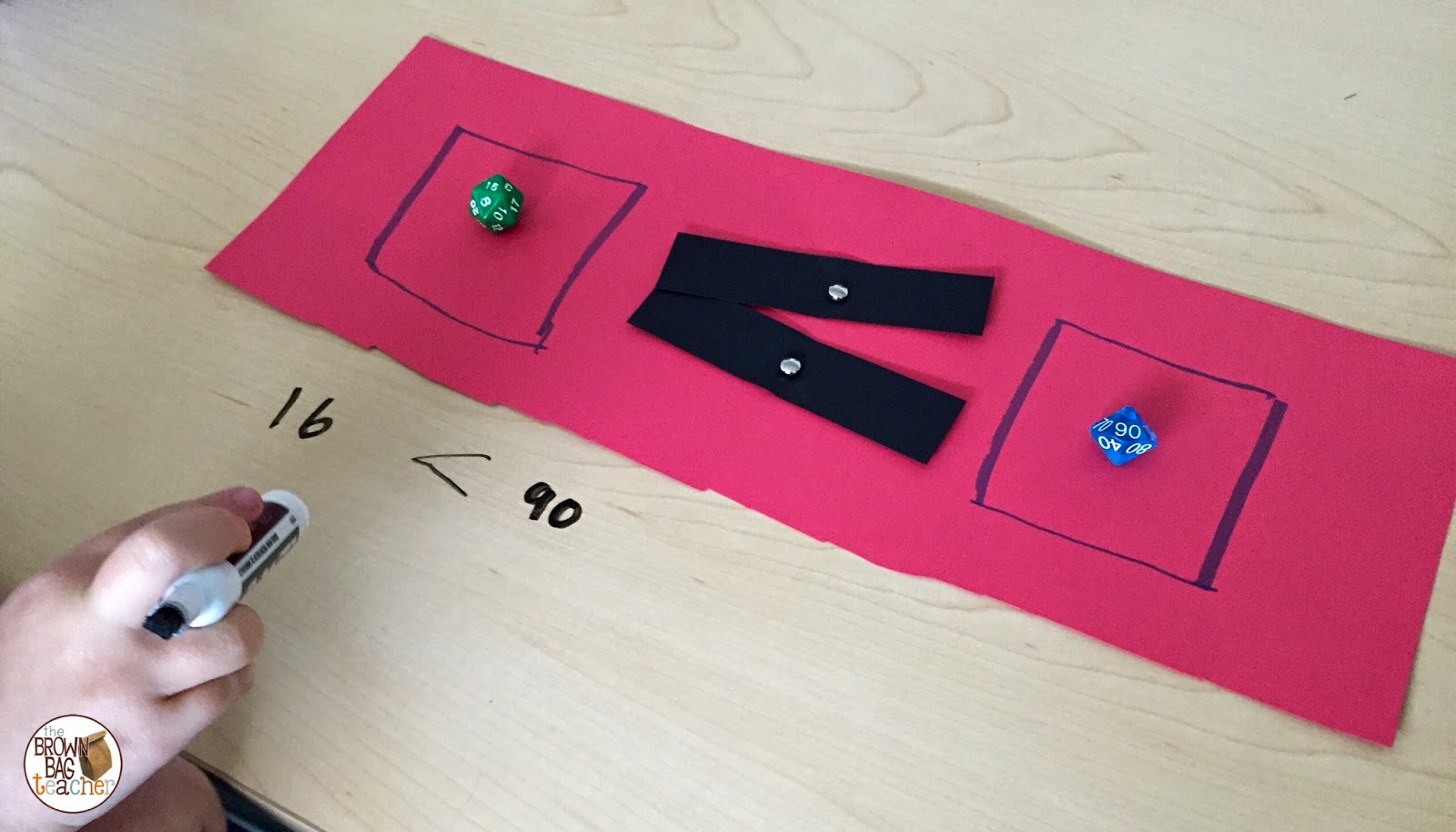
The content in our math tubs tend to follow a traditional schedule, so I don’t have to spend instructional time explaining what is going on. Tub 1 = interactive notebook (see the comparing numbers foldable below. I put a sample on the top of the bin, so students have a guide. Tub 2 is typically Versatiles, this week money Versatiles (I snagged the Hairy Money poster from Swimming into Secondhere.) Then, the 3 remaining tubs are spiral review. Below you see Making 20 Go Fish, Spin and Add (double-digit addition), and time math (to the half-hour and hour).
To keep this weekly schedule manageable, our team shares ideas for centers and we do not use centers with a lot of ‘pieces’. We tend to use a lot of dice, spinners, and playing cards. All of these materials are cost-effective, and make differentiation really easy.
With each tub, I keep visual directions and the name of the title on the tub. The directions are pictures of the center in action, and then, an “I Can” statement for their learning.
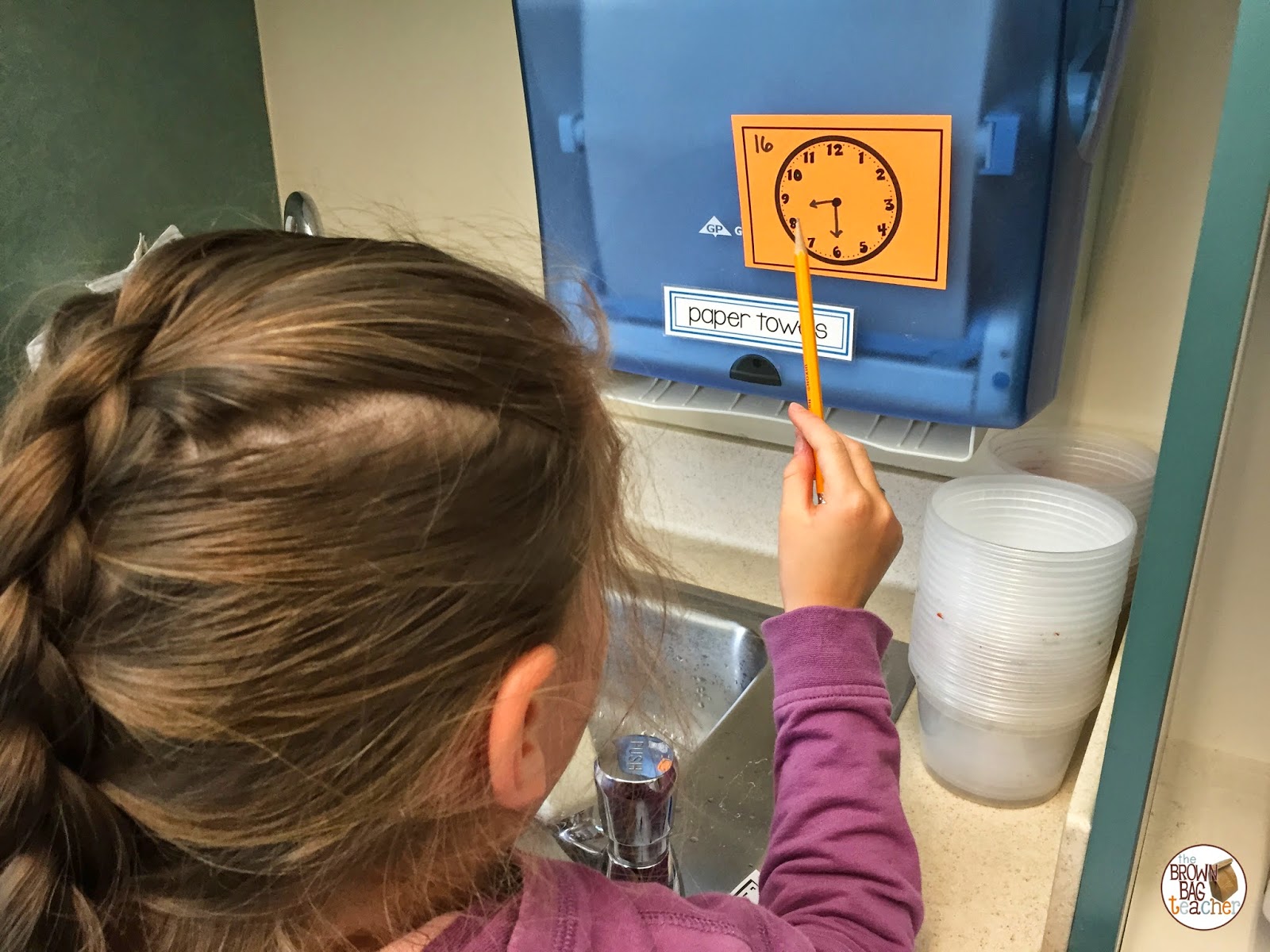
Solve the Room is one of my 1st graders favorite centers. Students know to grab a clip board, a recording log out of their differentiated colored folder, and get to work. In these folders I keep different recording logs for the same cards around the room. One group may be writing the time in words and numbers, while my friends who need more support might be choosing if the time is o’clock or thirty.
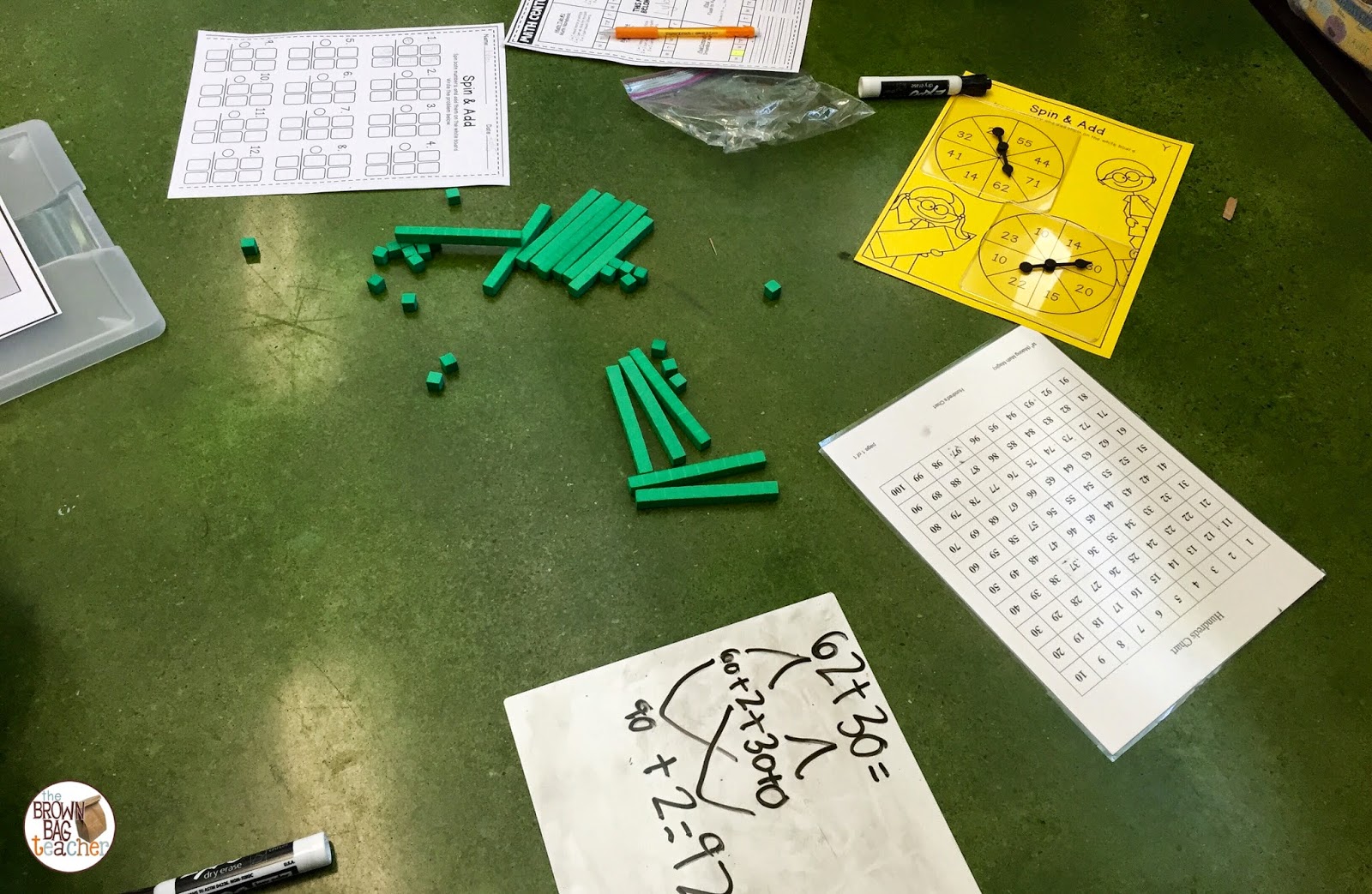
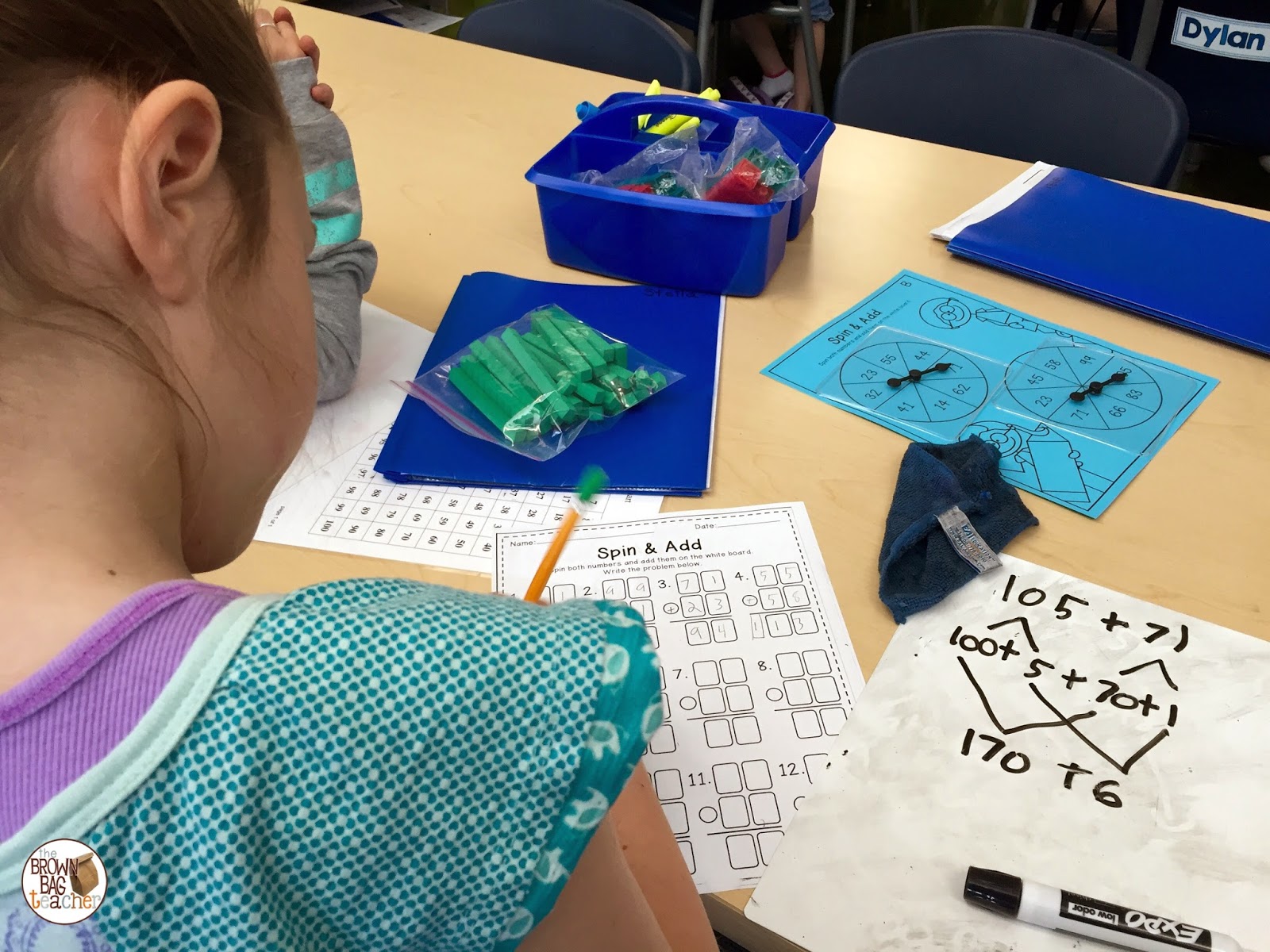
We’re also focusing on adding within 120 using double-digit addition. Below you see the yellow spinners which is for my on-level group. They are working with numbers that do not requiring breaking apart a ten.
For the same center, I also have green and blue spinners. The blue spinner (below) is my above-grade level group, and they are working to add within 120 with any type of number. I DO NOT introduce regrouping in 1st grade (or even 2nd) so students can break apart the numbers, use the base 10 pieces, use the 120s chart, or an open number line – mathematicians choice! The green spinner gives students a base number and then, they spin to add groups of 10 to that base-number.
Earlier in April, we used Becca Foxwell’s 120s Chart Cupid Shuffle song to practice adding 10 less and 10 more on the 120s chart. It was the perfect way to get my friends up and moving, as well as, provide students a tool for working with the 120s gird. It was so sweet to listen to my friends at this math center sing “To the left, to the left, one less, one less” while they worked!
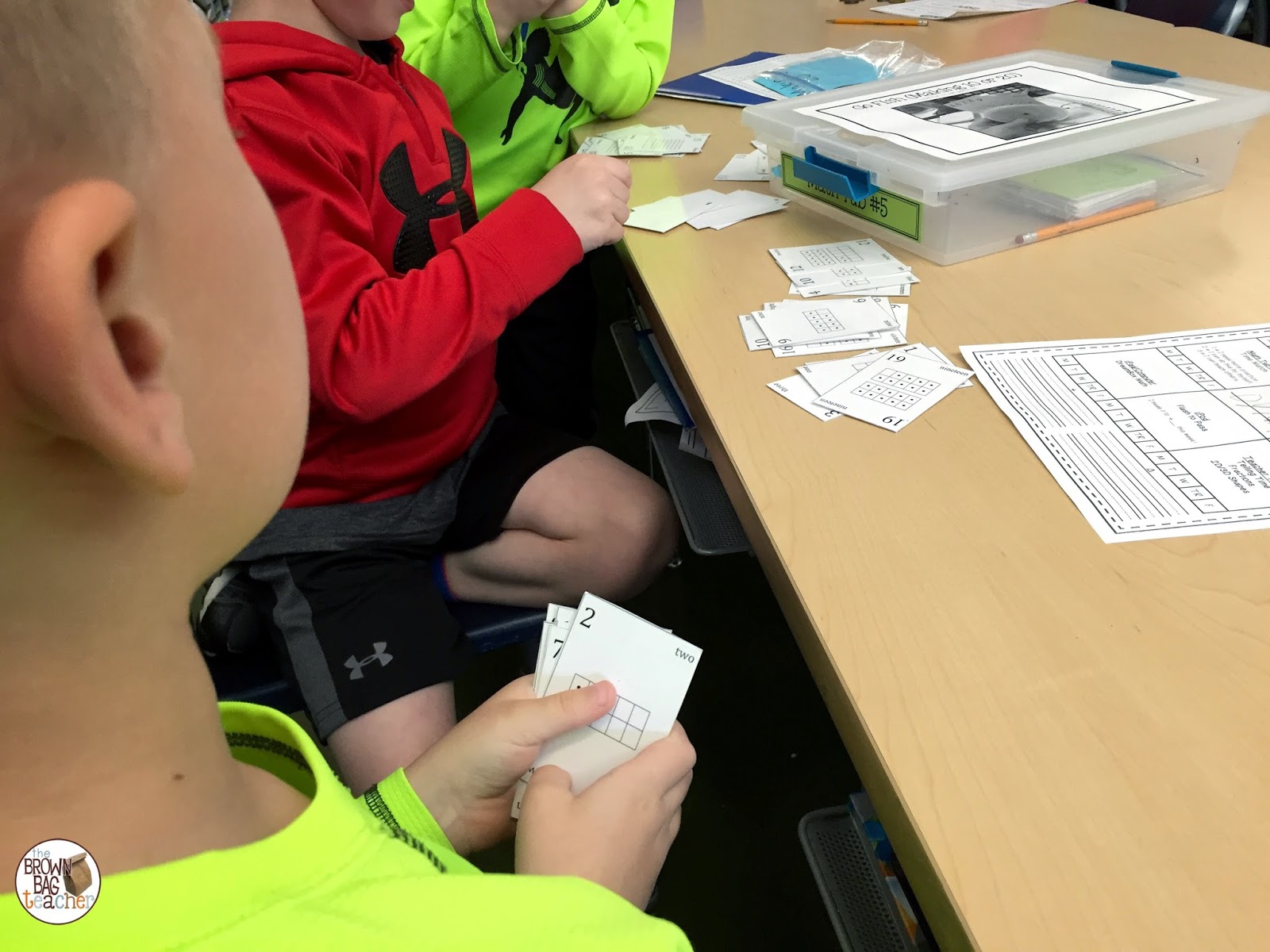
One of the math curriculums our school uses is Making Math Magic. It is a FABULOUS number sense program and has laid such a strong foundation for our students. Typically, one of our centers each week, is a throw-back to this number-sense foundation that we heavily focused on the first quarter. Making 20 Go-Fish was our throw-back this week. It’s perfect for building fluency to 20, and the kids cheer when we play it. 🙂
Now, while all of this goodness is happening in the classroom, I meet with small-groups of students. I pre-assess based on our unit and regroup students every few weeks based on the skill. Over the past 2-3 weeks, we’ve been hitting some of our last remaining math standards – geometry (composite shapes), fractions, and measurement.
After learning about 2D and 3D shapes, we marched into fractions using shapes. It was a perfect time to integrate composite shapes again. In first grade, we’re only supposed to learn about half, quarter, and whole. With the shapes, though, it’s easy to dabble in larger denominators.
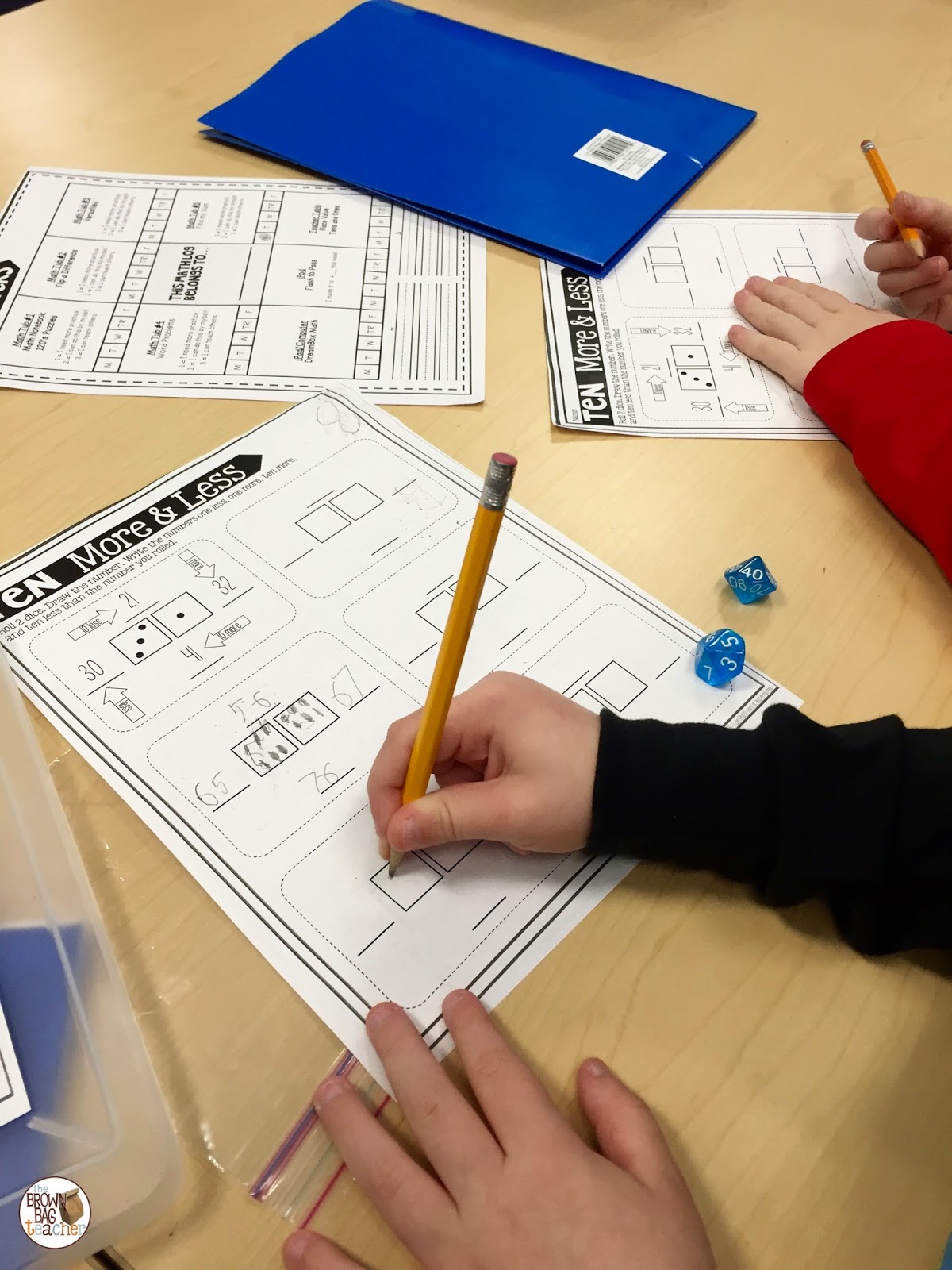
Our college block student led a few small-groups over the past few weeks and helped us review comparing numbers. She used our dice packs to differentiate some teacher-table activities. The kids loved having a hands-on way to practice greater than, less than, and equal to.
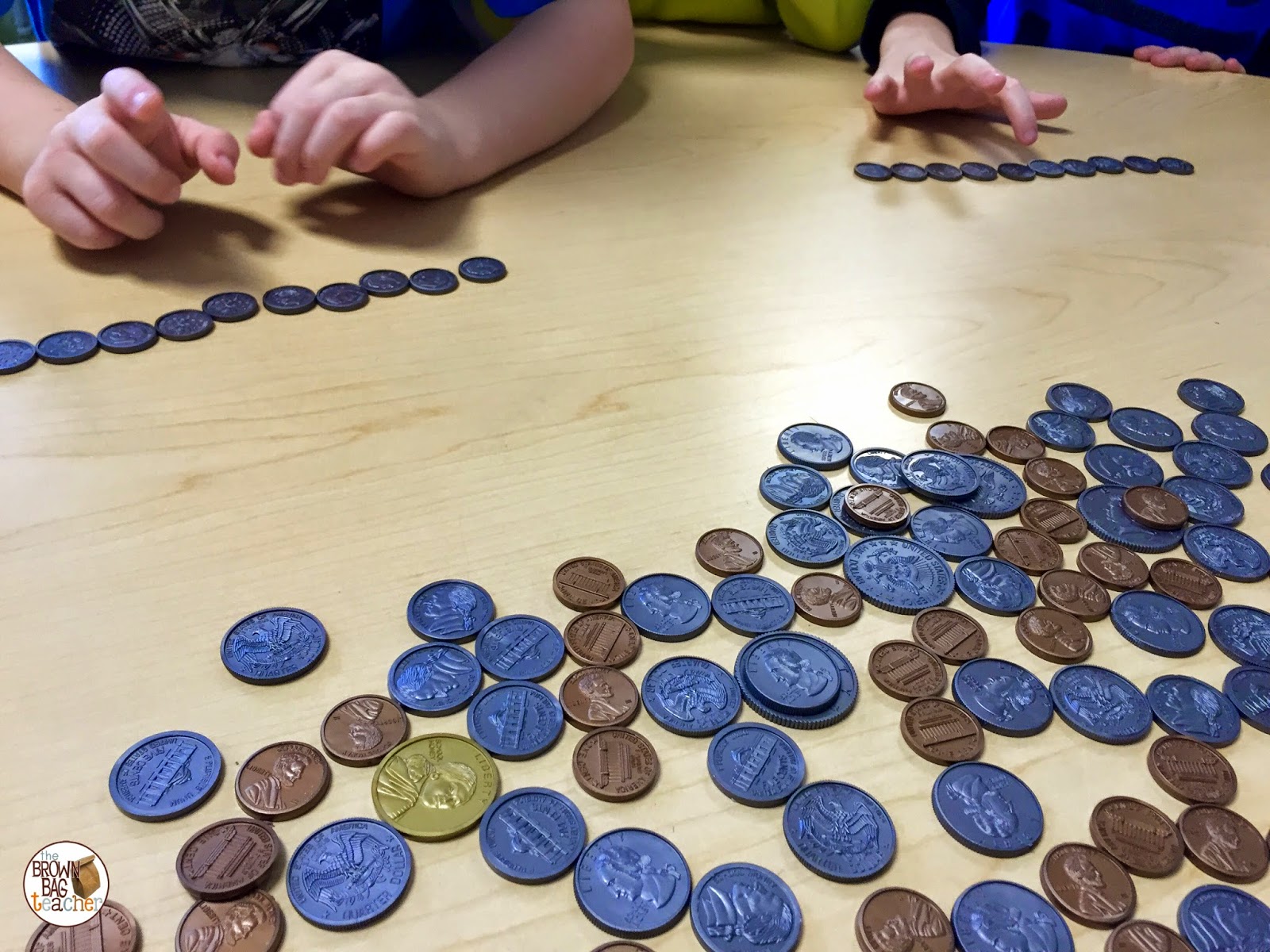
With my on-grade level and my above-grade level groups, we’re also working on finding different number combinations that equal the same sum. Money has been a perfect way to do this. The skip counting, the open number lines, and multiple combinations are an incredible way to showcase our 1st grade math learning. 🙂
Well friends, isn’t it amazing to see how much our friends have grown over the course of a year? So many days I am left speechless at their progress and their thinking. My kids ‘know’ how to talk math, and it is awesome! Guided math (i.e. small-group instruction) and building number sense has made such a difference this year, and I cannot wait to hit the ground running next year. It’s going to be fabulous!
I teach older students (4th/5th), but your post definitely got me thinking how I can make things better for next year. Thanks!
I am IN LOVE with reading this post and your others about math centers!! I LOVE your station bins and how you've set them up!! I especially love your folder system for differentiation. So many great ideas to think about for next year!!
Where is a good place to get Versatiles? We had a presenter come and share them with us last year and they were so cool and I love how you use them in your stations!
I LOVE your math time! Where do you get your ideas for the spinners and dice games? I struggle with using the same game but differentiating it.
I LOVE your math time! Where do you get your ideas for the spinners and dice games? I struggle with using the same game but differentiating it.
I had a question about your interactive math notebooks. Did I read somewhere that you purchased them from TPT? If it wasnt you, what do you normally include? Worksheet on skill being worked on that week? Thanks for any feedback!!
This is great! Do you only teach math in small group or do you have any whole group time? Just curious.
Amazing post and this article tell me math difficult question how to solve with new method thanks for share it statement of purpose graduate school .
Get teaching tips and free resources
Practical K-2 math and upper-elementary morphology ideas, straight to your inbox. No spam, unsubscribe any time.


 After learning about 2D and 3D shapes, we marched into fractions using shapes. It was a perfect time to integrate composite shapes again. In first grade, we’re only supposed to learn about half, quarter, and whole. With the shapes, though, it’s easy to dabble in larger denominators.

8 Responses
This is awesome! Some great ideas for next year!
I teach older students (4th/5th), but your post definitely got me thinking how I can make things better for next year. Thanks!
I am IN LOVE with reading this post and your others about math centers!! I LOVE your station bins and how you've set them up!! I especially love your folder system for differentiation. So many great ideas to think about for next year!!
Where is a good place to get Versatiles? We had a presenter come and share them with us last year and they were so cool and I love how you use them in your stations!
I LOVE your math time! Where do you get your ideas for the spinners and dice games? I struggle with using the same game but differentiating it.
I LOVE your math time! Where do you get your ideas for the spinners and dice games? I struggle with using the same game but differentiating it.
I had a question about your interactive math notebooks. Did I read somewhere that you purchased them from TPT? If it wasnt you, what do you normally include? Worksheet on skill being worked on that week? Thanks for any feedback!!
This is great! Do you only teach math in small group or do you have any whole group time? Just curious.
Amazing post and this article tell me math difficult question how to solve with new method thanks for share it statement of purpose graduate school .