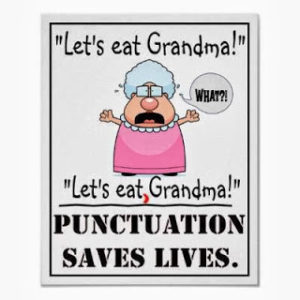

Here’s a moment every 5th grade teacher recognizes:
Your students can talk about what they’re reading.
They sound thoughtful in discussions.
They have ideas.
But when it’s time to write especially on demand. Their responses become vague, scattered, or painfully short.
And the closer testing season gets, the louder that question becomes:
“They KNOW it… so why can’t they explain it in writing?”
This is exactly where many students get stuck and where structure, not motivation, needs to come first. 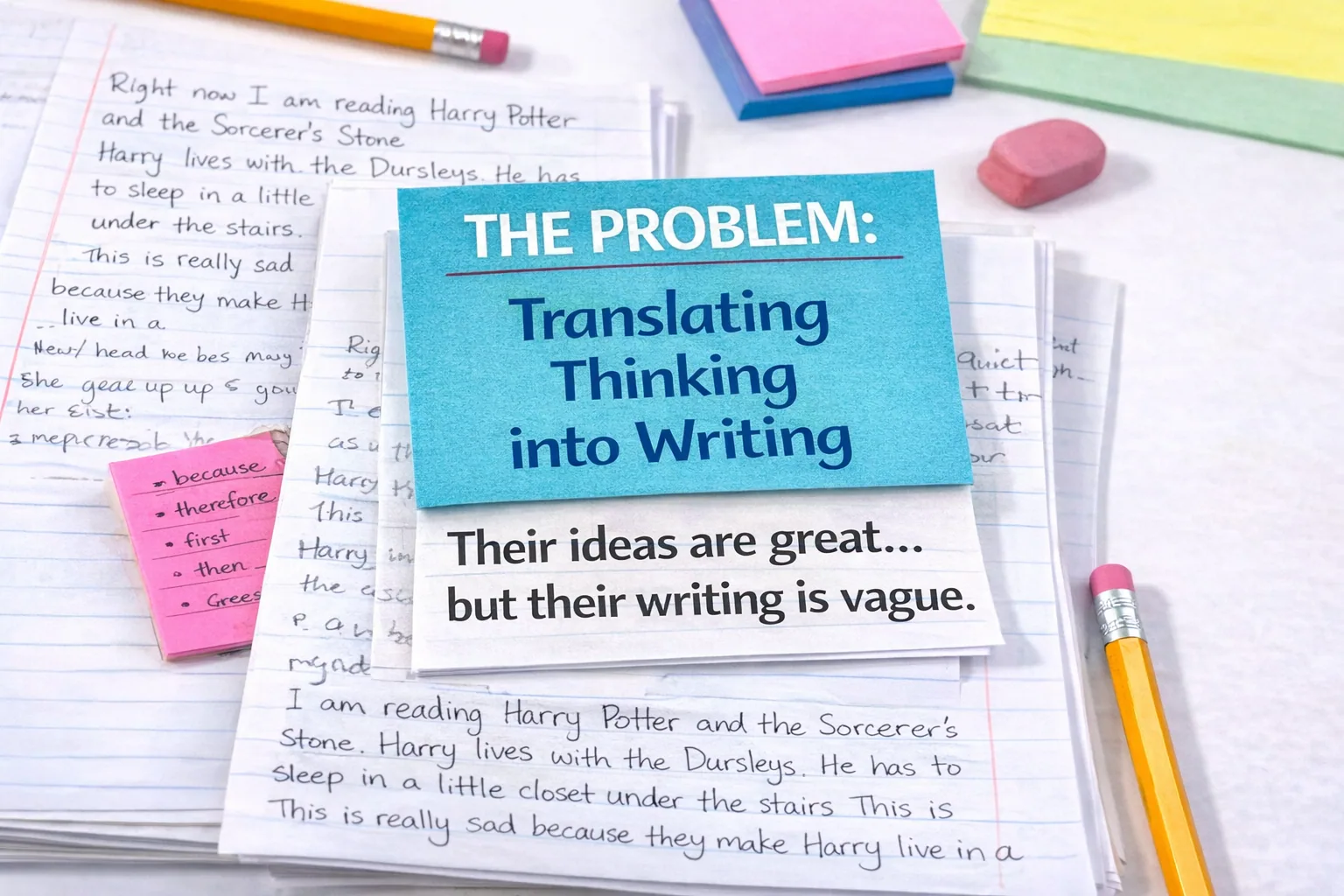
Most struggling on-demand writing doesn’t come from a lack of comprehension or effort. It comes from a gap between:
oral explanation and
clear written explanation under pressure
Students haven’t had enough practice organizing their thinking in writing before the stakes are high.
That’s where reading response letters come in.
Reading response letters replace traditional book reports with a simple but powerful routine:
Students write a short letter to the teacher about what they’re reading—and the teacher writes back.
On the surface, it looks like a reading response.
In reality, it’s low-stakes rehearsal for explaining thinking in writing.
The letter format naturally pushes students to:
give context
state an idea clearly
support it with text evidence
explain why it matters
Those are the exact skills required for strong on-demand writing. 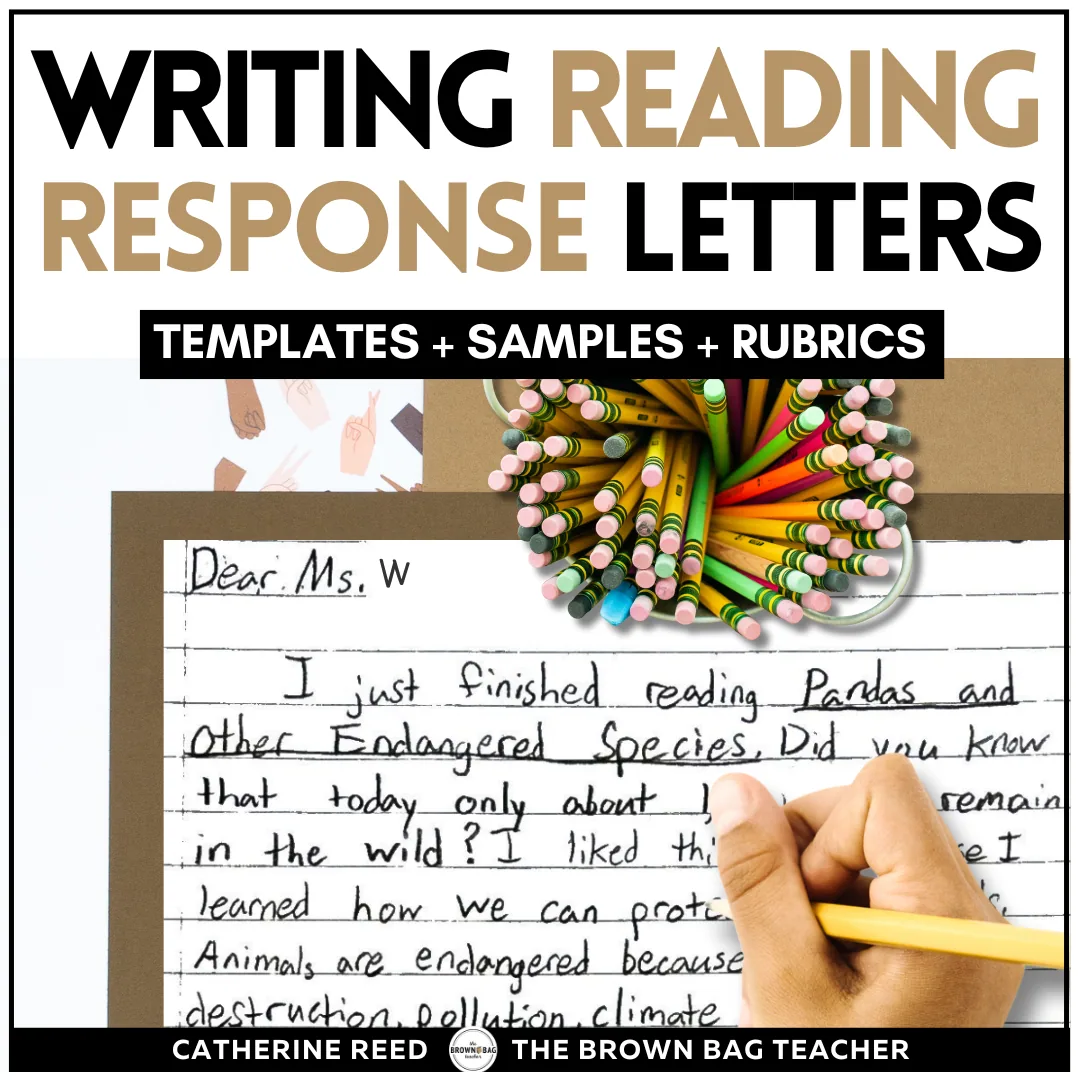
Letters work because they quietly solve the “they can talk but can’t write it” problem.
Unlike open-ended responses, letters:
require complete thoughts
discourage vague one-word answers
force students to explain for a real audience
slow students down enough to organize thinking
Students aren’t just summarizing—they’re practicing explaining.
And when explanation becomes routine, on-demand writing becomes far less intimidating.
To keep responses focused and transferable, I explicitly teach students to include:
Thinking – What are you saying about the text?
Evidence – Where do you see this in the text?
Explanation – How does the evidence prove your thinking?
Connection – Why does this matter?
This structure shows up again and again in their letters, so when students face an on-demand prompt later, the thinking process isn’t new—it’s familiar. 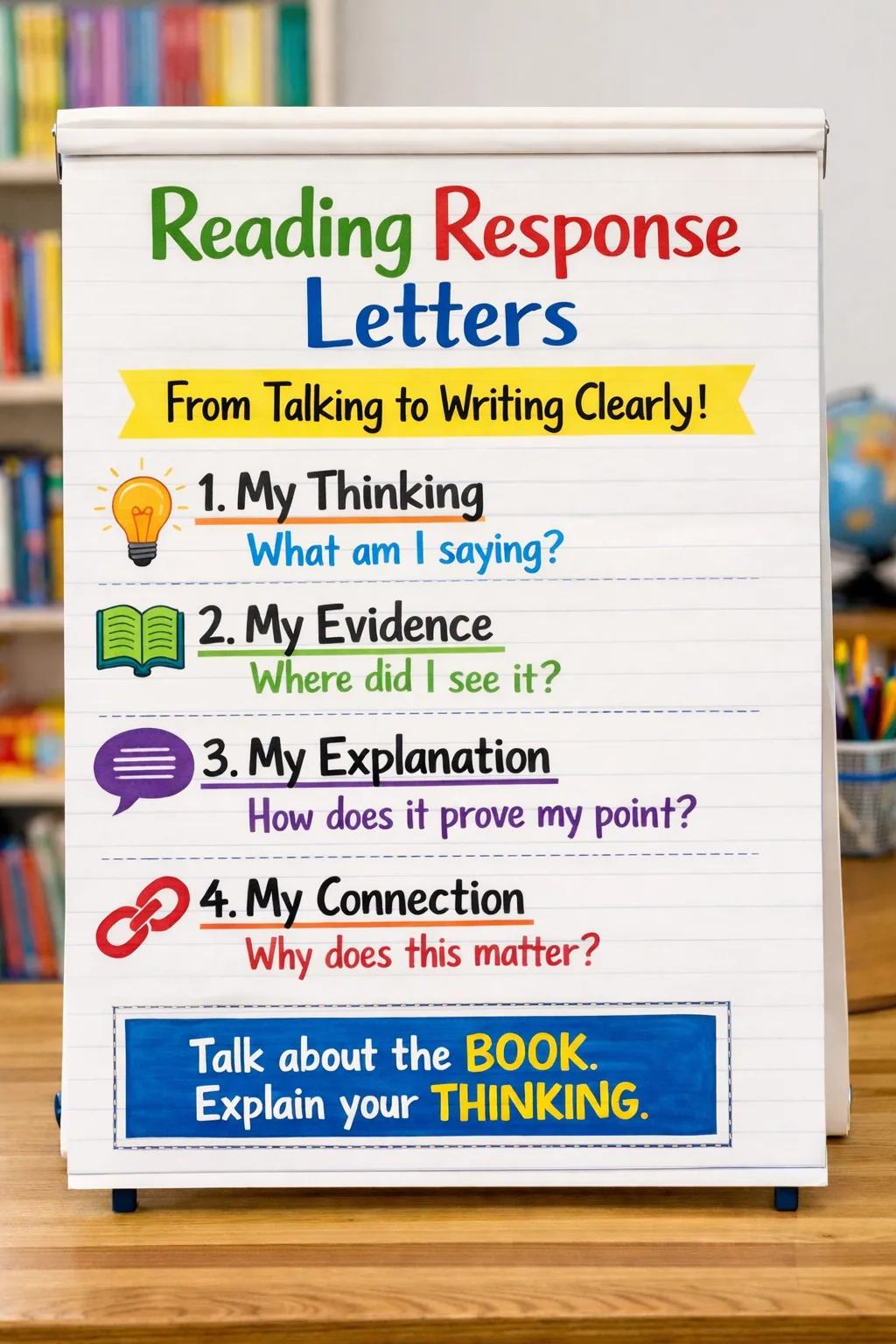
You don’t need an elaborate setup. Here’s what works:
Model one letter together
Start short (5–8 sentences)
Provide sentence stems at first
Respond with one strength + one next step
Repeat weekly
Consistency matters more than length. This is about practice, not perfection.
Too much summary? Require one sentence of thinking before evidence.
Quotes with no explanation? Add explanation stems (“This shows that…”)
Freezing up? Start with a 3-sentence version and build stamina slowly.
These small moves prevent breakdowns later.
Reading response letters are not the end goal—they’re the bridge.
Once students can consistently explain their thinking in letters, they’re ready to organize that thinking under pressure.
That’s where 4-Square for on-demand writing comes in—helping students plan, organize, and explain clearly when time is limited.
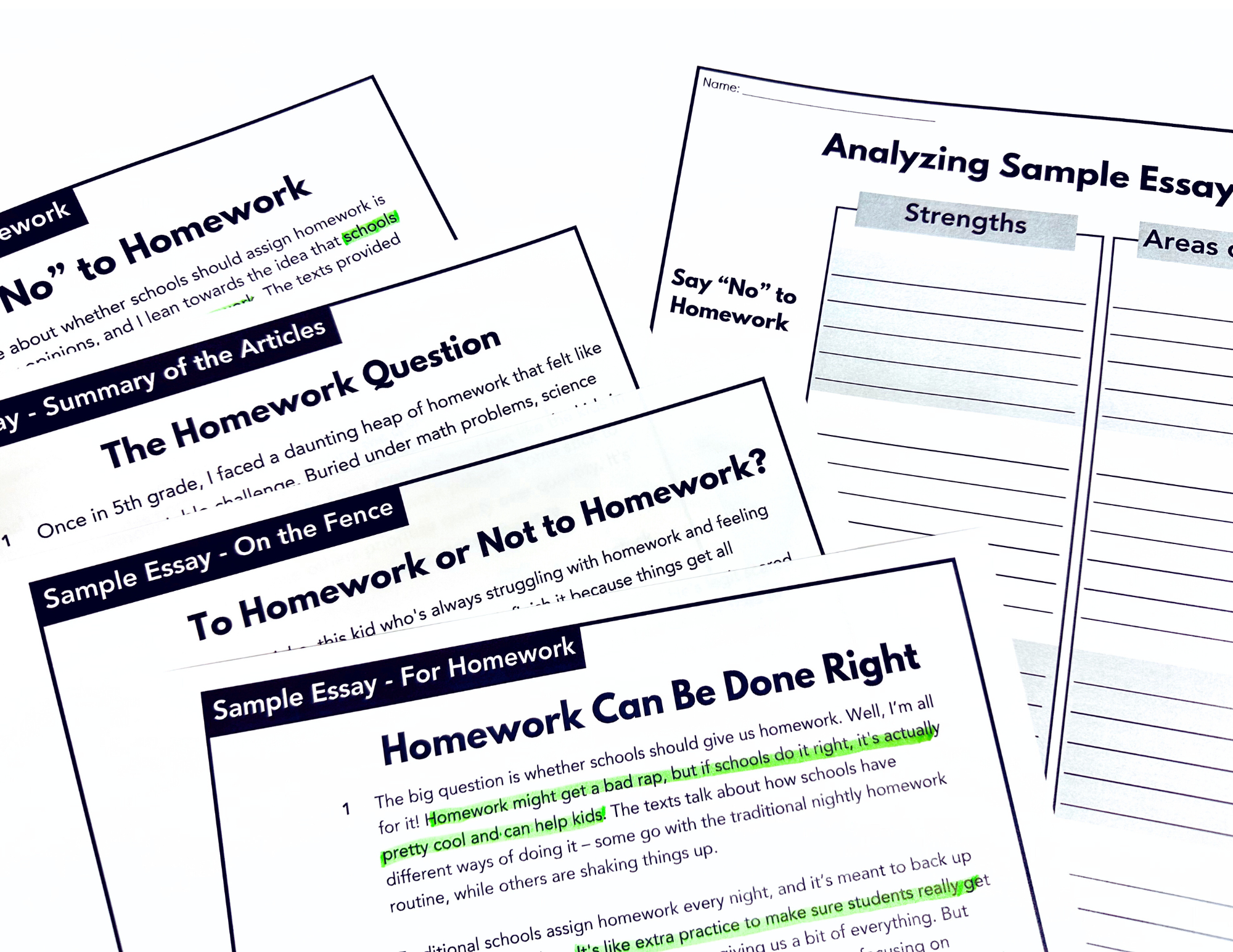
Strong writing doesn’t come from more prompts or more grading.
It comes from intentional structure, practiced before it’s required.
If your students can talk about their ideas but struggle to explain them in writing, reading response letters may be the missing link.
Structure first. Confidence follows.

8 Responses
I love reading response letters. We carve out special time a few days a week for this and you are ao right; it really creates a special reading bond between the kids and I. Will these work for 3rd graders?
Hope
Teaching with Hope
I was just looking at the we believe posters for my 6th grade classroom!
Steven
teachlikeahero
New 6th grade teacher here. Language Arts. I would love to win any of your resources.
I love everything that you create. I already have the We Believe Posters that I used last year. I have your Reading Response Letters and On Demand Writing Rubrics on my TPT wishlist. Thanks for creating such stellar products that are so user-friendly and visually appealing. Keep up the good work!
This is an amazing giveaway! I TOTALLY LOVE YOUR WE BELIEVE POSTERS! Can't wait to hear the big news, and thanks for the awesome giveaway!
I'm hoping that I'm the Steven that won!!!!! 😀
I hope I'm the Kaitlyn that won-your letters look awesome!
🙂 Kaitlyn
Smiles and Sunshine
I NEED your desk tags! I love them! Are they in your TPT store?