Differentiation – a word that drives fear into the teacher heart and requires a dramatic eye-roll during a staff meeting. So many times when we hear DI, it seems like this burdensome task is completely overwhelming. But friends, DI should NOT require hours of extra hours or thousands of extra copies. I’ve shared about about differentiation before here, and today I wanted to share one of my favorite ways to simply level math centers – with dice!
My Favorite Dice
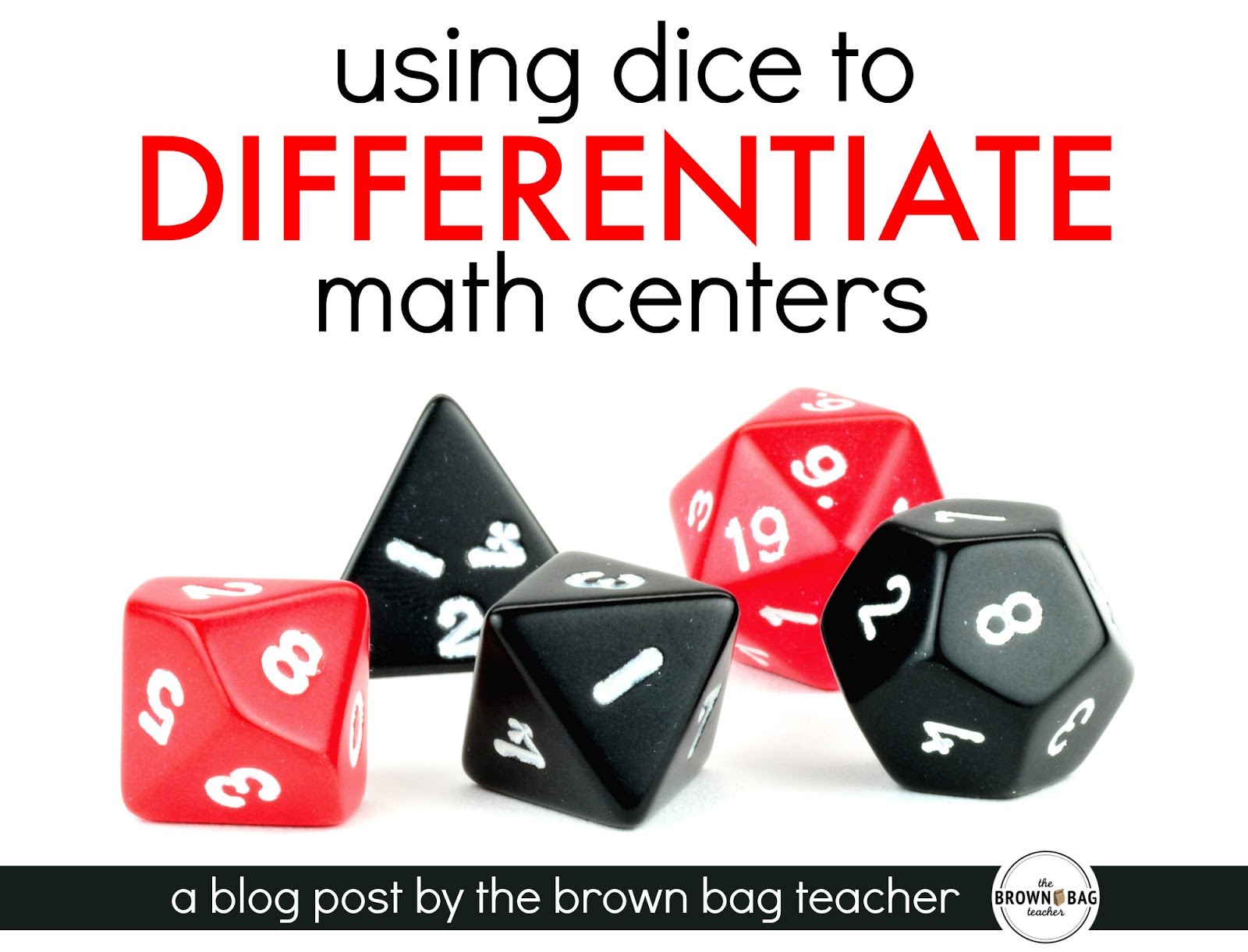
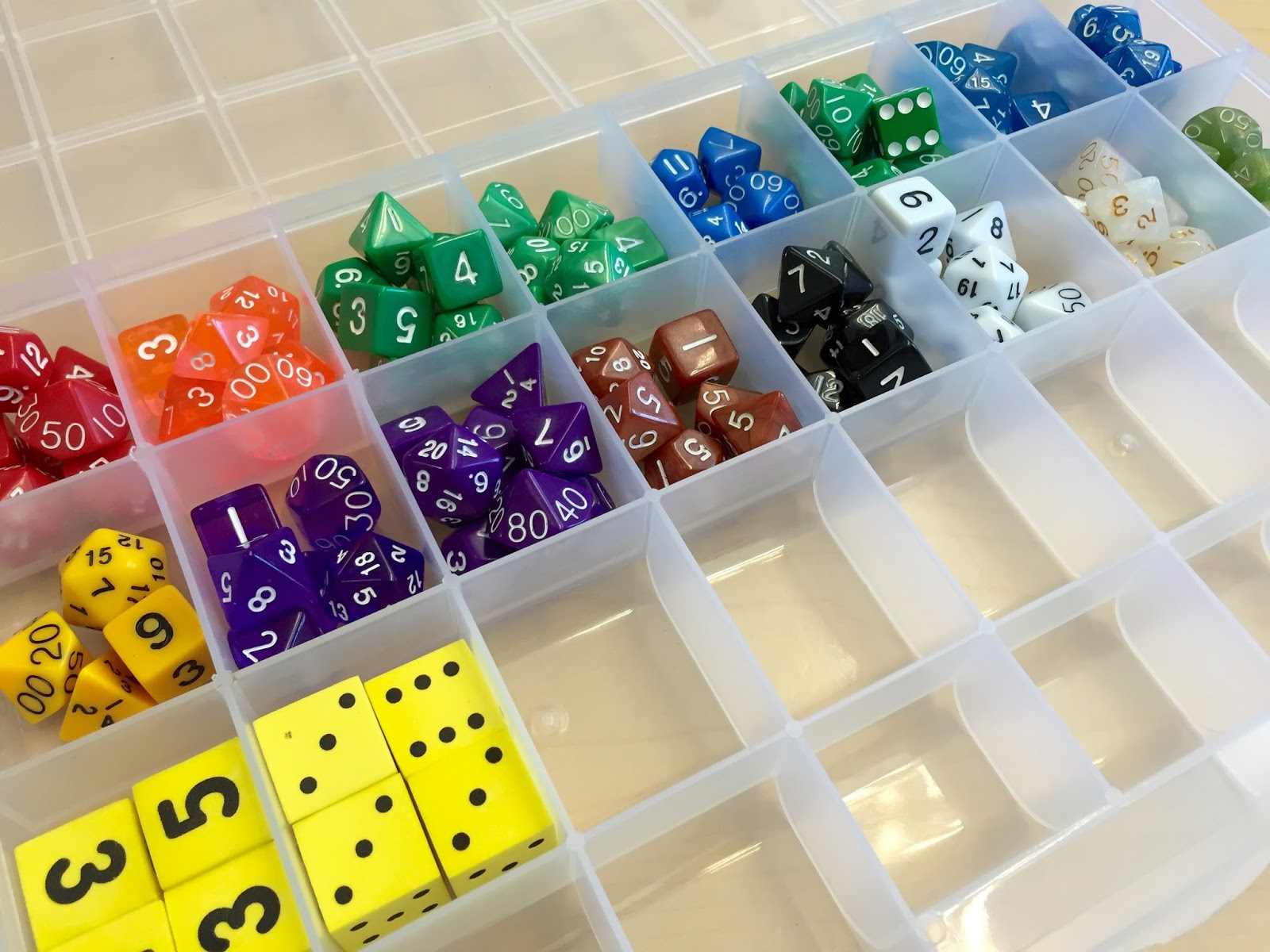
Last fall, I ordered a ‘Pound of Dice’ from Amazon (affiliate link) and was amazed to receive over 80 colorful dice. Each color-set included 4/6/8/10/12/20 dice, as well as, a place value dice (included multiples of tens). These dice allow me to have the same center in a tub with three different sets of dice – one for each of my math groups. (Learn more about how I group my students for Guided Math here.) I snagged a bead container from Michaels with a 40% coupon and my 15% Teacher Discount for less than $5 – a perfect storage solution!
Dice in My 1st Grade Classroom
When pulling math centers, I tend to use the green, yellow, and blue dice most. These match my
color-coded math groups and makes it easy for students to grab the right dice. My 1st graders know their math color and grab their dice from the math center bin.
Introducing math centers for the first time during our
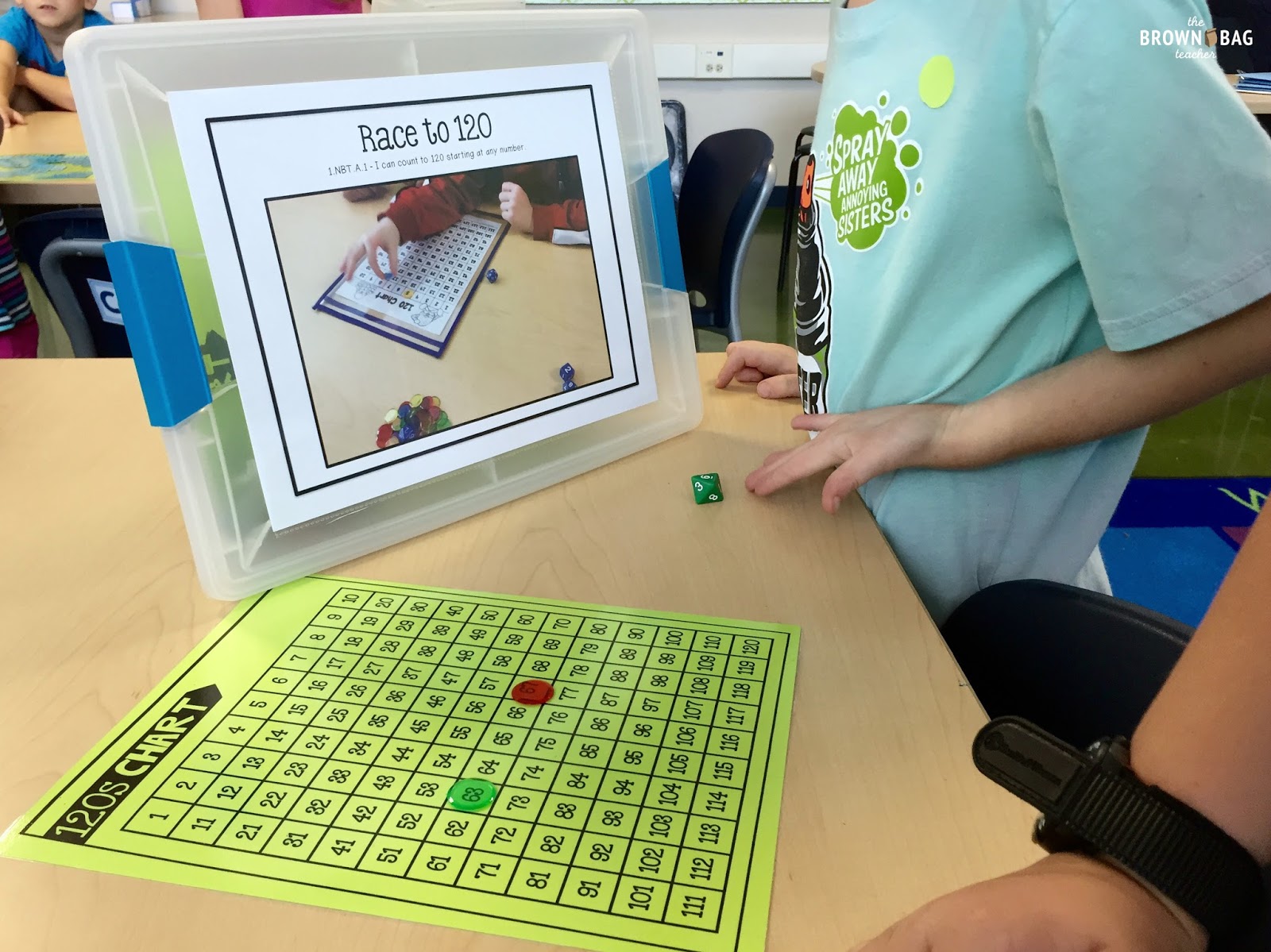
Making our Way to 120 Unit,
Race to 120 is the first math game I introduce. It is simple, requires few pieces, and is the perfect way for students to learn patterns on the 120s chart through repeated exposure. My green group is using dice within 6 as they are still individually counting squares on the grid, yellow group is using dice within 12 so they can begin to make hops of 10, and blue group uses the dice within 20 as they are able to easily manipulate the 120s chart early in the year.
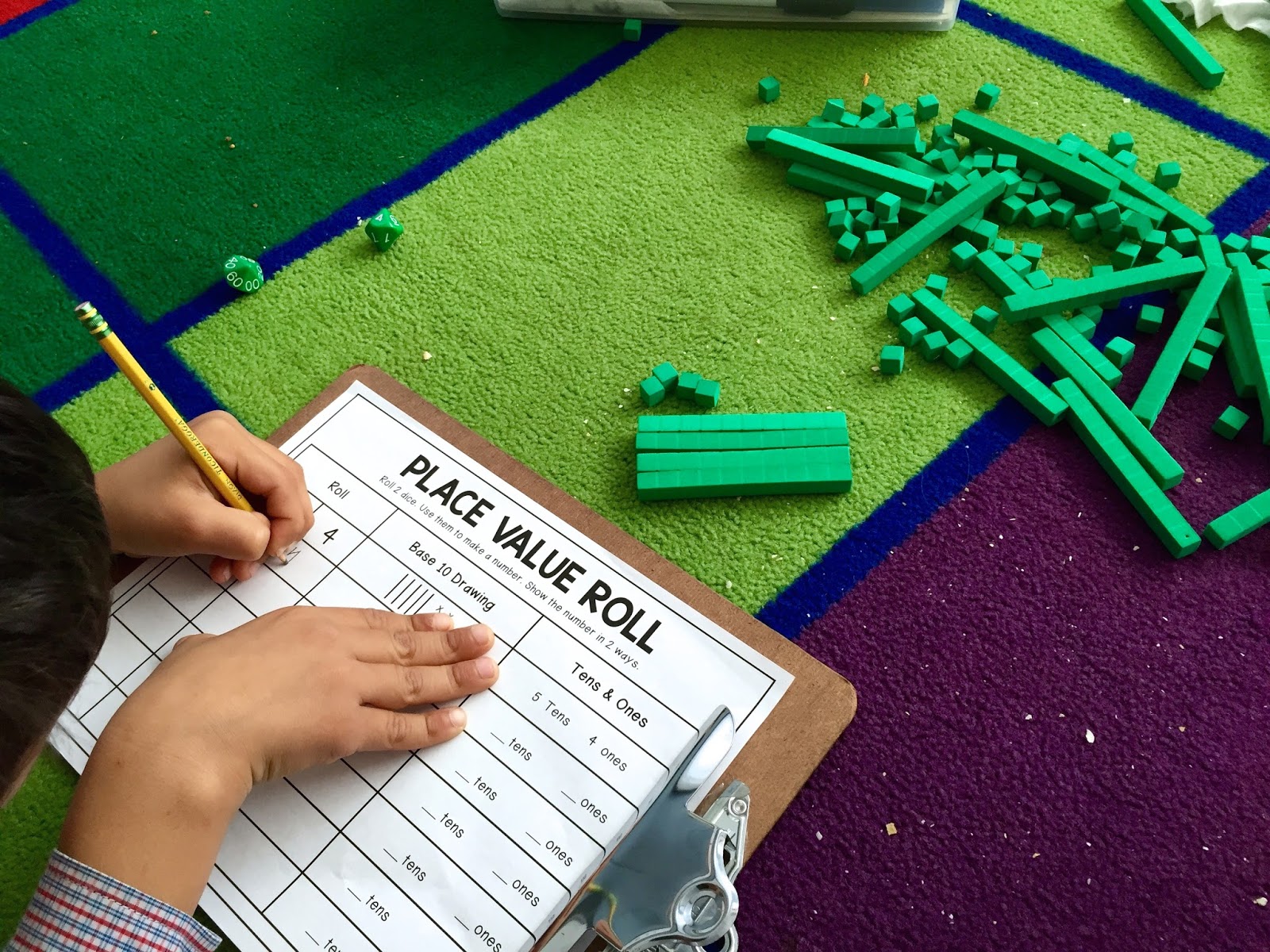
In October, my friends were doing
Place Value Roll with dice, base ten pieces, and a recoding log. Easy peasy prep. My lowest group was working with the green place value dice (10, 20, 30, etc.) and 0-9 dice. My middle group worked with two 0-9 yellow dice and had to decide where to place the dice to make the largest number, and my above grade-level group worked with 3 blue dice to make a 3-digit number.

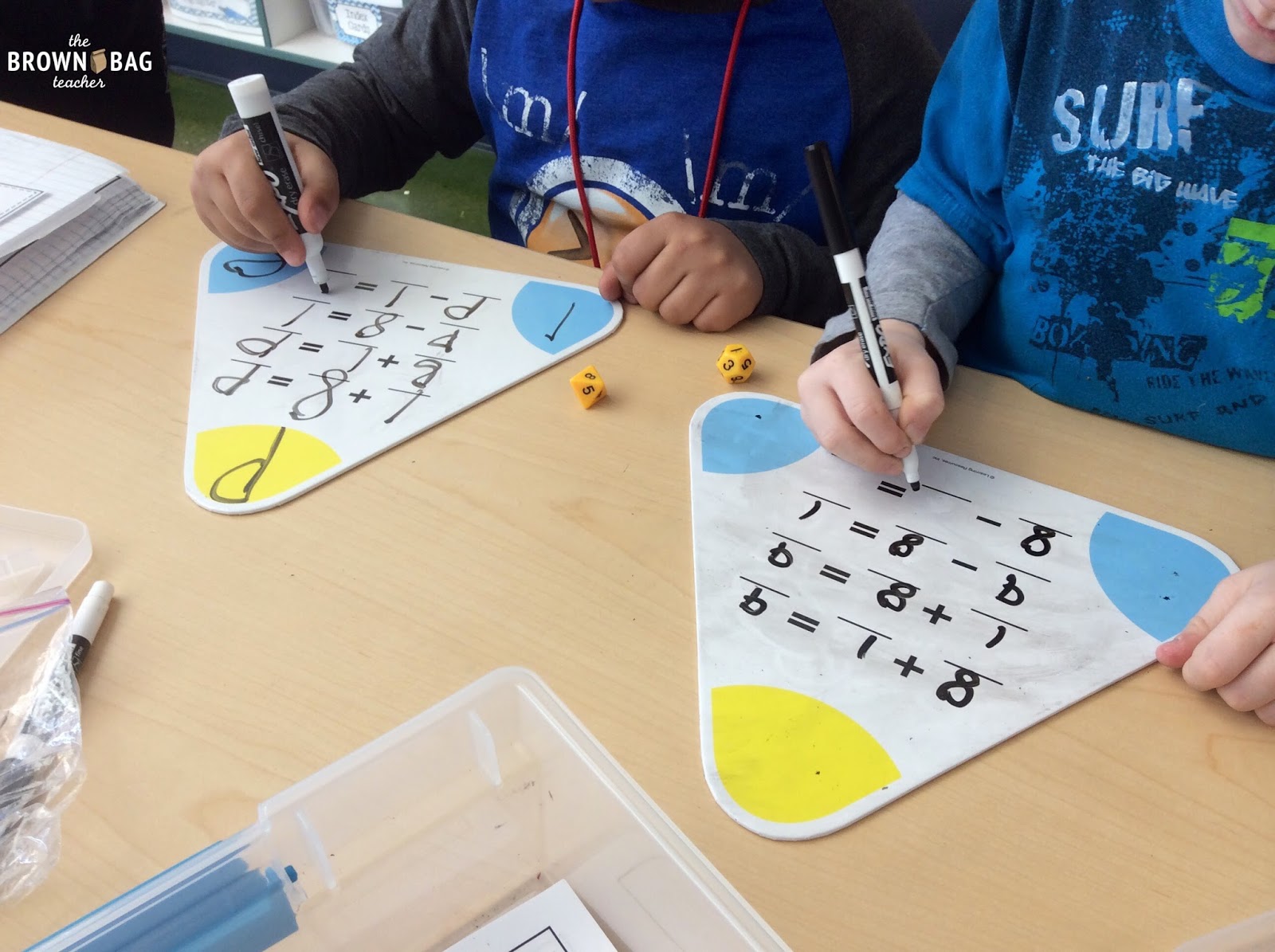
In our Fact Family Center we loved using our set-of-five Fact Family Triangles (Amazon affiliate link) to relate addition and subtraction. I placed the triangles, a recording log, and 3 sets of dice in the bin (each set in a ziploc bag with a colored sticker). My green group is working with two 6-sided dice (sums within 12), yellow group is playing with a 12-sided dice and a 6-sided dice (sums within 18), and blue group is playing with two 12-sided dice (sums within 24). The learning target – “Students will be able to relate addition and subtraction.” is being reviewed and practice with just-right materials.
On of the ways, I make math centers sustainable is by creating a routine of “staple” math centers. (Read more about that here.) Within that routine, these addition and subtraction games are ALWAYS on our list. Perfect for building fluency and number sense with 20. 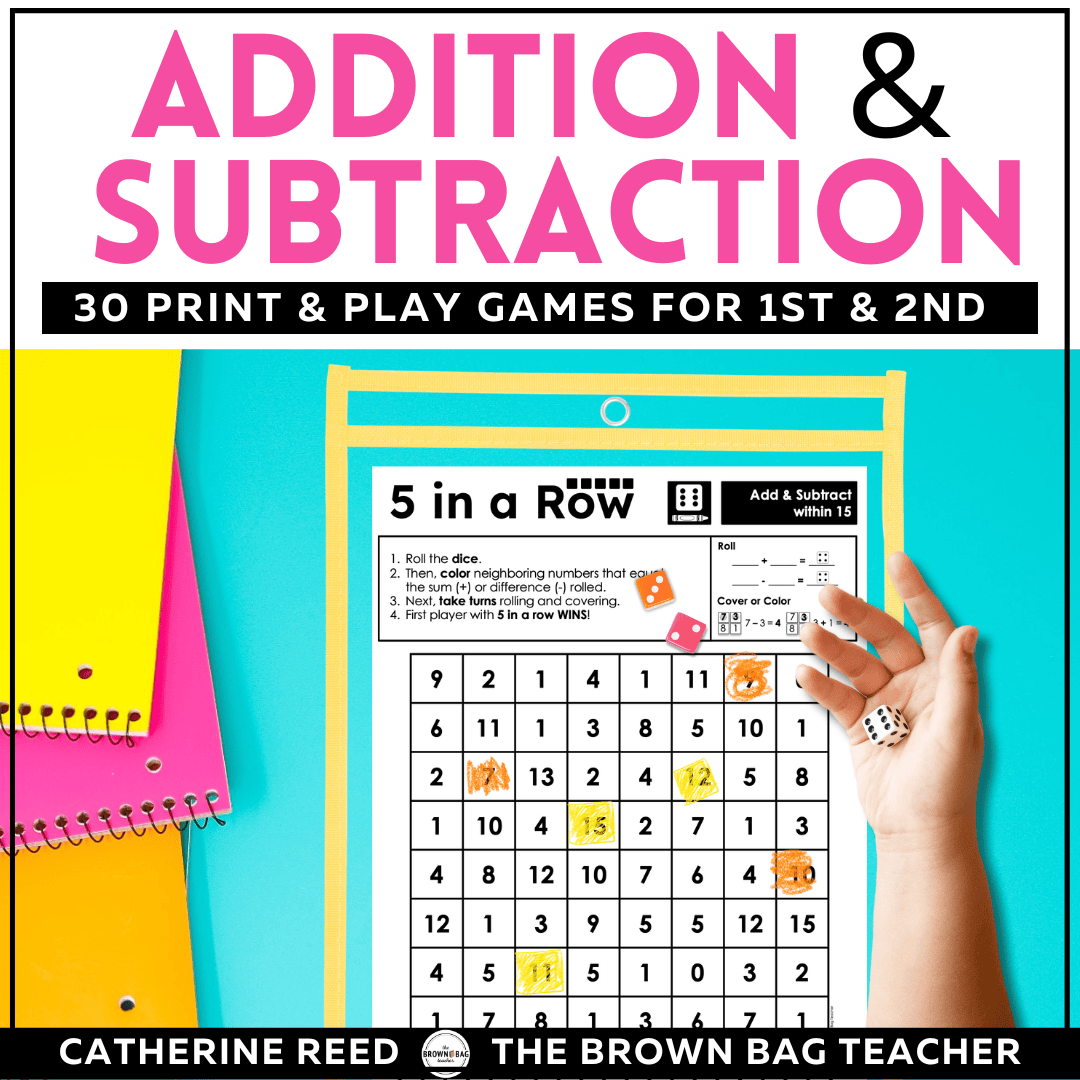
Other Ideas for Math Center Differentiation
If you don’t teach 1st grade, here are some other ideas for Easy Dice Games (and easily differentiated based on the number of sides each die has):
- Representing Numbers: Have students roll multiple dice to make a number. Then, ask students to represent the number in 4 different ways on a whiteboard (place value, tallies, addition/subtraction equation, number word, expanded form, money, etc.)
- Comparing Numbers: Roll 2/3/4 dice (depending on your grade). Order the dice to make the largest possible number. Use <, >, = to compare your number to your partner’s number. The friend with the largest number receives 1 point. First partner to 15 points wins!
- Missing Addends: Have students roll two dice. The students must place the numbers in a sentence frame where one dice is the addend and the second dice is the sum. (You could also have one dice be a subtrahend and one dice be the difference.) Then, students must solve for the missing number and create a word problem to match the equation.
- Place Value: Roll 2/3/4 dice. Make all the number combinations possible out of those numbers. Then, order the numbers from least to greatest. (If you teach older grades, require every number to have a tenths or hundredths place.)
- Rounding: Have students roll multiple dice (depending on standard) and record the number. Then, have students round the number to the nearest 10 or 100 (or both).
- Word Problems: Leave a set of word problems on a binder ring at a center. For every number in the problem, leave a blank. Then, have students roll numbers to fit the problems. They have to ensure the numbers make sense and then, they have to solve the problem! (To learn more about differentiating word problems in this way, read this blog post.)
- Fractions: Have students roll a 4-sided dice as a denominator. Then, have students roll the 20-sided dice for a numerator. Then, students have to make the improper faction, put it in simplest terms, and write it as a decimal!
I use these dice every.single.day and they are definitely one of my teacher-must haves. I give these away to all my University Students and I frequently shout-them out on Instagram and Facebook. Do you use dice to help level your math centers? If so, what are your favorite ways to use them. I’m always looking for new math ideas and would love your input. For other FREE classroom resources and freebies, sign-up here for teaching ideas to land in your inbox each month.



25 Responses
When you are doing Math daily 3–do you use a math notebook and if so –what do you use in the math notebook? Love your post–I have all the products so great to see how you use in detail! Thanks so much!
Hi Chris! I actually pull from all over for the math notebooks. Most of the math notebooks I purchase are WAY too easy…so I just pull the best from all over. The easiest way to get what I want is to make my own differentiated word problems!
Well post its tell us a teacher how to explain math solving technique on dice and how to practical explain on white board in class thanks for share it rewriting service .
What is your trick for keeping your students from throwing the dice too high or too far away from their workspace and losing the dice? Do you have tips for keeping the noise level of dice down? I want to use dice more but have some students who misuse them.
Putting a piece of foam on the work space and letting them know the dice should stay on the foam mat should help.