Morphology instruction in upper elementary gives students a way to break words down, reason through meaning, and approach academic vocabulary with confidence and strategy.
As upper elementary teachers, we know that word learning can’t keep up with word exposure. By fourth and fifth grade, students encounter thousands of new words across content areas—many of them multisyllabic, abstract, and Greek or Latin in origin. Take photosynthesis, geography, interruption, or autobiography. These are not “sight words.” And they’re not just big—they’re meaningful.
This isn’t word-of-the-day fluff. It’s evidence-based, high-leverage instruction that directly supports decoding, fluency, comprehension, and vocabulary.
Let’s dig into what it looks like in real classrooms.What Is Morphology, Really?
Morphology is the study of morphemes—the smallest units of meaning in language. A morpheme can be a prefix (re-), a root (graph), or a suffix (-er). When students understand how these parts work together to form words, they can unlock meaning, even when the word is unfamiliar.
Take the word autobiographer. 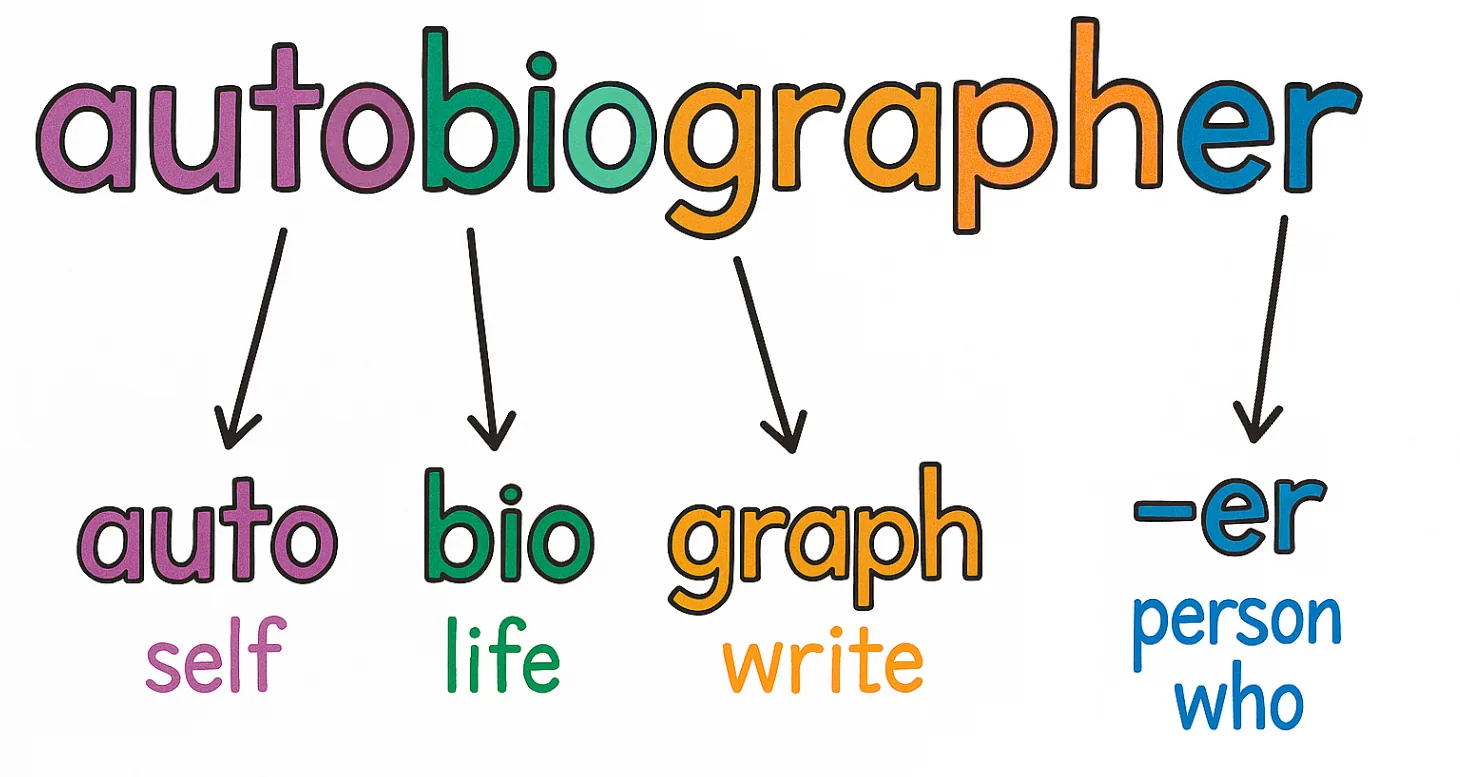 Even if a student has never seen the word, they can reason: autobiographer is a person who writes the story of their own life. That’s the power of morphology.
Why Morphology Instruction Is Essential in Upper Grades
By upper elementary, phonics-based decoding alone won’t cut it. Over 60% of academic vocabulary in English comes from Greek and Latin roots and affixes. If students aren’t taught how these morphemes work, they’re left to memorize or guess. 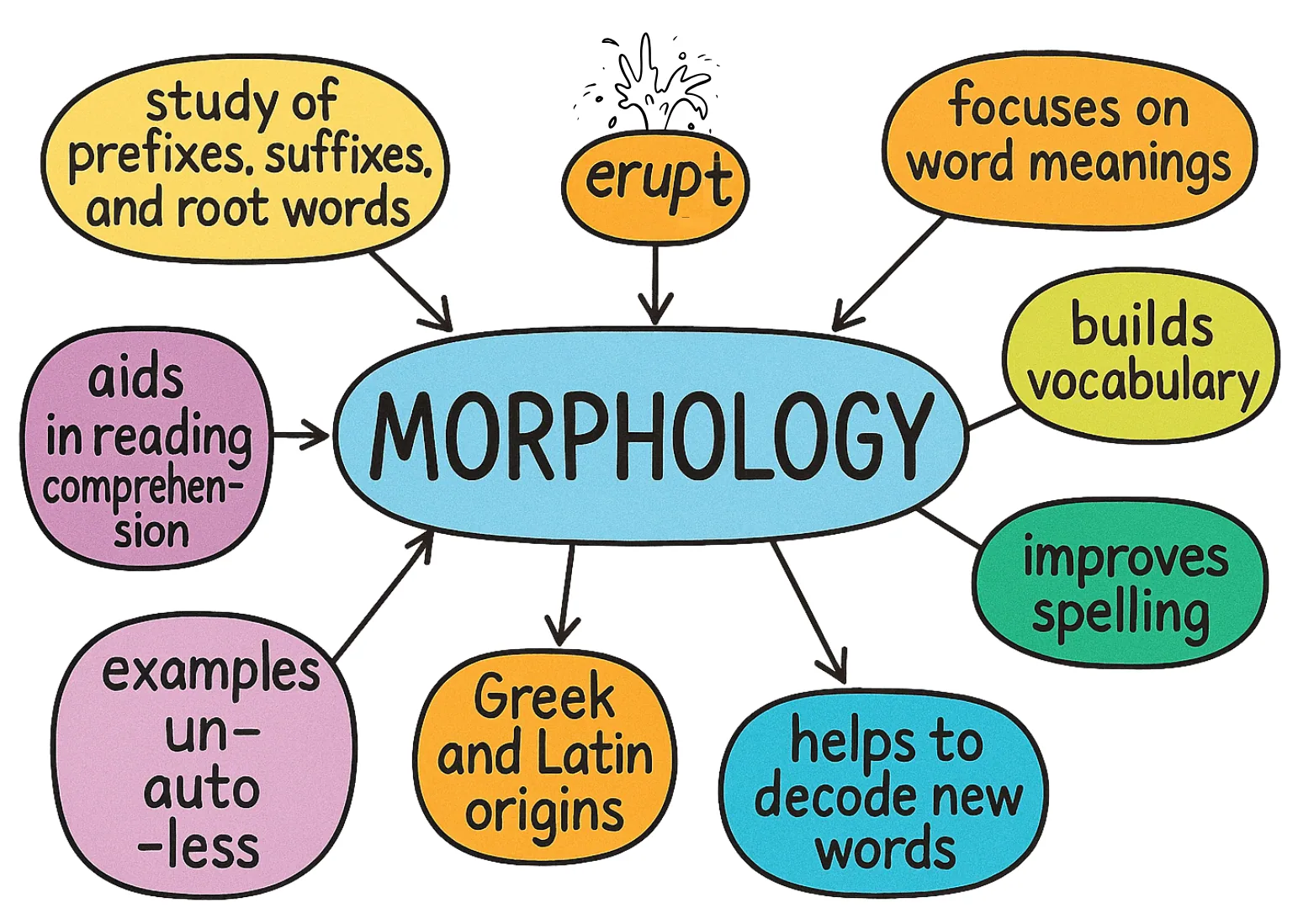
High-quality morphology instruction:
-
Supports reading of multisyllabic words
-
Strengthens spelling patterns (think: interrupt vs. eruption)
-
Bridges word recognition and comprehension
-
Improves writing precision through word choice
In other words, it’s not optional—it’s foundational.
Best Practices for Morphology Instruction
Research and classroom-tested practices agree: effective morphology instruction in upper elementary is:
1. Explicit
Teach one affix or root at a time. Define it. Model how it combines with other word parts. Use example words and non-examples. Don’t assume students “sort of know” what pre- means.
Try introducing one new root each week. This Root of the Week resource is perfect for 3–5 minute warm-ups and spiraling review. See more about the routine here.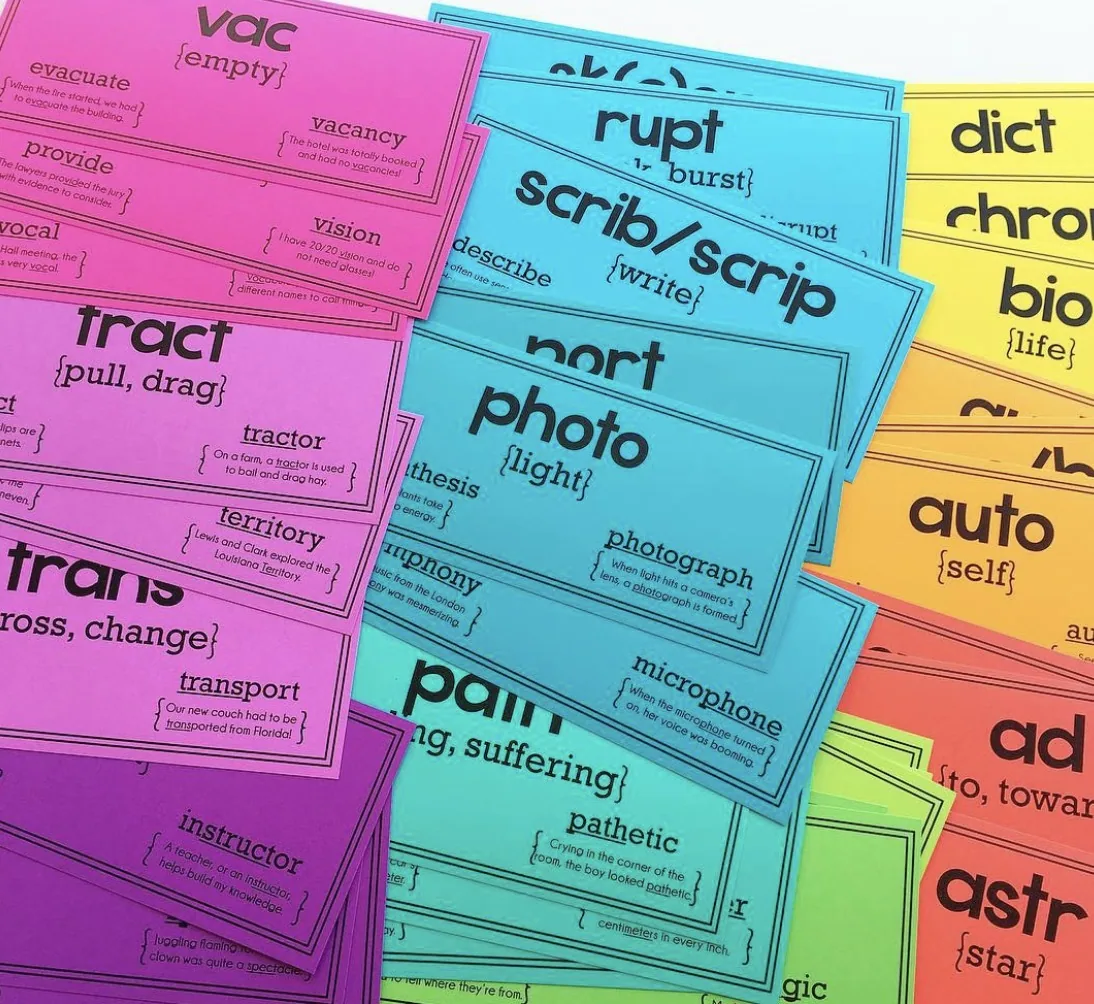
2. Connected to Meaning
Morphology instruction is not about memorizing prefixes. It’s about unlocking word meaning. Choose roots that connect to your content. For example, introduce val- and dom- during a government unit. 
This yearlong bundle organizes instruction by theme, making cross-curricular integration seamless. 
3. Practice-Rich
Students need repeated exposure and application. Word building, sentence writing, vocabulary mapping, and word detective tasks build fluency. Use Morphology Puzzles for independent or small group practice and Sorts to support hands-on engagement. 
4. Cumulative
Revisit and spiral previously learned morphemes. Language builds on itself. As students learn that rupt means “break,” they should revisit it again in new contexts (disrupt, corrupt, bankrupt). Anchor walls, student journals, and card sorts are excellent tools for keeping roots alive year-round.
Getting Started (Even If You’re Brand New to Morphology Instruction)
Start small. Pick 10–12 roots and affixes to teach over the semester. Post them. Use them. Spiral them. You don’t need to overhaul your literacy block, just weave morphology into what you’re already doing.
And if you want to jumpstart planning?
-
Use Root of the Week for easy morning work or bell ringers
-
Grab the Morphology Scope & Sequence Bundle to map out the year
-
Pull in puzzles, games, and sorts to make word work and reading centers meaningful and independent
Final Word
Morphology instruction in upper elementary is more than vocabulary…it’s access. It helps students decode the language of science, math, literature, and beyond. It builds word awareness that empowers students to learn independently.
If you’re ready to help your students stop guessing and start understanding, root-based instruction is the next right move. It’s not a trend. It’s a foundational shift in how we teach kids to think about words.
Let’s teach students how language works, from the inside out.