

Place value misconceptions often show up in small moments during math instruction.
You write two numbers on the board:
43 and 34.
A student says,
“43 is bigger because 4 is bigger than 3.”
Another student begins recounting both numbers.
A third student just stares at them.
If you teach first or second grade, you’ve probably seen this moment.
And it’s confusing because students often look like they understand place value on paper. They can build numbers with base ten blocks. They can identify tens and ones. They may even say “3 tens and 4 ones.”
But when they need to reason with numbers, something breaks.
This isn’t carelessness.
These moments are often the first signs of place value misconceptions, especially when students are still learning to trust tens as units.
Place value understanding develops in layers.
Students may learn to name tens and ones, but that doesn’t mean they see ten as a unit that can stay together while they think.
When that unitizing isn’t stable, students return to the strategy that has always worked for them:
counting by ones.
Many place value misconceptions appear when students need to:
These moments reveal whether students truly see tens as units or whether they still rely on counting to feel sure.
Here are five signs that students are still learning to trust tens.
You might hear:
“43 is bigger because 4 is bigger than 3.”
Students are reading digits as independent numbers instead of recognizing that the 4 in 43 represents four tens.
When students trust tens, comparison becomes simple.
Three tens is less than four tens.
No counting required.
You give a student two tens rods and four ones.
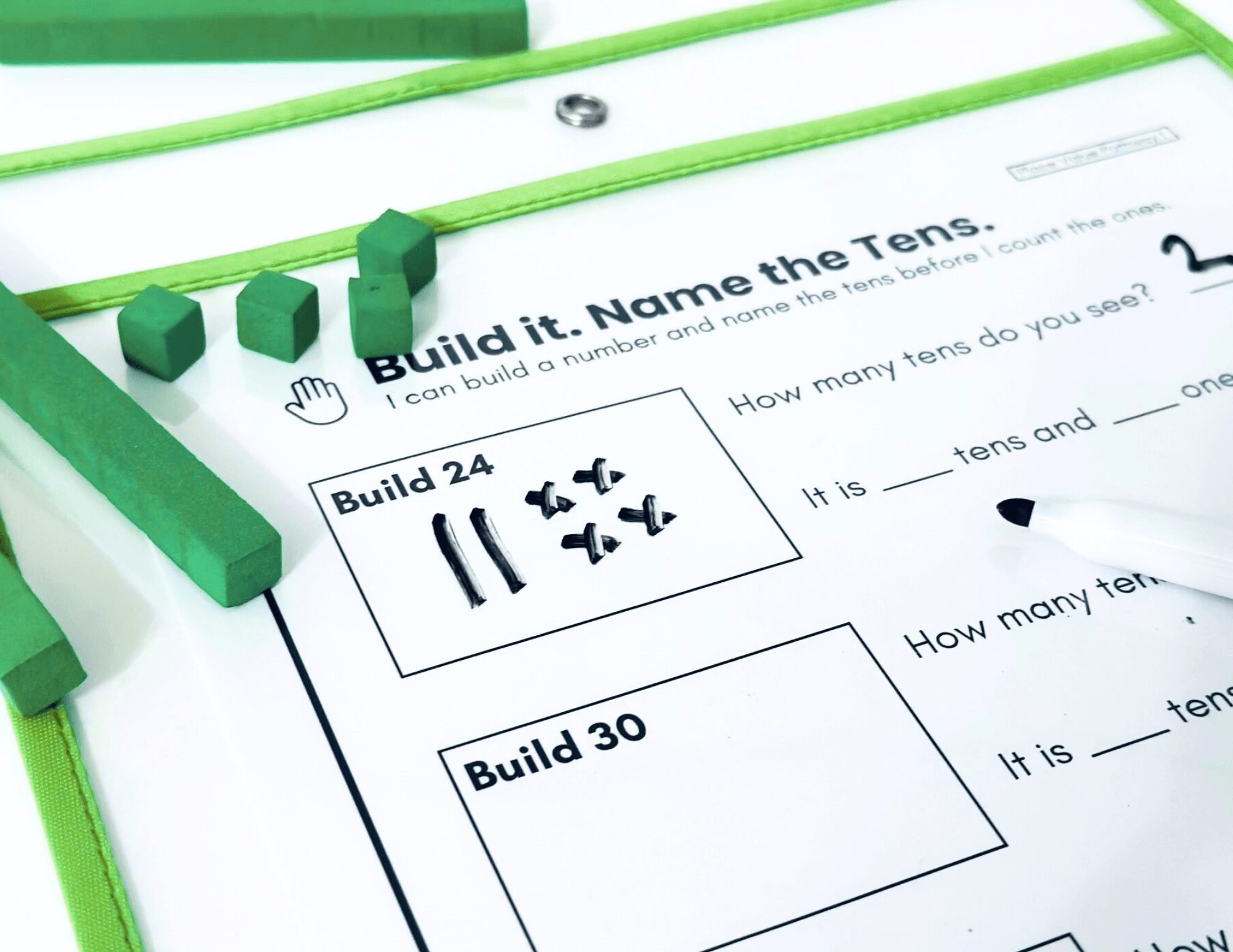
Instead of saying 24, they begin counting every piece.
This tells us they still see the rods as collections of ones rather than units that stay together.
Trusting tens means recognizing that a group of ten does not need to be broken apart to understand its value.
Many students can determine which of two numbers is larger but struggle to order several numbers from least to greatest.
Ordering requires students to hold multiple quantities in mind at once.
When tens are not stable units, students often revert to recounting each number.
When asked to represent 24, some students will draw twenty-four individual circles instead of two tens and four ones.
This shows they are still relying on counting rather than grouping.
Grouping numbers into tens and ones helps students begin to see the structure of the base ten system.
Charts are useful tools.
But when students cannot reason about numbers without referencing a chart, it often means the structure of the number system hasn’t stabilized yet.
Students need more opportunities to build numbers, compare numbers, and reason with tens as units.
If you are seeing these signs, your students likely do not need more worksheets or more comparison practice.
They need more opportunities to interact with the structure of numbers.
That means giving students time to:
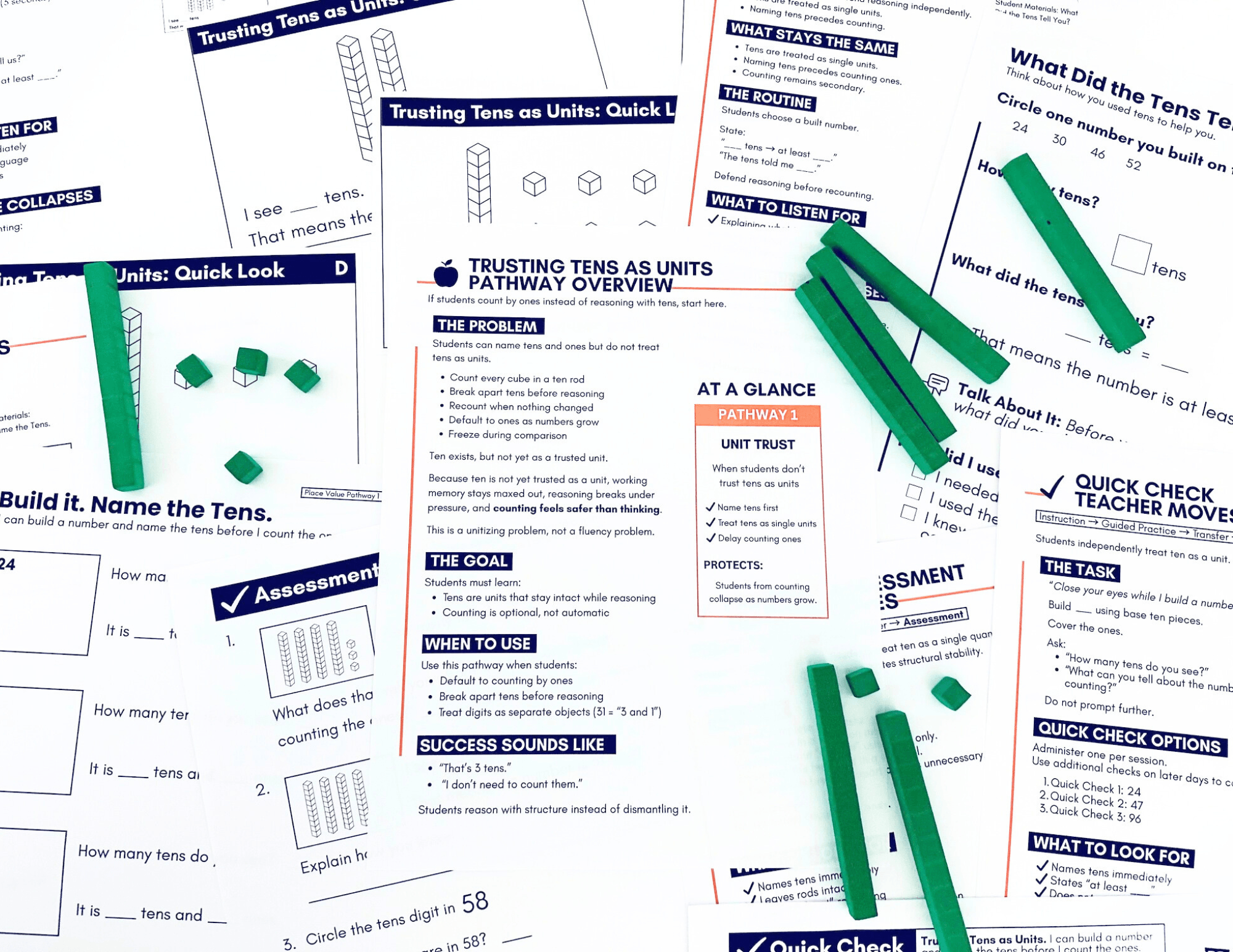
When students return to these structures again and again, something shifts.
They begin to rely on grouping instead of counting.
And when that shift happens, everything becomes easier.
Comparing numbers becomes faster.
Mental math becomes more efficient.
Students stop counting every cube to feel sure.
Over time, I started noticing that these breakdowns weren’t random.
Students were getting stuck at predictable stages of place value understanding. These predictable patterns are some of the most common place value misconceptions teachers see in first grade.
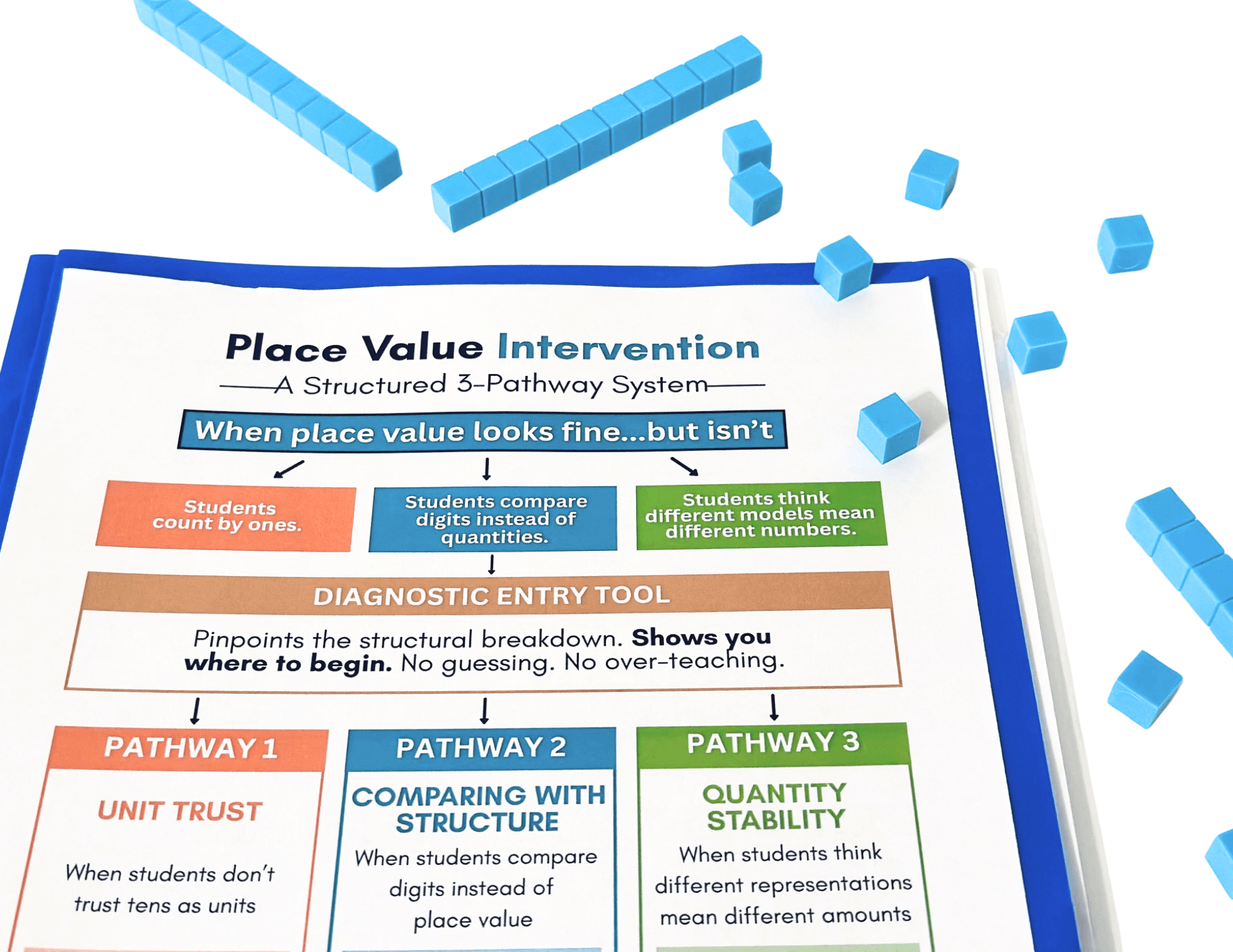
That realization led me to create Place Value Pathways.
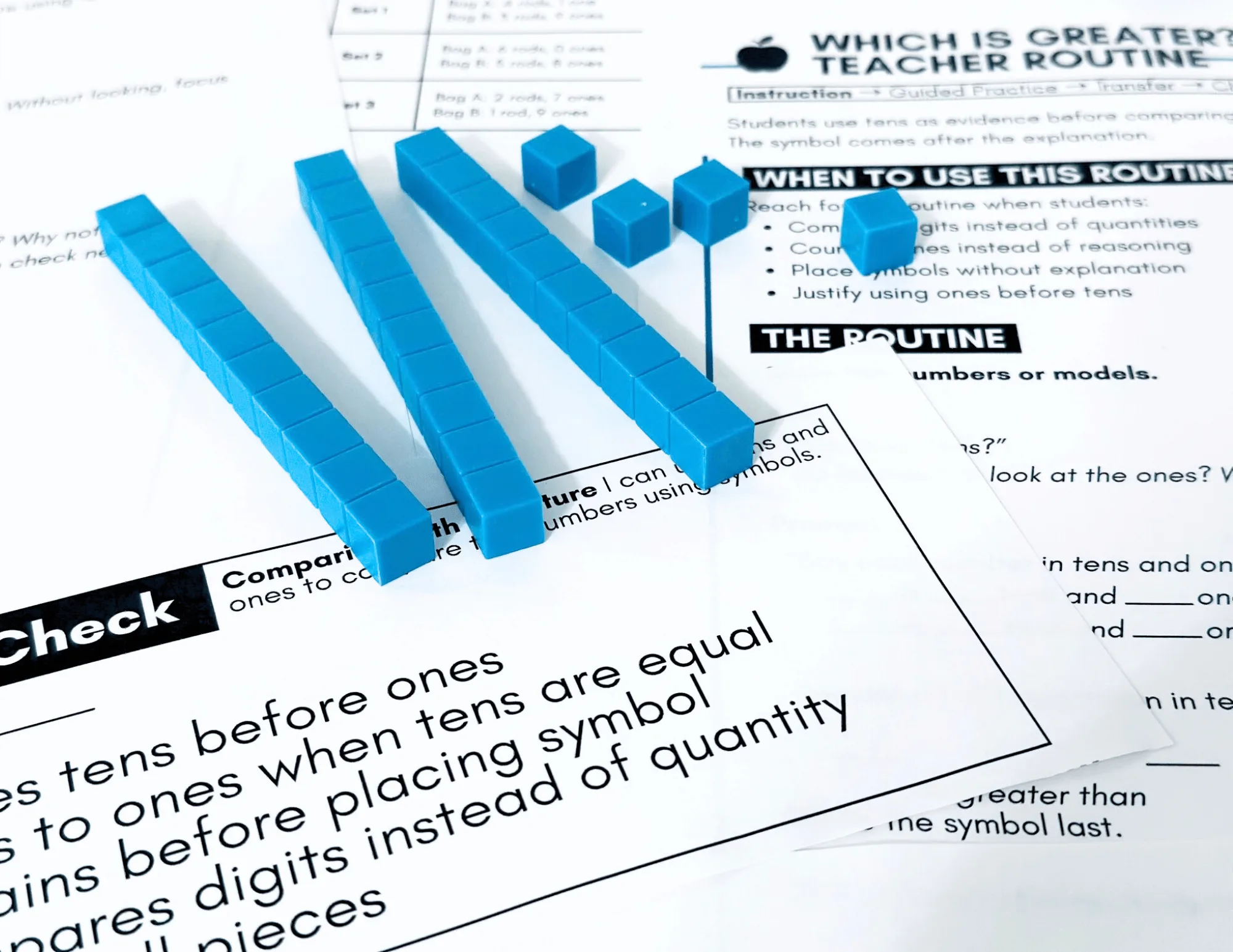
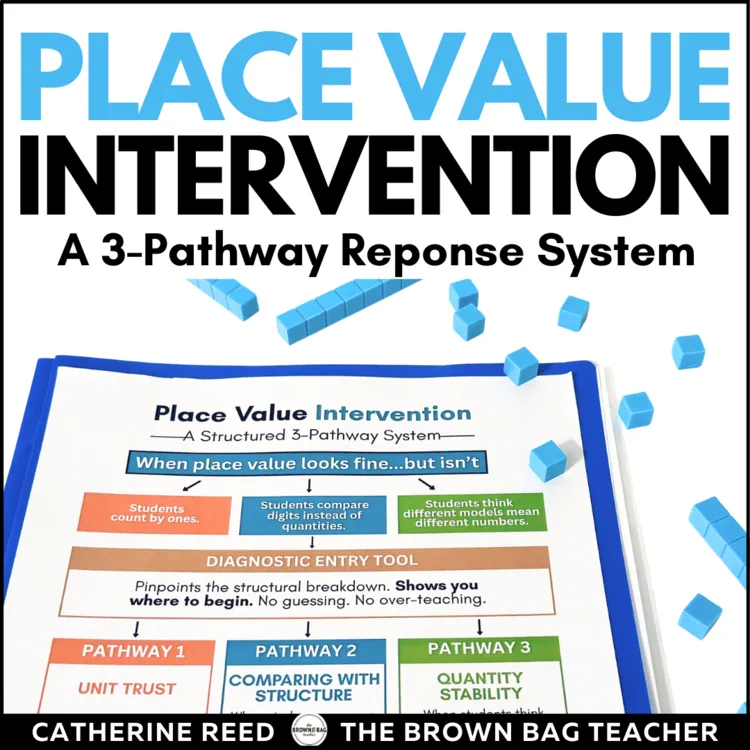
Place Value Pathways is a structured intervention system designed to help teachers respond when place value breaks down.
The system focuses on three critical shifts:
• trusting tens as units
• comparing numbers using place value structure
• recognizing that the quantity stays the same across representations
Inside the pathways, students engage in short routines that require them to build numbers, compare quantities, and reason with tens and ones.
These routines help students rely on structure instead of counting.
When students begin to trust tens as units, the number system starts to make sense.
Comparisons become easier.
Mental math becomes more flexible.
And students begin to see numbers as groups that work together, not just collections that need to be counted.
Helping students make that shift is one of the most important steps in building fluent mathematicians.