

As a teacher, watching other teachers in action is the most valuable Professional Development I can have. I love seeing other professionals in their happy place and learn from their classrooms. Realistically, guest teachers are expensive, our schedules are too important, and sub plans take TOO long to write. So, as teachers, we turn to alternative methods to build our professional networks – blogs, Instagram, Facebook, Pinterest, etc. Today I’m sharing about how and why I use Twitter in my 1st grade classroom!

While I do have a Twitter account through my blog (@MsWsClassroom), I’m pretty intentional in setting blog/classroom boundaries. To protect my 23 beautiful 1st Graders, I have a separate account for my classroom and it’s one I don’t share at The Brown Bag Teacher. At the beginning of the year, I have families give permission for their child’s face and work to be shared in this way. Although the District photography-form technically covers me, I like to be careful and have a form I can physically touch (our district forms are turned over at the beginning of the year).

On my classroom I account, I do not participate in Twitter Chats (I do that through my blog account, so families are not inundating with tweets about #edchat.) I’m also not comfortable allowing my 1st graders to Tweet throughout the day. I know many of you 1st grader teachers are, and I am so happy for you (go you!!). Still, it’s not in the cards for my classroom and that’s okay!
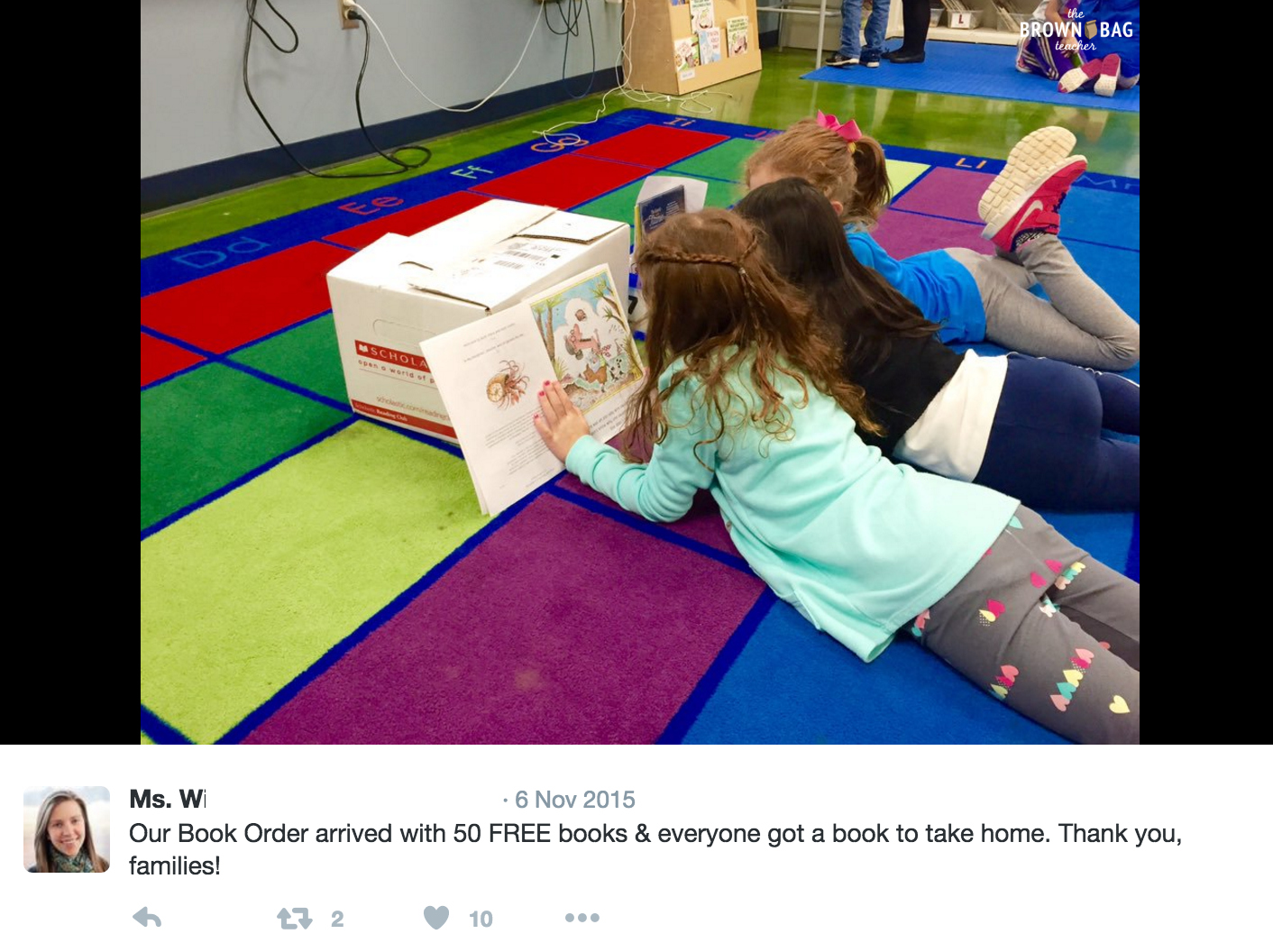
Although I do love sharing live snapshots of our classroom, the top reason I tweet is to connect with other first grade classrooms. There are 14 elementary schools in my District and between schools there are only little pockets of collaboration or communication. As classrooms following the same scope and sequence, Twitter allows us to see what’s actually happening from other 1st grade classrooms. What does there student work look like? What was their math mini-lesson about on Tuesday? How do they celebrate student success?
Some of my favorite emails are the ones from other 1st grade teachers in the district that say, “Hey! I saw on Twitter that you were ____________. Would you mind sharing it or telling me more about it? I think my 1st graders would really like it.”

In real-time, without sub plans, I’m able to connect with teachers and I am longer teaching on my island. Friends, there is an incredible beauty and reassurance in that.
There are about 12-15 teachers who tweet in our school (our principal included) and I love sneaking-a-peek inside their classrooms. Plus, Twitter makes it SO easy to see something and then brag on a coworker. There are awesome things going on in our building and I love having the chance to see these things and praise them.

Quite simply, Twitter is free, positive PR – for our school and district. Education is burdened with so much negativity, and Twitter gives me to power to say –
There are awesome things happening in this classroom. We are a family. We are learning. We are proud of our hard work.
We often have visitors in our school, and it’s amazing the number of times I’ve heard – “Oh, I follow her on Twitter. I’ve seen her classroom before.”

So friends, tell me – is Twitter in your repertoire of teaching tools? Do you use it for professional development, quick hashtag searches, and/or a way to connect families? Are there any favorite #hashtags I should be checking out? I’d love to hear your thoughts, ideas, and questions!


4 Responses
Twitter is great for plcs!! I join in on a couple of different chats a week. There's even been a few workshops I've watched on periscope. SUCH an underutilized tool.
I love how you're connecting with parents this way! I need to find an effective way to reach all my families 🙂
sounds like I need to join twitter
Have you tried using the Class Story/School Story feature of Class Dojo? I absolutely love this app and they're updating in July to include Student Story pages that act as online portfolios. I'll have to check out twitter as well–never thought about it for teaching hashtags!
I ever thought of using Twitter to share real-time learning. LOVE this idea!