Starting Number Talks in the first weeks of school can be a game-changer for both students and teachers. It’s not just about solving math problems—it’s about building a classroom culture where every student feels seen, heard, and safe to share their ideas. As students build number sense, they learn that numbers are made up of parts that can be broken apart and put back together in flexible ways.
These first 10 days lay the groundwork for everything to come: calm transitions, clear expectations, and authentic math conversations. Here’s how to think about them and what to focus on as you build your routines. 
Why Start the Year with Number Talks?
Number Talks are short, daily math routines (about 10–15 minutes) where students solve problems mentally and share their strategies out loud. (Read more about Number Talks in blog post here.) They’re an opportunity to see math as a language, not just a set of procedures.
In these talks, students learn to:
-
Explain their reasoning using math language
-
Listen respectfully to classmates
-
Make connections between strategies
-
Develop flexible thinking and confidence
For teachers, the first 10 days are a chance to set expectations for how math conversations work and to build the trust that makes sharing feel safe. 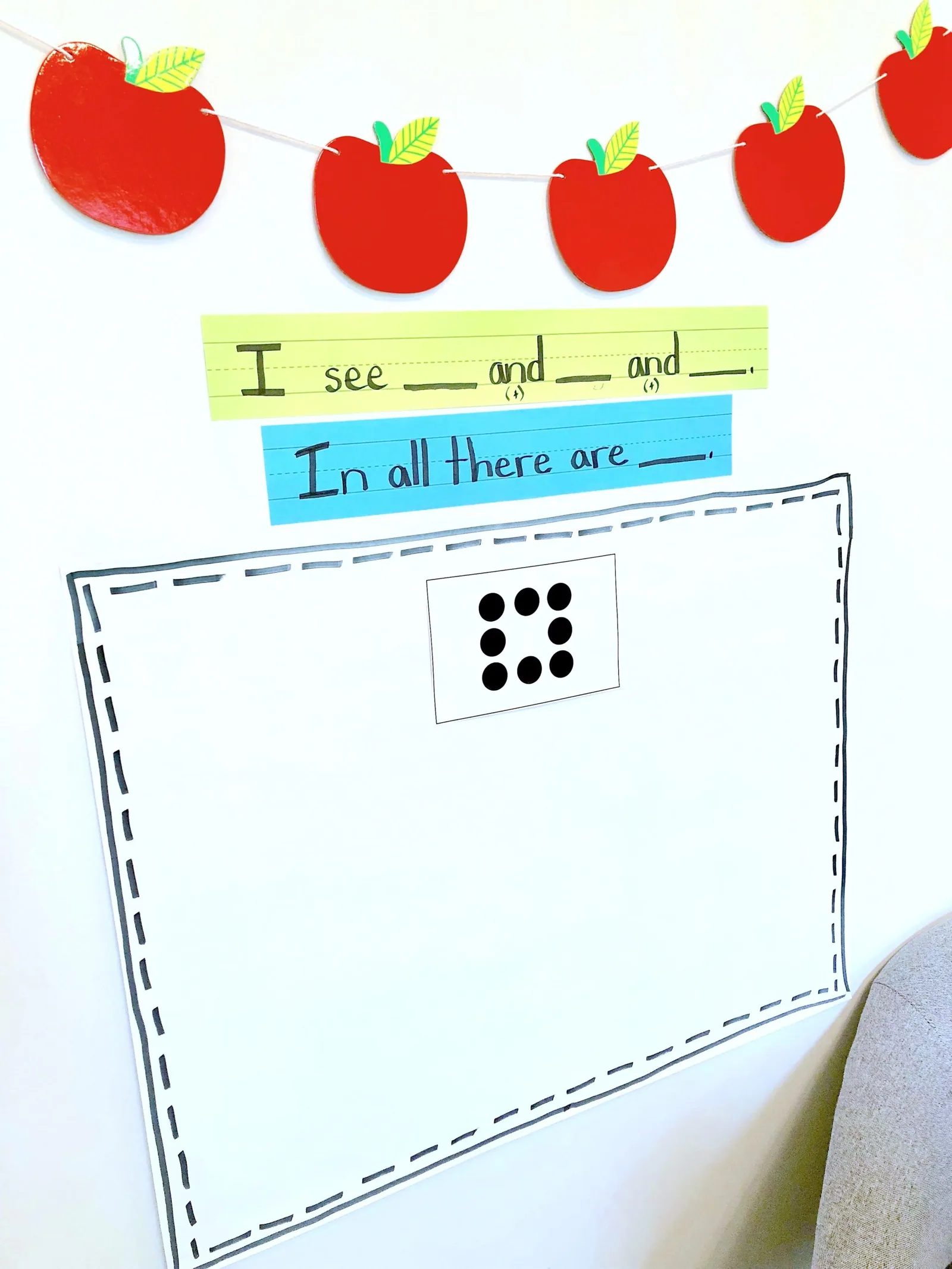
Day 1–3: Establishing Routines and Quiet Signals
The first days of Number Talks are all about routines and community. How do students come to the carpet? Where do they sit? How do they show they’re ready?
This is where silent signals come in—thumbs up for an idea, additional fingers for more ideas, a building fist to add on to a friend’s idea. These hand signals are powerful: they allow every student to participate, even if they’re not ready to speak out loud.
💡 Quick Tip: Practice silent signals with low-stakes questions at first. For example:
“What’s your favorite fruit? Show me your thumbs up when you have an idea.”
Practicing the routine with something silly can help students feel more confident when it’s time for math!
Day 4–6: Introducing Reasoning and Sentence Stems
Once students are comfortable with the physical routines, shift the focus to explaining their thinking. In these early days, the math tasks are often simple—dot patterns, finger images, or ten frames—but the real work is in getting students to talk about what they see and how they see it.
Using sentence stems like “I agree with ___ because…” or “I know ___ so I could…” gives students a framework to make their thinking clearer. These sentence stems are especially helpful for younger learners or those who are still developing language skills.
💡 Quick Tip:
Post these sentence stems on the board or carpet area so students have a visual reminder during discussions.
Day 7–10: Spotting Patterns and Deepening Conversation
By the second week, the routines are feeling familiar. This is the perfect time to introduce more complex math ideas like doubles, near doubles, and using known facts to solve new problems.
Students start noticing patterns in number strings and using what they know to find new sums or differences. Turn & Talk routines become important here too—students share strategies with a partner before sharing with the group, giving every child a chance to practice talking math.
💡 Quick Tip:
Use prompts like:
- “What do you notice about these three problems?”
- “Did anyone see a pattern that helped them?”
- “When ___ said ___, it made me think…”
These prompts encourage deeper thinking and more connected math conversations.
The Power of the First 10 Days
The first 10 days of Number Talks aren’t about racing through curriculum or “getting through” the routine. They’re about teaching students that math is something we can talk about—and that how we talk about it matters just as much as the answer.
When teachers take the time to build these routines, they see:
✔️ Students who feel comfortable sharing strategies—even if they’re not 100% sure
✔️ A math community where mistakes are welcome
✔️ A more engaged, curious class—because everyone’s ideas are valued 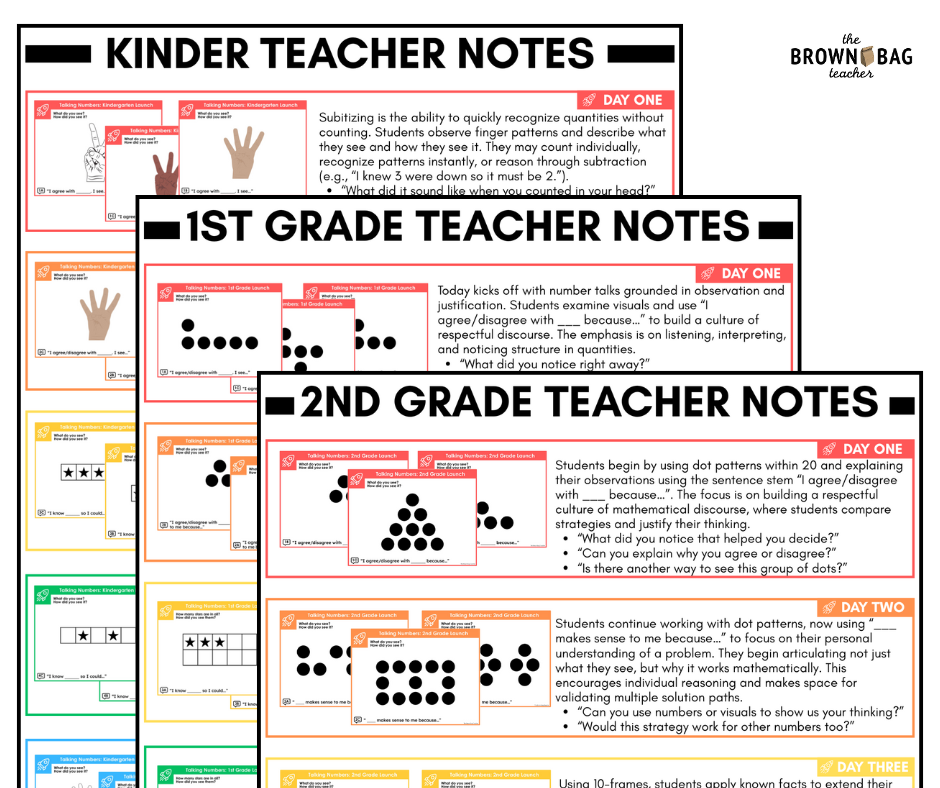
How the Number Talks Starter Pack Helps
While these ideas can be put together in any classroom, it can be overwhelming to start from scratch. That’s why I created the Number Talks Starter Pack—a 10-day, step-by-step launch plan that includes:
-
Daily plans for Kindergarten, 1st, and 2nd Grade
-
Sample teacher language and prompts
-
Visuals for silent signals and sentence stems
-
Tips for managing transitions and making math talk calm and focused
It’s a classroom-tested roadmap that takes the guesswork out of “What should I say today?” and helps teachers focus on listening and supporting students.
Starting Number Talks during the first two weeks of school is an investment in classroom community, student confidence, and mathematical reasoning. With clear routines, simple visuals, and a culture that celebrates all voices, these 10 minutes a day can transform how students see themselves as mathematicians.
Want to see how it all fits together? Click here to take a closer look at the Number Talks Starter Pack and see how it can support your routines this year.
In the meantime, to learn more about talking numbers in my K-2 classroom, click the links below: