
During math mini-lessons and Guided Math, I am ALL about manipulatives.
Base-ten blocks, Unifix cubes, Cuisenaire rods. Give me all the math things!
Especially in 1st grade, manipulatives give students a concrete way to represent numbers, explore relationships, and make their mathematical thinking visible.
But eventually, students need to begin making those connections without always having the manipulatives in front of them.
They need opportunities to visualize numbers, recognize relationships, and think flexibly about how numbers work.
That’s where number talks come in.
Number talks are short, intentional math conversations that help students build number sense and develop mental math strategies. Instead of focusing only on getting the correct answer, students explain how they see numbers, listen to their classmates’ strategies, and discover that there is often more than one way to solve a problem.
And friends, some of the BEST mathematical thinking happens during these conversations!
Whether you’re teaching kindergarten, 1st grade, or 2nd grade, number talks offer a practical way to help students move from concrete representations toward flexible mental math.
Let’s look at what number talks are, how to get started, and what these conversations can look like in a K–2 classroom.
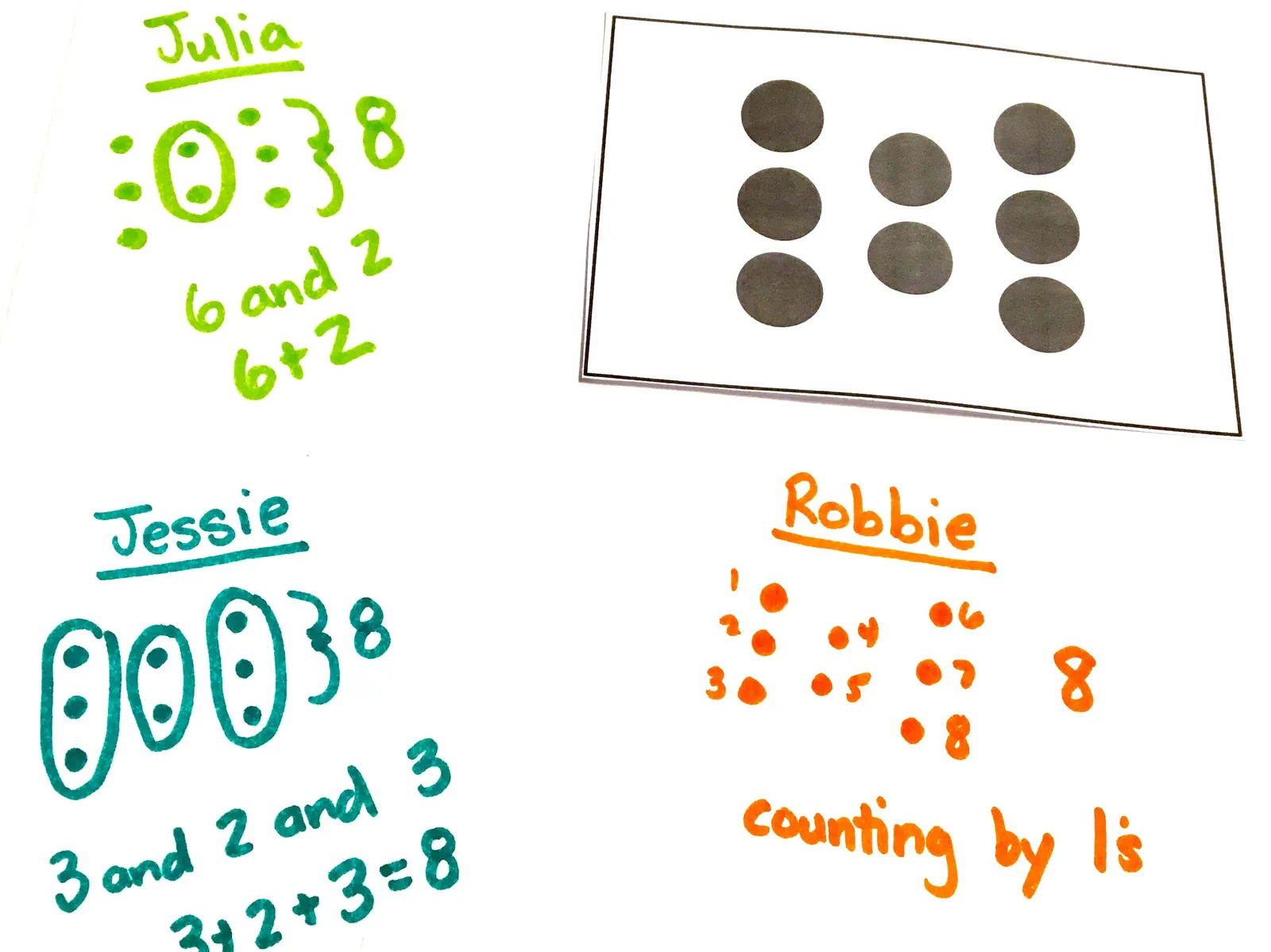
A number talk is a short, intentional math conversation, typically lasting about 5–10 minutes, that helps students develop number sense, mental math strategies, and flexibility in their mathematical thinking.
But what does that actually mean?
Number sense is the ability to understand numbers, recognize relationships between them, and use those relationships to solve problems.
Students with strong number sense don’t have to approach every problem the same way. They can break numbers apart, put them back together, recognize familiar combinations, and choose strategies that make sense for the numbers they’re working with.
During a number talk, students are presented with a mathematical problem or visual. They think about it independently, share how they approached it, and listen to the strategies their classmates used.
Meanwhile, the teacher records student thinking, asks questions, and helps students notice connections between different strategies.
The goal isn’t to find the fastest student or the quickest answer. It’s to make mathematical thinking visible.
And that’s what makes number talks so powerful in kindergarten, 1st grade, and 2nd grade.
A student might see eight dots as 6 and 2. Another might see 3, 3, and 2. Someone else might recognize 4 and 4. All three students see the same quantity, but their strategies give the class different ways to think about how eight is composed.
These conversations help students connect what they know about numbers to increasingly flexible mental math strategies.
If you’re looking to learn more about the routine, Sherry Parrish’s Number Talks: Helping Children Build Mental Math and Computation Strategies is a wonderful professional resource with examples of number talks across the elementary grades.
One of my favorite things about number talks is how easily they fit into the school day.
Whenever possible, I started our Guided Math block with a number talk. But if we were running behind? I’d squeeze one into an awkward transition or even the last few minutes of the day.
Number talks don’t require a complicated lesson plan or a long block of instructional time. Just a purposeful prompt, a few predictable routines, and opportunities for students to share their thinking.
Here’s what a typical number talk looked like in my 1st-grade classroom.
Students gathered in our common area, and I presented a problem or visual prompt. Sometimes it was a dot pattern. Other times, it was a number relationship, equation, or problem that encouraged students to think in different ways.
During traditional number talks, students worked mentally rather than reaching for manipulatives or paper and pencil. For younger mathematicians, the visual prompt itself provided an important starting point for noticing and reasoning about numbers.
I kept my number talk prompts on binder rings beside our document camera so they were easy to grab whenever we had a few minutes.

Instead of asking students to raise their hands when they had an answer, we used a quiet signal.
When students had an idea they wanted to share, they gave me a small thumbs-up against their chest. If they discovered another way to solve the problem, they could hold up additional fingers on that same hand.
I loved this routine because it gave students time to think without turning the conversation into a race to be first.
And it sent an important message: finding more than one strategy was worth celebrating!
Once students had time to think, I’d invite someone to share.
“________, what are you thinking?”
Notice that I didn’t start with, “What’s the answer?”
I wanted to hear the strategy first. How did they see the numbers? What did they notice? What relationships helped them solve the problem?
As students explained, I recorded their thinking so the rest of the class could follow along and make connections.
This was where some of my favorite mathematical conversations happened.
After a student shared, classmates could ask questions, explain what they noticed, or offer another way to think about the problem.
We practiced language like:
We also used a sign-language-inspired “me too” signal, with a thumb near the chest and a pinky pointing toward the student sharing.

It was a quiet way for students to show they were making connections with their classmates’ thinking.
And when someone shared a strategy that didn’t quite work? We treated it as an opportunity to reason together, ask questions, and make sense of the mathematics.
The goal was never to embarrass someone for an incorrect answer. It was to build a classroom where mathematical ideas could be discussed, questioned, and refined.
After discussing one approach, I’d invite other students to share how they thought about the same problem.
Sometimes students used completely different strategies. Other times, their approaches were similar, but they noticed different relationships along the way.
We compared those ideas, looked for connections, and talked about why different strategies worked.
And friends, this is where number talks really shine!

Students begin to recognize that mathematics isn’t about memorizing one way to get an answer. It’s about understanding numbers well enough to think flexibly.
Give think time. (When a student raises their hand, it tells other students they were not fast or good enough in their thinking. To account for this, students give me a sly thumbs-up on their chest to signal that they have thinking they want to share. Then, they put up multiple fingers (on the same hand) to indicate they have multiple ways to answer/solve the problem.
See a video of a number talk in action here!
If you’re new to number talks, my biggest piece of advice is simple: start small and teach the routines before expecting students to lead the conversations.
Especially in kindergarten and 1st grade, students may have plenty of mathematical ideas but very little experience explaining their thinking to a group.
And that’s okay! Talking about math is something we have to explicitly teach.
During our first few number talks, I spent time modeling what these conversations should look and sound like. We practiced gathering together, using our quiet thumbs-up signals, listening to classmates, and asking questions when we didn’t understand someone’s strategy.
We also talked about what it means to disagree respectfully and how to share an idea even when we aren’t completely sure of our answer.
Before students can have meaningful mathematical conversations, they need to know their thinking is welcome.
My first number talks of the year almost always involved subitizing and dot patterns.
Why? Because students could immediately begin noticing quantities and relationships without needing to solve a complicated equation.
For example, show students a collection of six dots and ask, “How many do you see? How do you see them?”
One student might see three and three. Another might see four and two. Someone else might recognize five and one.
Same six dots. Different ways of seeing the number!
These early conversations help students recognize that we’re not just looking for an answer. We’re interested in how they see and think about numbers.
As students become more comfortable, you can introduce other prompts that encourage them to compose and decompose numbers, notice patterns, and explore mental math strategies.
During our first couple of days, I did a LOT of modeling.
I showed students how to explain what I noticed, ask for clarification, and respond to someone else’s strategy.
Then, as students learned the expectations, I intentionally stepped back and gave them more ownership of the conversations.
That didn’t mean I stopped supporting them. I still recorded their strategies, asked questions, and helped make connections between ideas.
But the mathematical thinking belonged to the students.
And that’s the goal. We want students talking to one another about mathematics, not just waiting for the teacher to confirm an answer.
One of the easiest ways to support students during those first few weeks is to keep your number talk expectations and discussion language visible.
Anchor charts can remind students how to signal they’re ready, listen respectfully, ask questions, and explain their strategies.
Over time, those routines become familiar, and students begin using the language more independently.
If you’re getting ready to launch number talks in your classroom, I’ve included my FREE Number Talks Anchor Charts below to help you get started.
Here’s something I learned pretty quickly about number talks: just because students can solve a math problem doesn’t mean they can explain how they solved it.
Especially at the beginning of the year, students may be hesitant to share their strategies. Some aren’t used to explaining their mathematical thinking. Others know what they did but aren’t quite sure how to put it into words.
And sometimes? They just need a little more time to think!
That’s why scaffolding mathematical conversations is so important. We want to support students as they learn to explain their thinking without doing the thinking for them.
During our first few number talks, I did a LOT of modeling.
I thought aloud as I noticed patterns, made connections, and explained how I approached a problem. I also modeled what to do when I wasn’t sure about an answer or needed to rethink a strategy.
As students became more comfortable with the routine, I gradually stepped back.
The goal was never for students to repeat my strategy. It was for them to develop the confidence and language to explain their own.
Sometimes students know exactly what they’re thinking but need help getting started.
That’s where sentence stems can be incredibly helpful!
Some of my favorites included:
These simple starters gave students a way to begin explaining their reasoning without telling them which mathematical strategy to use.
And just like any instructional scaffold, sentence stems were there when students needed them, not something every student had to use forever.
Oh, the awkward silence of a number talk!
When you’re standing in front of a group of first graders and nobody is ready to share, it can be SO tempting to jump in with a hint, suggest a strategy, or just explain the answer yourself.
But some of our most meaningful mathematical conversations happened when I resisted that urge.
I’d give students time to think, revisit the prompt, and work through their ideas. Sometimes a student needed a little longer to find the words. Sometimes the class needed another opportunity to look at the numbers and notice a relationship.
Productive struggle doesn’t mean leaving students without support. It means giving them an opportunity to make sense of the mathematics before we step in and do it for them.
If students were genuinely stuck, I could ask a question, return to a visual representation, or invite them to build on something a classmate had noticed.
And if a student wasn’t ready to share aloud that day, listening and making sense of another student’s strategy was still valuable mathematical work.
One of the most important things we can do during number talks is create a classroom where students feel comfortable sharing ideas that aren’t completely polished.
When a student shares an unexpected strategy or makes a mistake, we have an opportunity to ask questions and reason together.
Instead of immediately correcting an answer, we might ask, “Can you tell us more about what you noticed?” or “Does anyone see another way to think about that?”
Over time, students begin to understand that their job isn’t to guess what the teacher wants to hear. Their job is to make sense of numbers and communicate their thinking.
And that’s when number talks become so much more than a five-minute math warm-up.
So, it all sounds great, right? But what do number talks actually look like in a K–2 classroom?
One of the things I love about number talks is that the prompts can be incredibly simple while still encouraging some pretty sophisticated mathematical thinking.
My first number talks each year almost always started with dot patterns. As students became more comfortable noticing and explaining number relationships, we explored composing numbers, representing quantities in different ways, hundreds charts, word problems, and balancing equations.
The goal wasn’t to move through prompts as quickly as possible. It was to help students develop more flexible ways of thinking about numbers.
Subitizing is the ability to recognize a quantity without counting each object individually. With larger quantities, students can also recognize smaller groups and combine them to determine the total.
And friends, dot patterns are one of my FAVORITE ways to introduce number talks!
When students look at a collection of dots, they may recognize the entire quantity immediately or see smaller groups that they can combine.
For example, in one of our number talks, students explored a triangular arrangement of ten dots.
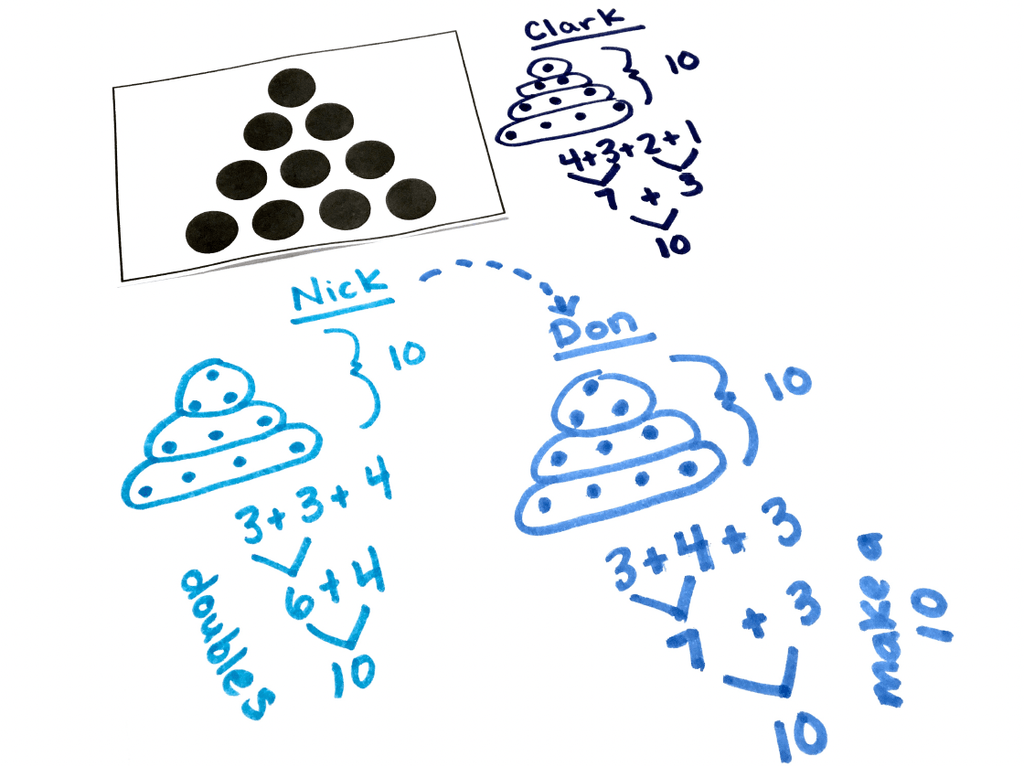
Some students saw 3 + 3 + 4. Others saw 3 + 4 + 3. The total was the same, but students noticed and grouped the dots in different ways.
Same ten dots. Different ways of seeing the number.
Instead of simply asking, “How many dots are there?” I wanted students to explain, “How did you see them?”
That’s where the mathematical conversation begins.
These quick images help students notice that numbers can be composed and decomposed in different ways. Those relationships become important as students develop addition, subtraction, and mental math strategies.
Once students begin recognizing number combinations, we can extend their thinking by asking them to compose numbers in different ways.
For example, we know that seven can be made from 4 and 3, 2 and 5, 6 and 1, or 7 and 0.
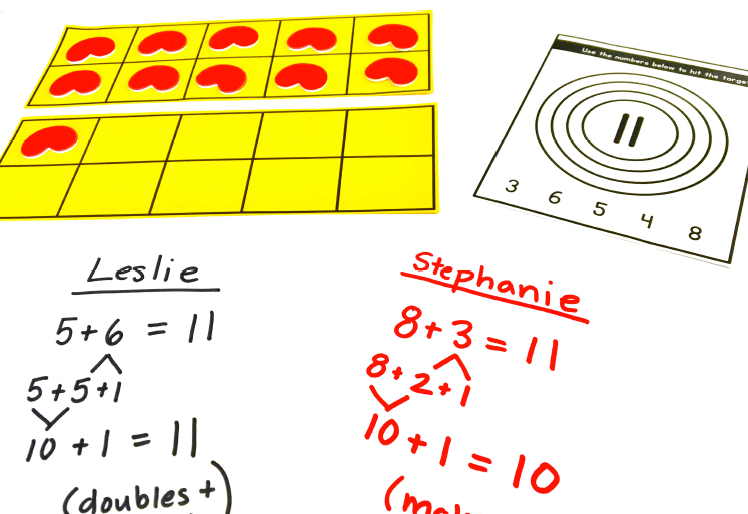
But what happens when we give students a target number and several numbers they can use to reach it?
Now students have decisions to make!
They need to consider which numbers to use, whether addition or subtraction makes sense, and how different combinations might produce the same result.
During these conversations, I love asking:
We’re moving beyond finding one correct combination and helping students reason about the relationships between numbers.
And these conversations don’t always have to begin with a target number.
Sometimes, we started with an addition problem and explored how different number relationships could help us solve it.
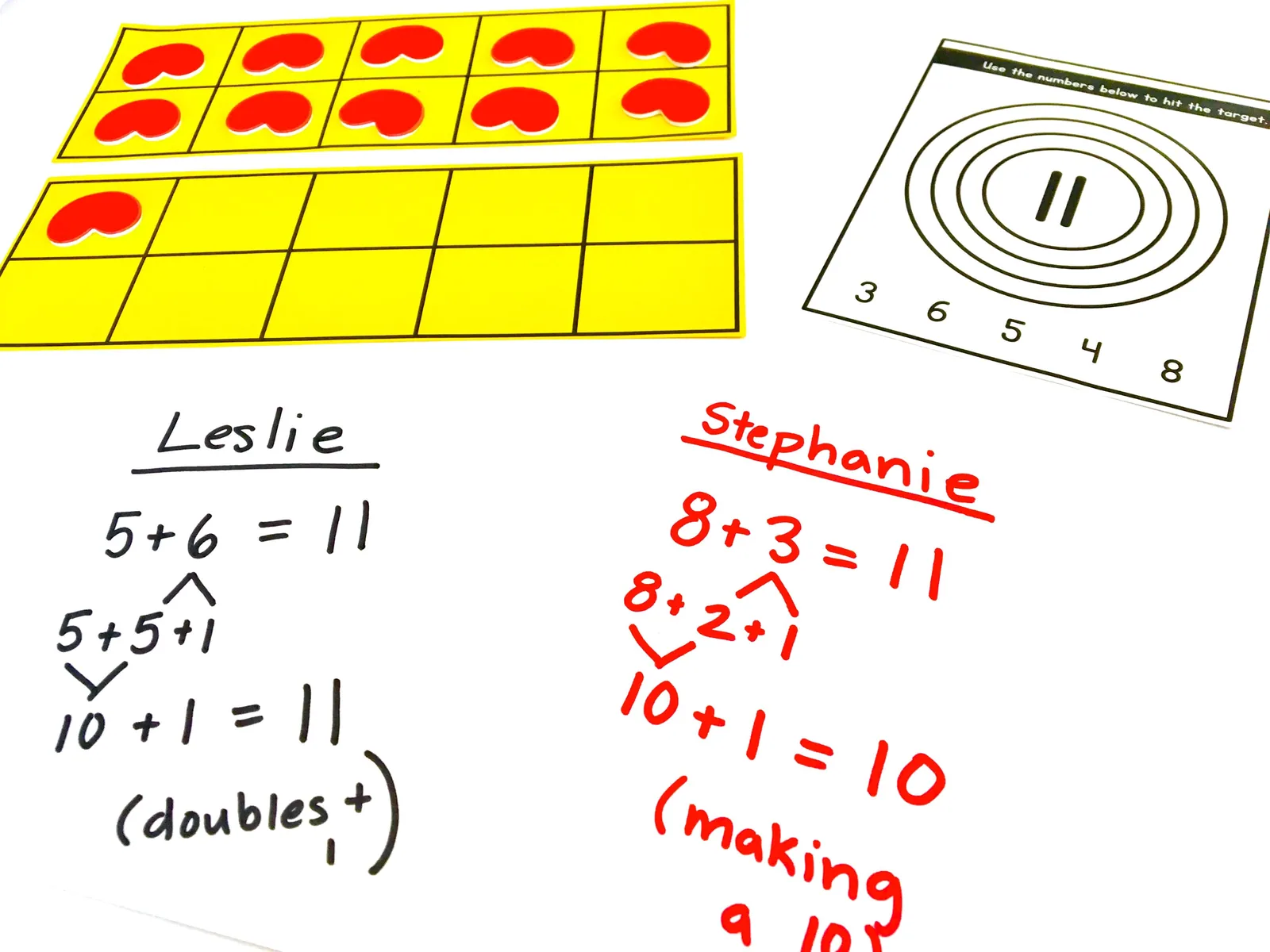
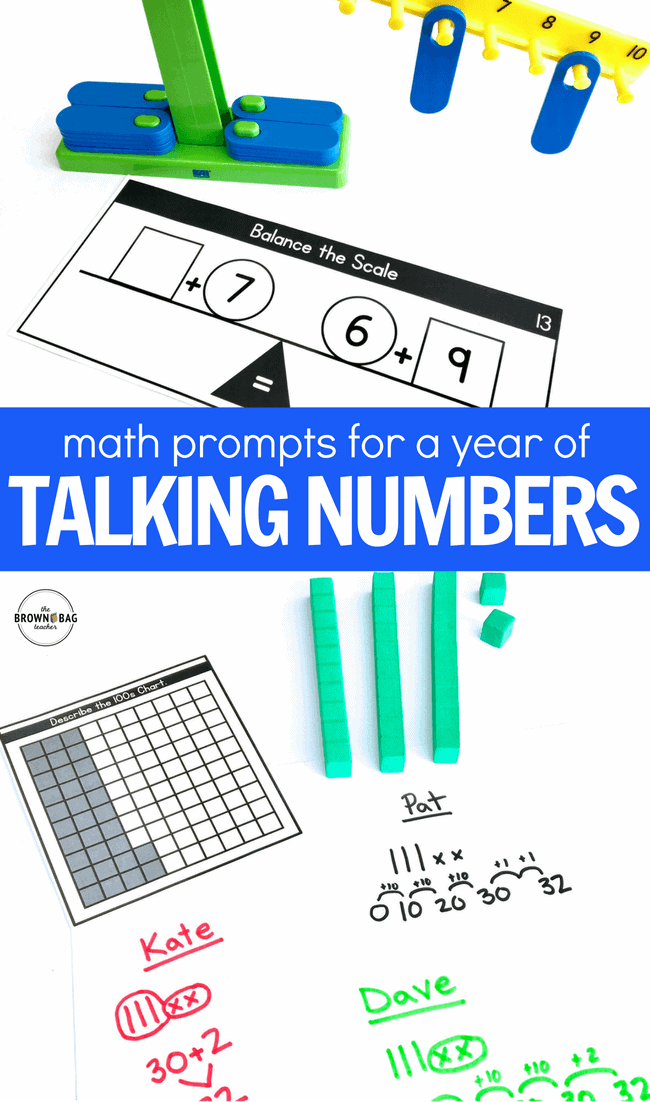
In the example below, students shared strategies for solving 5 + 6 = 11.
Leslie used a near-double, thinking 5 + 5 + 1. Stephanie decomposed a number to make ten, turning the problem into 10 + 1.
Both strategies show students using what they already know about numbers to solve something new.
And that’s exactly the kind of flexibility we want to develop!
Another favorite number talk routine is asking students to represent the same number in multiple ways.
When we first introduce representing numbers, students often rely on familiar models like ten frames, tally marks, or counting on a number line.
And those are wonderful starting points!
But as students grow, I want them to move beyond the first representation that comes to mind.
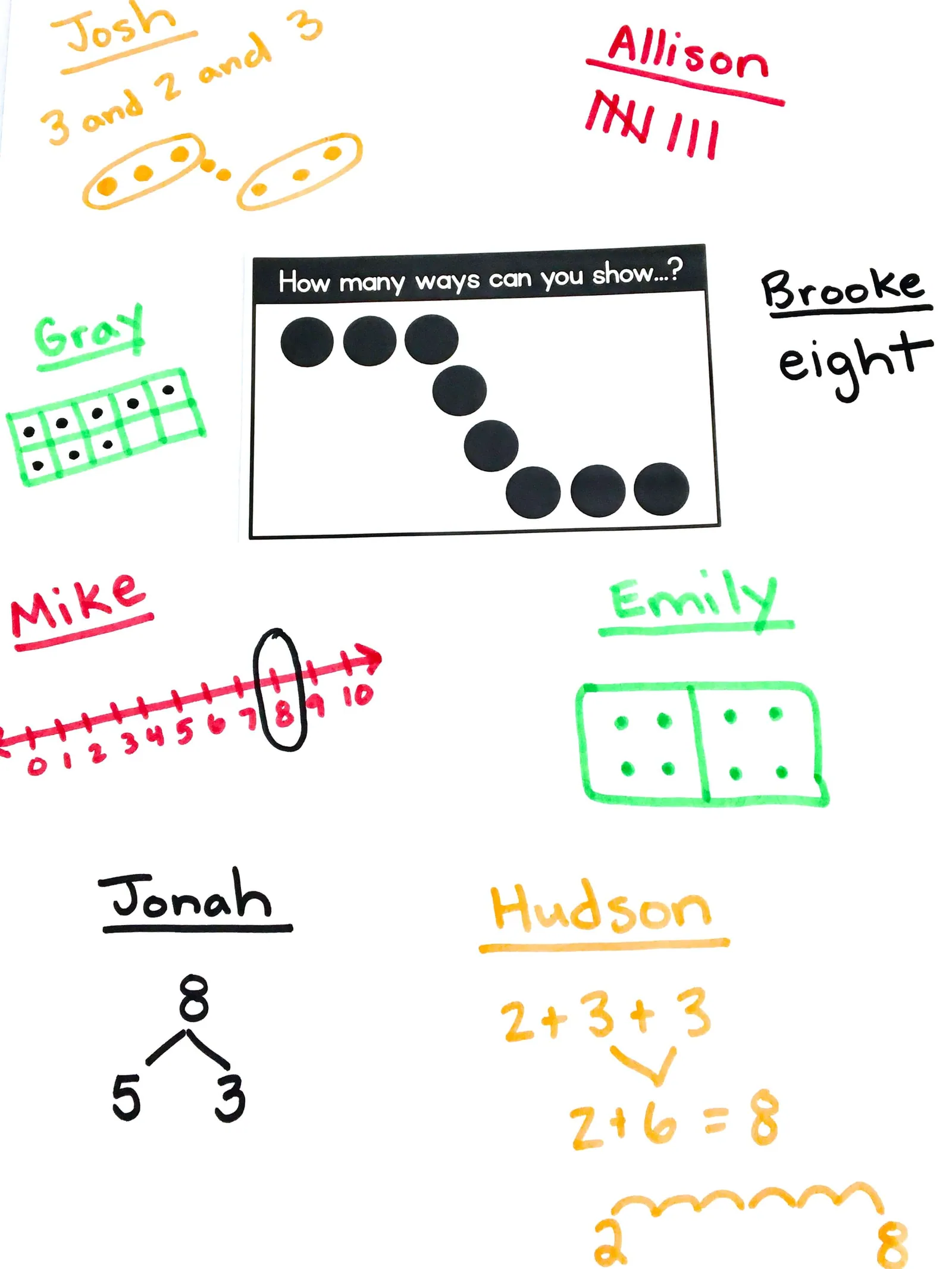
In one of our first-grade number talks, I asked students to show the number eight in as many ways as they could.
And friends, look at all the different representations they shared!
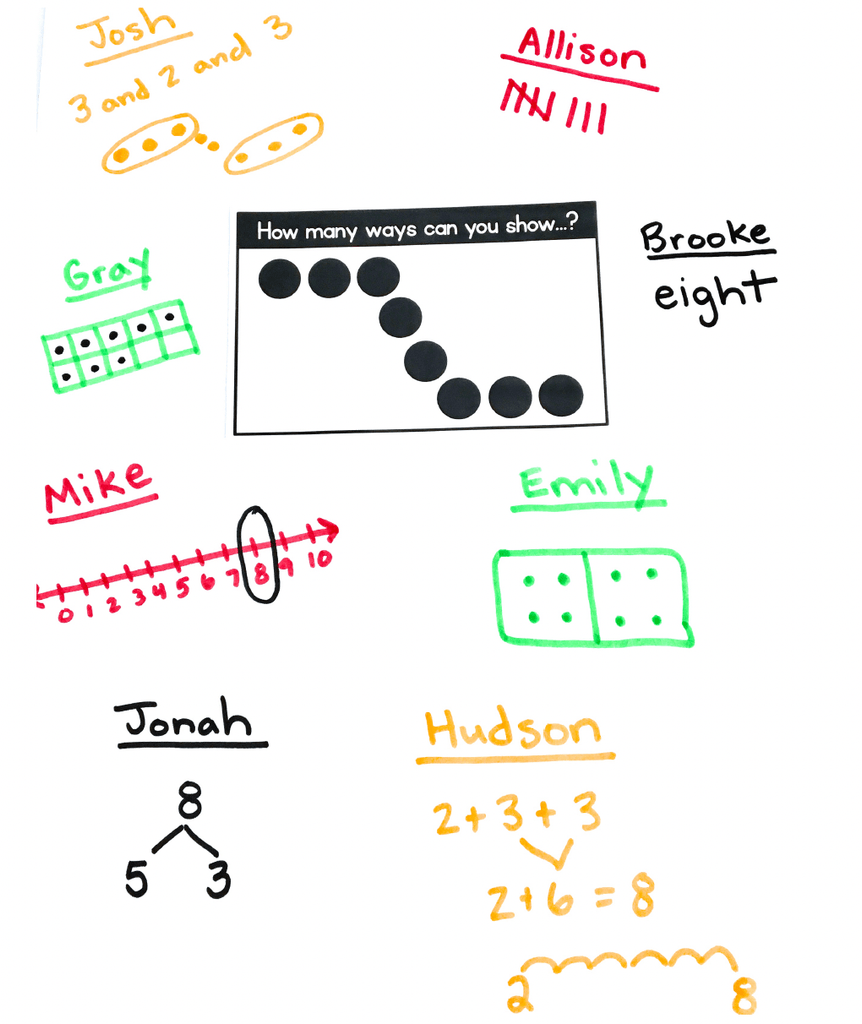
Some students used tally marks or a ten frame. Others showed eight on a number line, decomposed it with number bonds, or wrote equations to represent different combinations.
Every representation showed eight, but each one helped us notice something different about the number.
When students share different representations, we have opportunities to ask questions that deepen their understanding:
And as students become more confident, we can extend these conversations to larger numbers and more complex relationships.
For example, a student might represent 24 as two tens and four ones. Another might see 20 + 4, while someone else might think of 12 + 12 or 30 – 6.
When students can represent a number in multiple ways, they’re building the flexibility they’ll eventually use to solve problems mentally.
And that’s why these conversations are so valuable. We’re not just practicing facts or filling a few extra minutes in our math block. We’re helping students make connections that support future mathematical thinking.
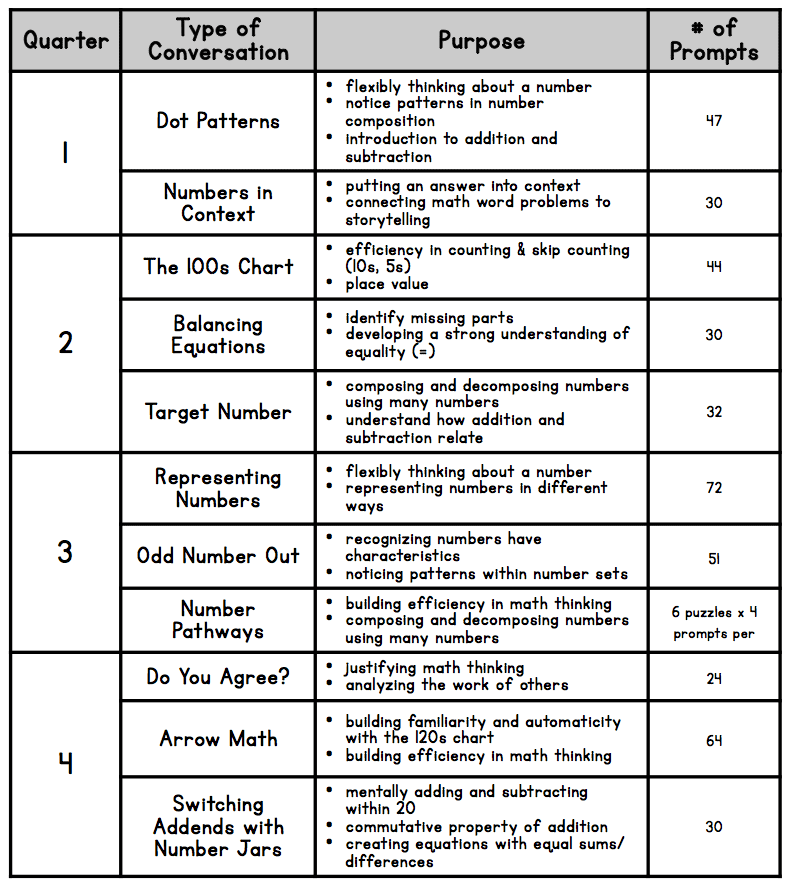
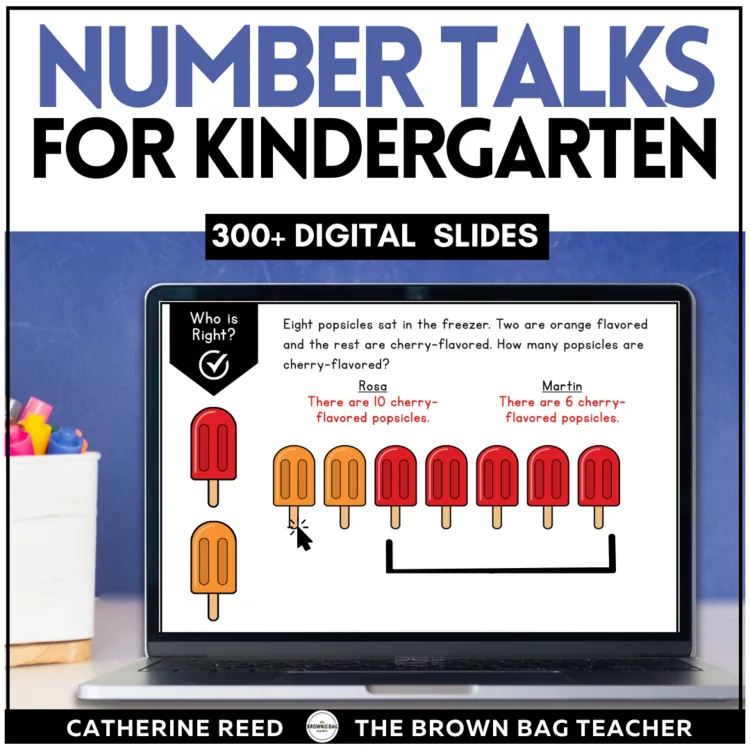
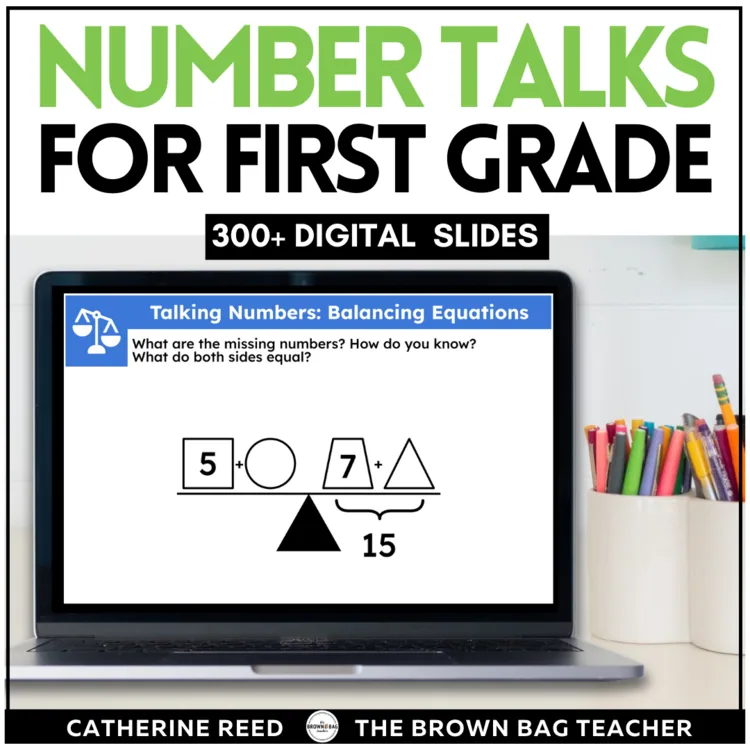
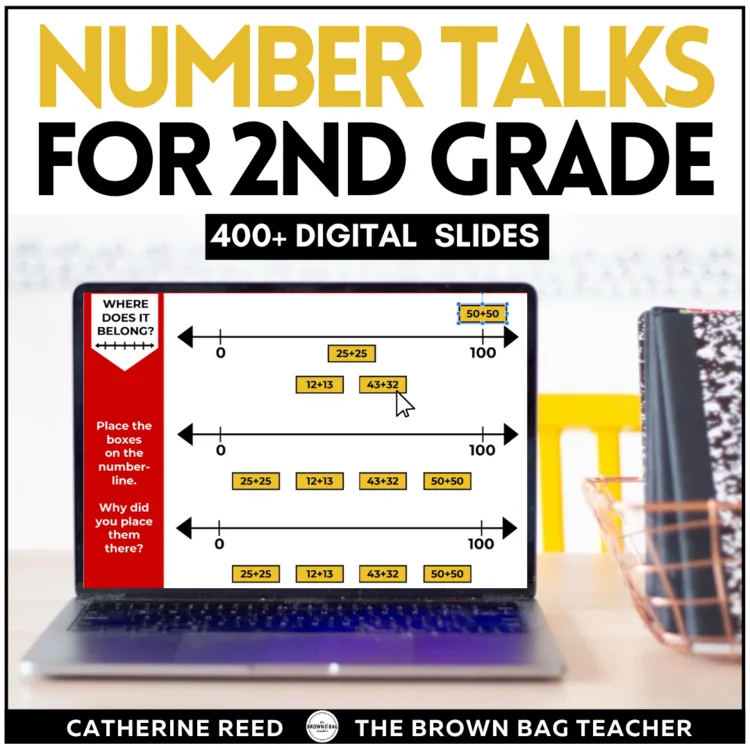
In the 2nd grade number talks, the focus is on building fluency within 20 and 100, as well as, layering skills in different ways. From missing addends, to algebraic thinking, over 400 prompts offer students dozens of chances to spiral review math skills each month.
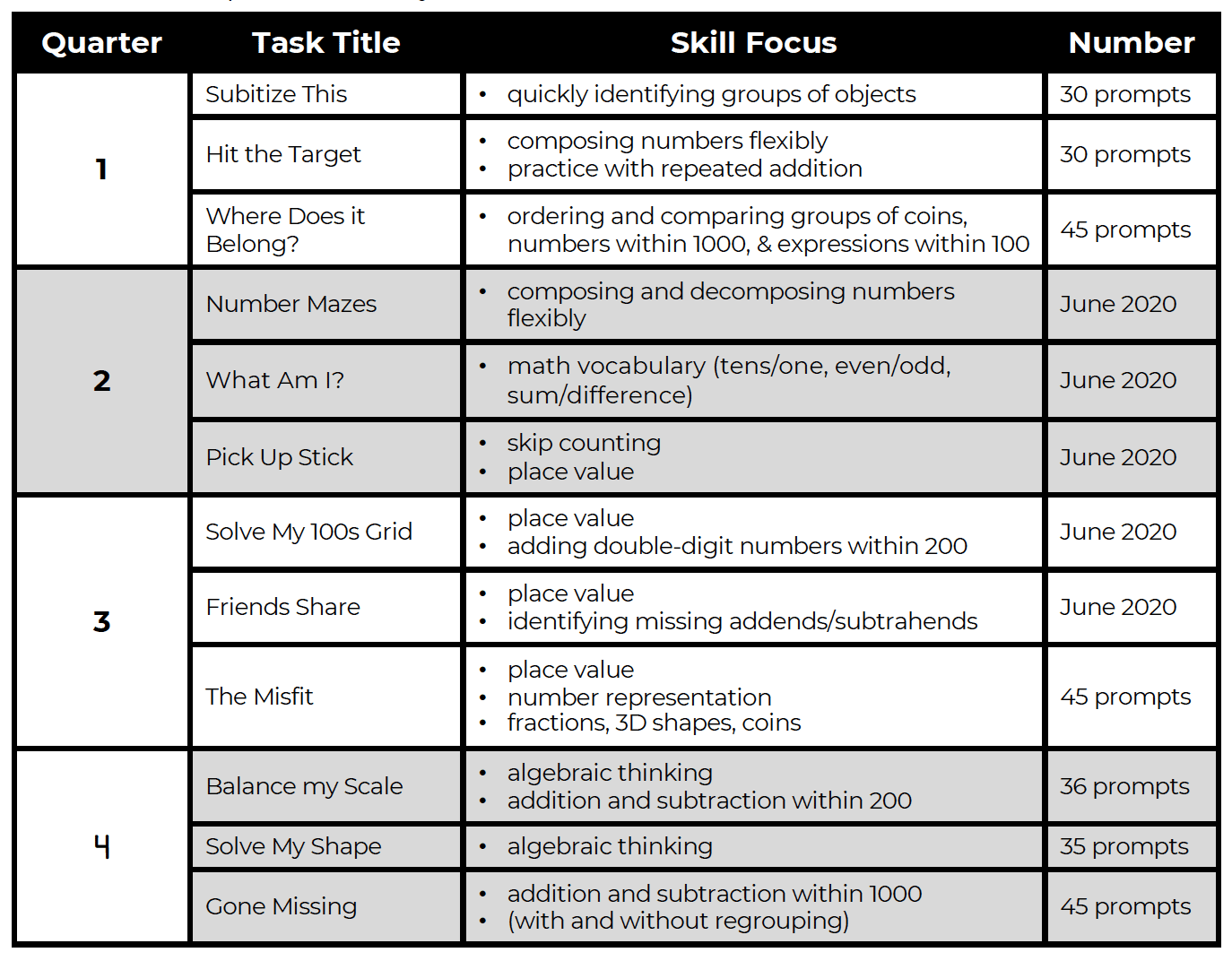
Subitizing (Kindergarten, 1st Grade & 2nd Grade) is the ability to quickly identify the number in a group of objects without individually counting the objects. It is a concrete way to explore composing and decomposing numbers. Students will see dot patterns in different ways, and that is a great thing. When showing students 6, made from a pyramid students might see 3 and 3, 5 and 1, or 3 and 2 and 1. These are all ways to build 6 and lead students to understand that numbers can be composed and decomposed in many different ways.
Flexibility in number thinking is a critical skills in beginning mathematicians. Students must understand that 7 can be made from 4 and 3, 2 and 5, 6 and 1, or 7 and 0. Below students are provided with a “Target Number” and ask students to use some of the provided numbers to hit the target. Students then have to decide how many numbers to use, which operation to use (addition or subtraction), and then, decide if number order matters. (1st Grade Prompts, 2nd Grade Prompts)
An important part of teaching primary students is to build number fluency and flexibility. Students should be able to encounter numbers in a variety of formats and engage with them in a variety of ways. During our Representing Numbers conversations (1st Grade & 2nd Grade), I encourage students to branch outside of the typical ten frame, plus one, etc. These are great strategies when we first start, but after the first few days students can build on these basic representations to develop different relationships and understanding.
If you’re interested in me emailing you some of my favorite ways to talk about numbers, sign-up here and confirm your email. Some sample number talks will appear in your inbox.
To see a LIVE Talking Numbers Prompt in action, click on the video below!
In the meantime, to learn more about talking numbers in my K-2 classroom, click the links below:

30 Responses
Is there a place where you can purchase all of the cards you have hanging on your shelves or did the come from the book you suggested. Been working on this in my 2nd grade room. Love it!
I hope you are going to make more of these cards. They are great!!
I would love to purchase a year-long set as well! I hope it is coming soon! Thanks so much!
Excellent article it is very impressive eddie redmayne fantastic beasts and informative content thanks for share us.