Guided Math in Primary Classrooms
The Daily 3 and Guided Math are a small-group approach to learning mathematics, just like we meet with students daily during Guided Reading, we meet with students as mathematicians. It is a deviation from whole-group math instruction.
Throughout the post, you’ll find Amazon Affiliate links, which means Amazon tosses a few nickels my way if you purchase something through that link, at no extra cost to you, that help keep my corner of cyber-space running and helps fund giveaways!
Guided Math Question- What Long Is Your Math Block?
Using a Guided Math format there is still time for whole-group, but you invest your efforts and resources into meeting with small-groups of students each day. Teaching 1st grade for the first time, I was using whole-group math with a single math center at the end of our math block. Then over Winter Break, our team felt like something wasn’t working. While our students were growing in math, it was definitely not at the same rate of their reading growth. So, we started to compare the 2 blocks. For reading, we use a Daily 5 model, so 80% of my instruction was in small groups during guided reading. Rather, in math, 80% of my instruction was whole group with enough time for a math center 3-4 times a week.
With small-group math, our math block does take a little longer (around 75-90 minutes), but it is completely worth it! Our math routine looks like this – Number Talks (5-7 minutes), 3 Rotations of Small Groups/Technology/Centers (17-20 minutes/each), Reflection (5 minutes).
How do you group students?
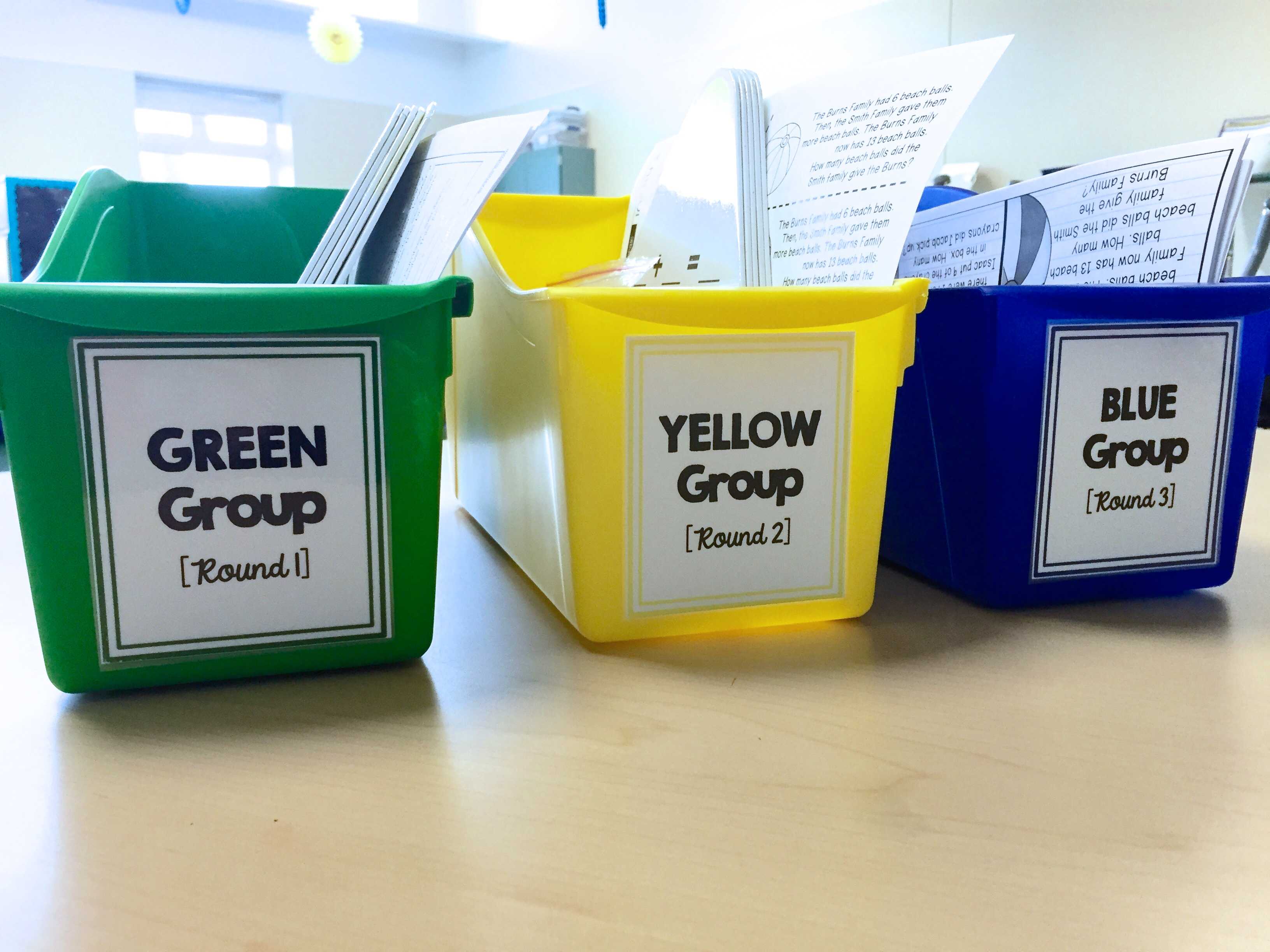
Based on our District’s Common Assessments, I group students into three math groups – green (approaching grade level), yellow (on grade level), blue (above grade level). This is the system our 1st grade team uses for reading and math and it’s fabulous! (Read more here) I always start meeting with my green group first to ensure that they are never skipped – regardless of surprise fire alarms, change in schedule, or assemblies. Additionally, I try to add 4-5 minutes of instructional time onto this group. (Grab a free editable version of this rotation board here). Every unit, these group changes change and I don’t always have one of each group. By the end of last year, I actually had 2 blue groups and 1 yellow group, which was REALLY exciting!

What Do You Teach in Small Group?
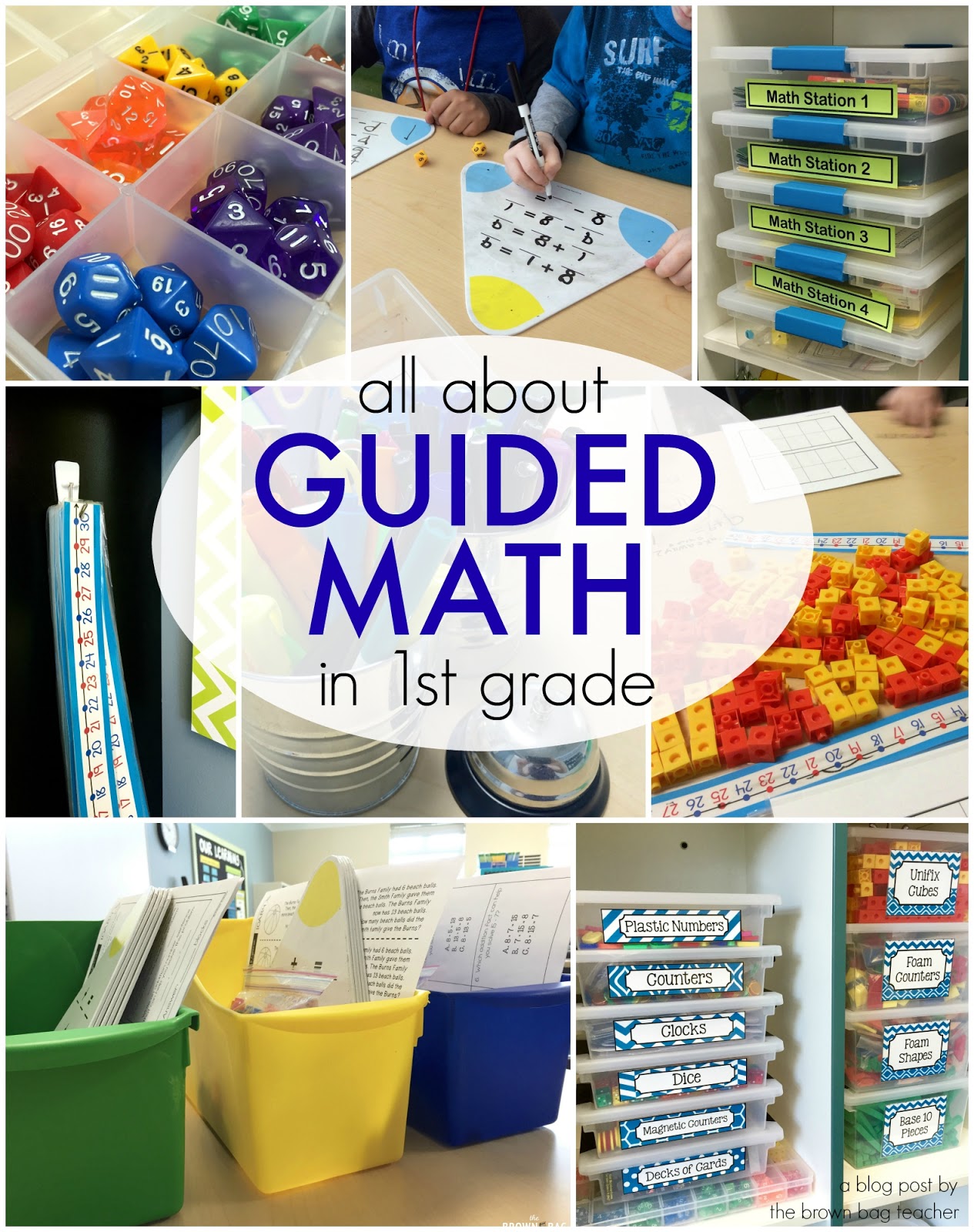
When planning and organizing for small-group math, I use color-coded library bins – one for each of my math groups. Often the manipulatives travel from bin-to-bin, but the assessments and mini-lesson materials are group-dependent. I love having my materials at an arm’s reach, and it’s easy to restock them at the end of the day.
Typically each of my groups are working on the same skill or content standard, but each group is working with the material in different, just-right ways. As math teachers, we intentionally move students using the CSA model of instruction (concrete, semi-concrete, and abstract). My highest group (blue) spends a lot more time working with the abstract; whereas my green group needs many more concrete experiences with the content.
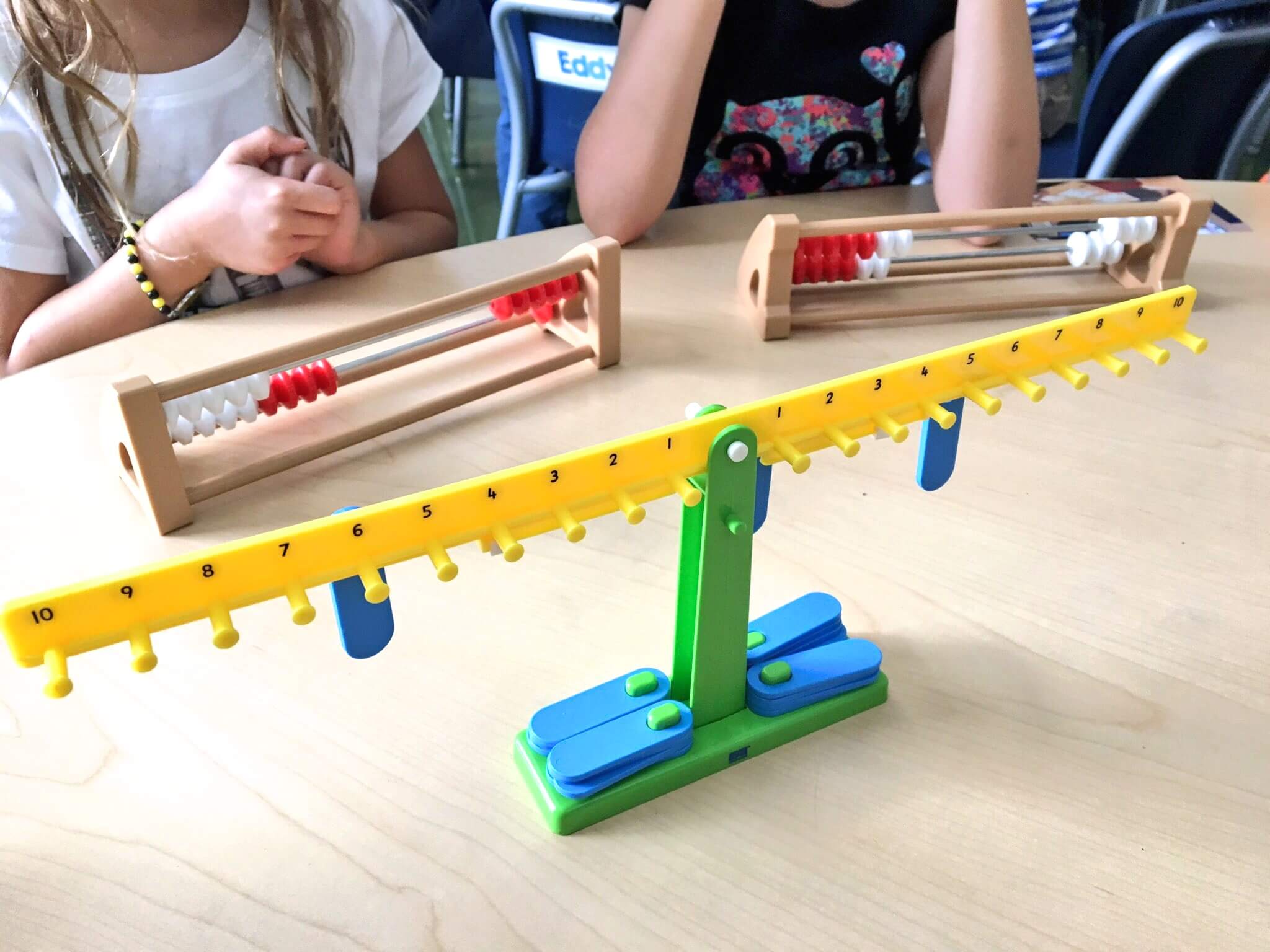
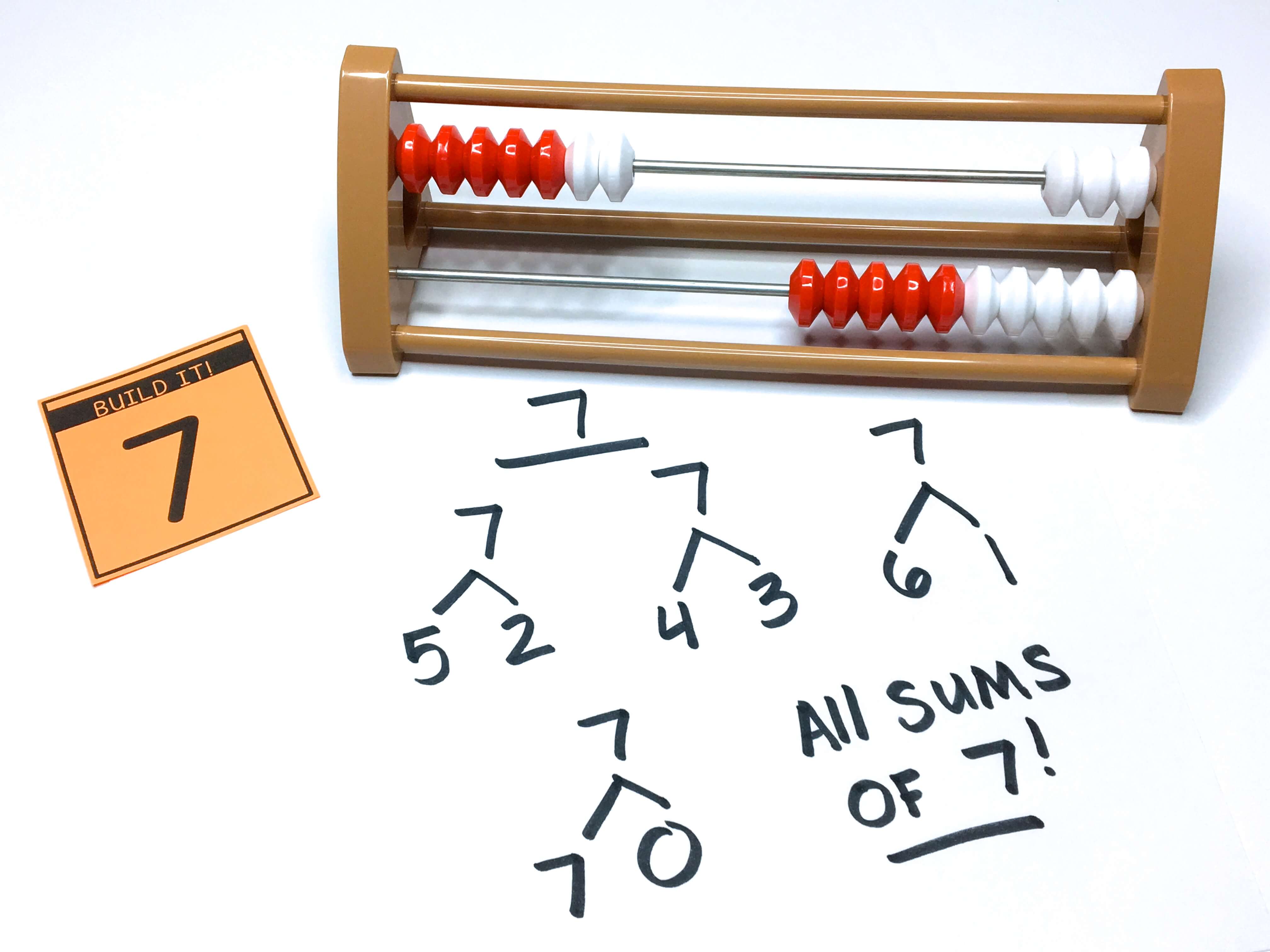
Within my small-groups we are working on targeted, hands-on skills. We are trying to build concrete learning experiences that eventually branch into semi-concrete and abstract understanding. From composing and decomposing numbers on rekenreks to balancing equations on a number scale to master part-part-whole with rods, we are using manipulatives every.single.day.
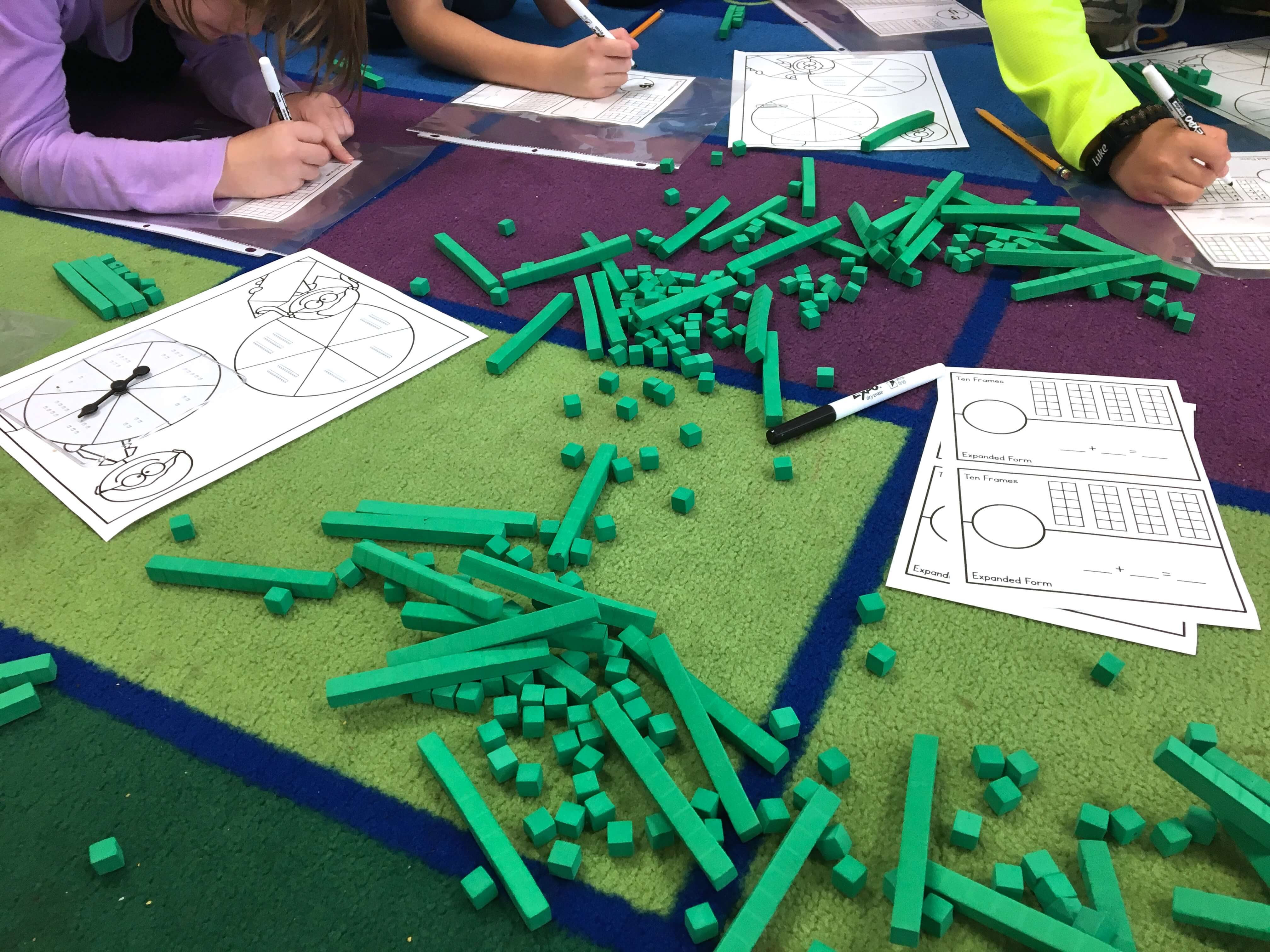
I’ll be honest, it’s definitely messy. My teacher table routinely looks like this – piles of place value rods, ten frames, and number lines strewn about…but that’s okay! We accomplish so much in our 17-20 minutes together, and I am loving teaching targeted skills to my small groups. For my classroom and my group of kids, guided-math is the answer!
What does a Math Block Look Like?
To launch each Guided Math block, we start by talking numbers using our Math Prompts. These are short (10ish minutes), daily exercises aimed at building number sense. While we are talking numbers, students are thinking, asking their peers questions, and explaining their own thinking all while the teacher records the thinking. You can read more about our Number Talks here and snag a year’s worth of Number Talks here.
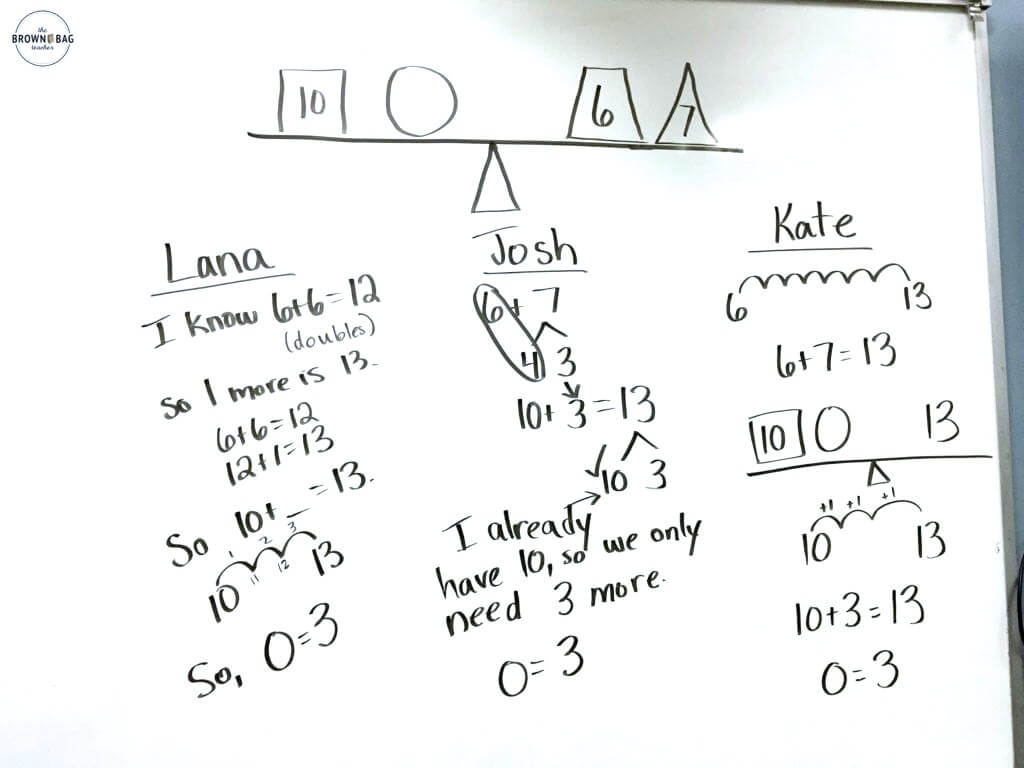
Guided Math Activity- Whole Group Mini-Lessons
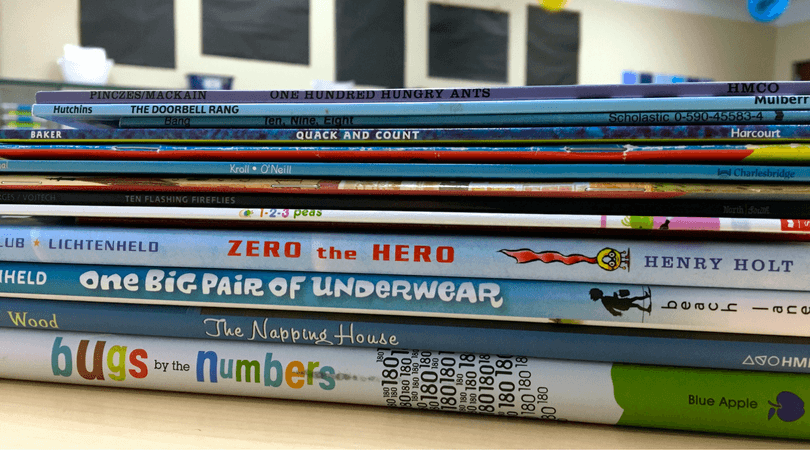
After our number talks, we stay on our classroom carpet to say our learning target for the day. Then, I lead a quick 7-8 minute mini-lesson. During these mini-lessons, I focus our small-group time, share important vocabulary, model math thinking, and introduce foundation knowledge (things that ALL students need to know, regardless of math group). Some of my favorite mini-lessons include photograph hooks and online math manipuatives. We also routinely pull out some of our favorite math read alouds! All three are great for modeling math thinking for students!
Guided Math Activity- Teacher Table
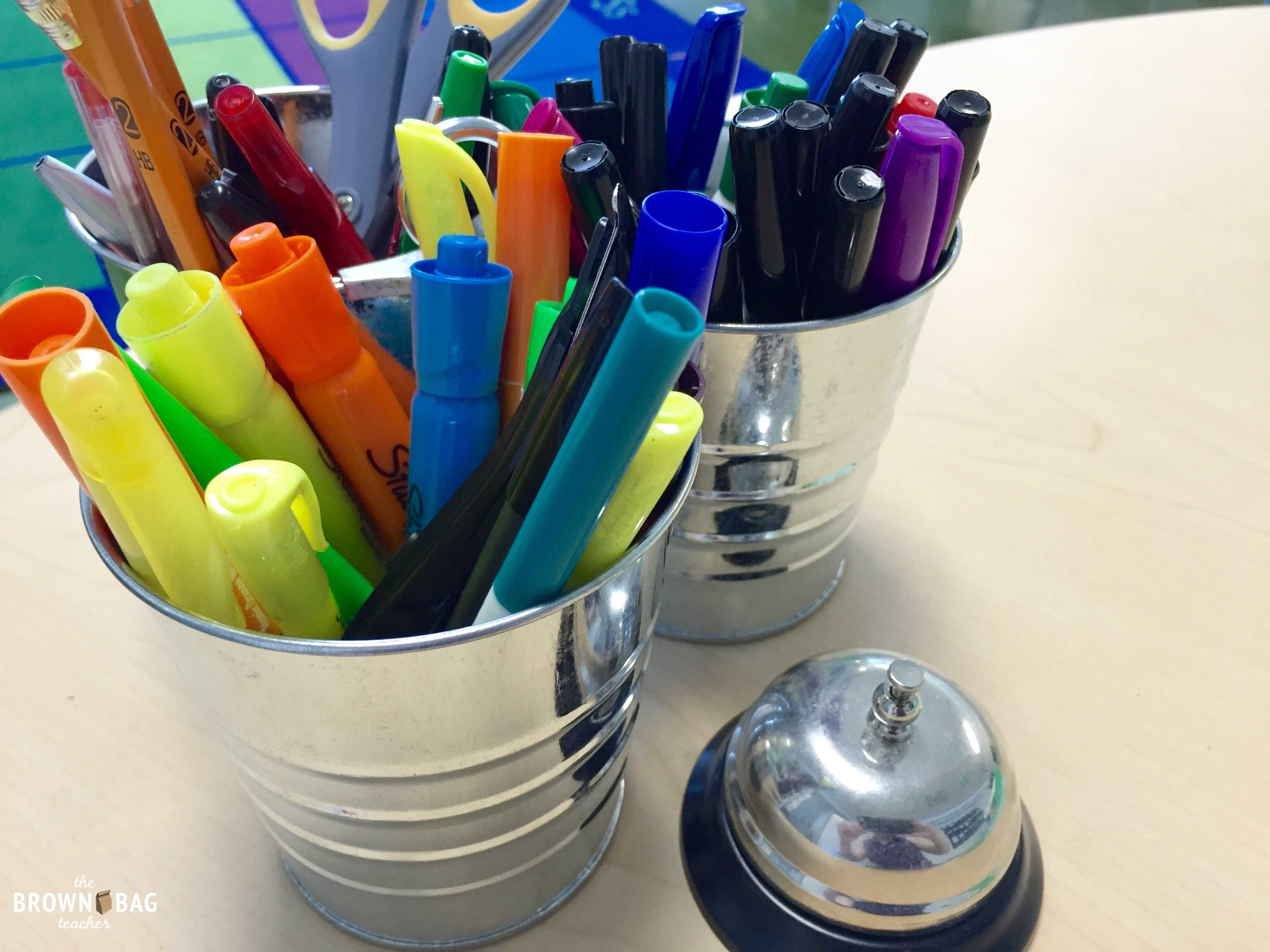
When students come to my teacher table, I don’t want them worrying about bringing supplies. I did when I first started small-group math, and it killed a TON of time. With such a short time for mini-lesson, I now keep all our materials (pencils, highlighters, expo markers) in a tri-container I found at Ikea. All students need to bring is their Blue Math folder.
I’ll be honest, small-group math is definitely messy. My teacher table routinely looks like this – piles of rods, ten frames, and number lines strewn about…but that’s okay! We accomplish so much in our 17-20 minutes together.This time is hands-on and engaging. Students are building a conceptual understanding of numbers and that is critical!
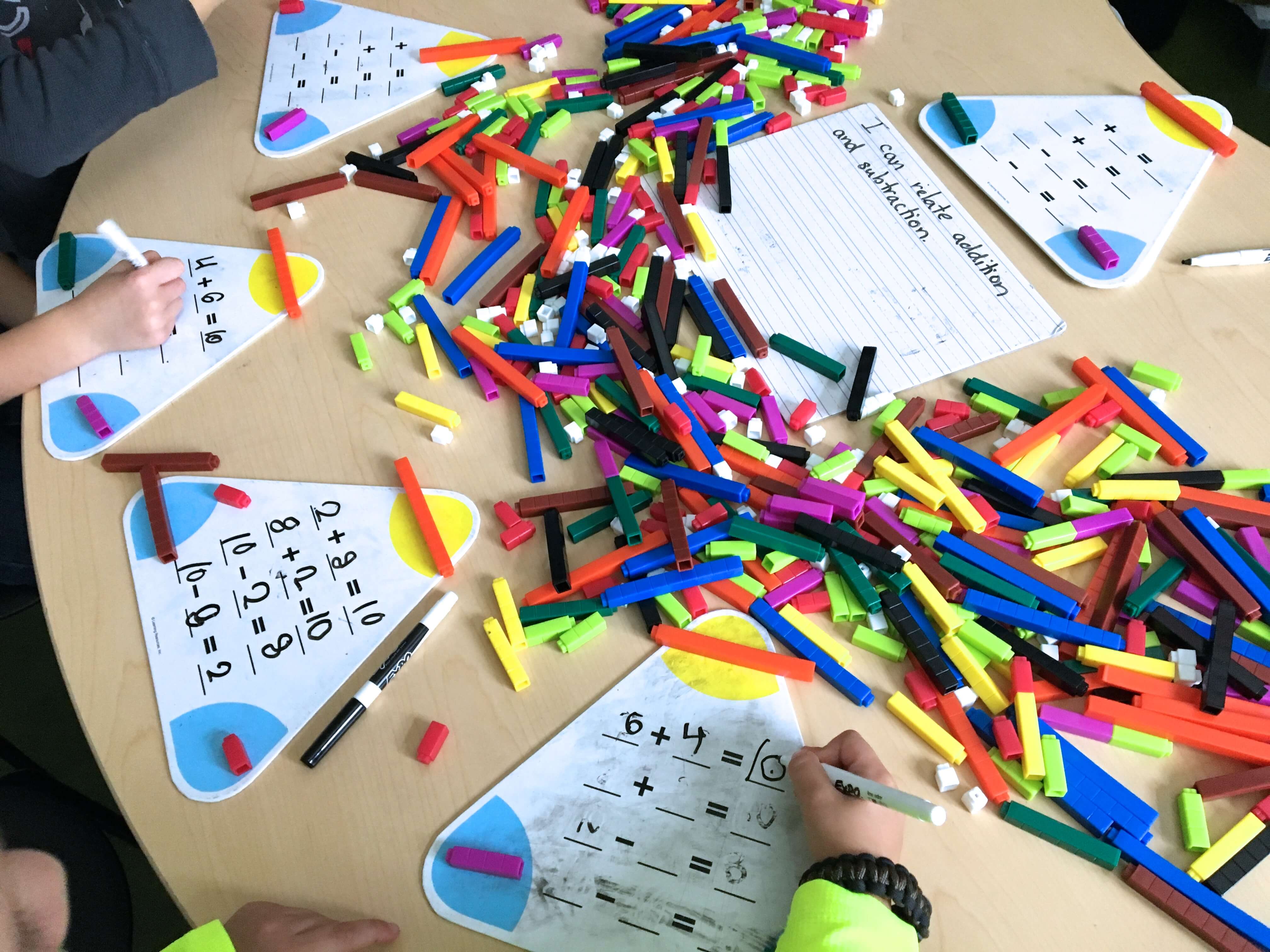
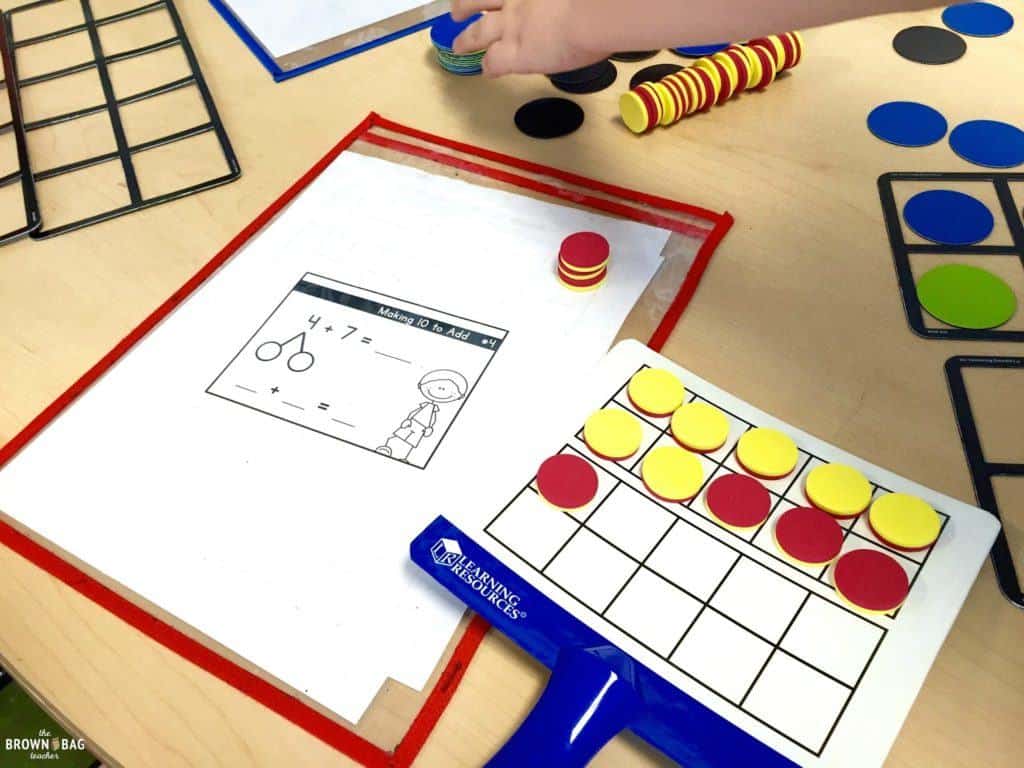
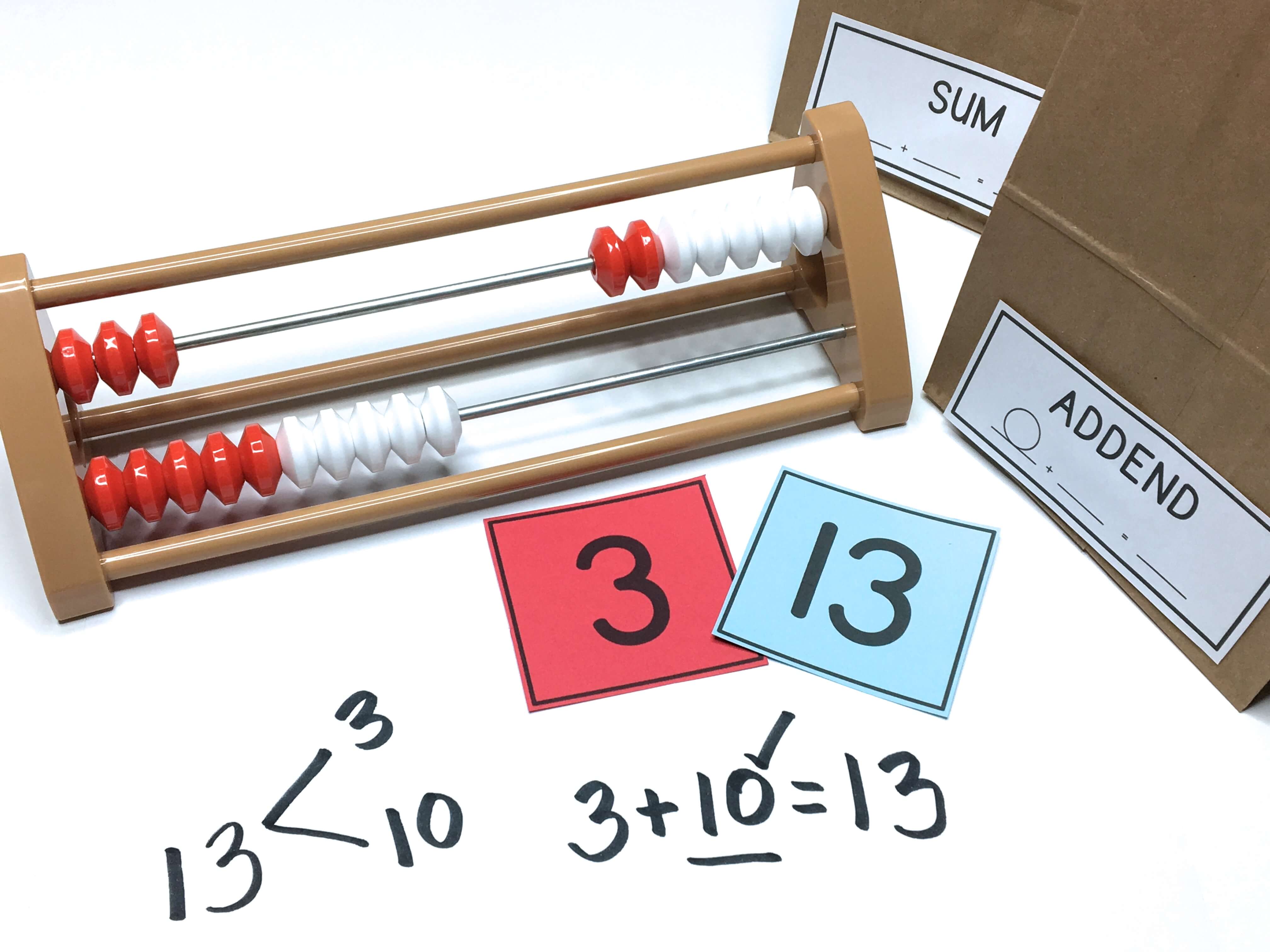
Our time spent at teacher table is typically broken into a quick fluency/skill game (a 2-3 warm-up), a mini-lesson (5-6 minutes), guided practice (4-5 minutes), independent practice (4-5 minutes), and a quick assessment (2-3 minutes). Below is an example of our Making 10 to Add independent practice -which is almost always based out of manipulatives and concrete learning!
What are students doing when they’re not with the teacher?
While I am working with a group of students (6-8 students at a time), my other friends are working at the other parts of the Daily 3 – math by myself and math with a friend. I do substitute Math By Myself for DreamBox (a District Math program – technology based) as my friends are expected to log time on this program each day. HERE you can watch a FREE video about how I organize and run math centers in my classroom.
During math with a friend, I offer students 5 centers a week. Students choose which center to visit each day but they need to visit all five by the end of the week. One center is always math notebook, one center is always Versatiles or Solve the Room. I am only introducing 3 new centers each week (although we have practiced these activities in small groups at some point, so they’re not completely new). Typically, 2 of the centers are spiral review and the 3rd center relates to our current learning.
I store our math centers in large Sterilite containers (I buy them in sets of 6) with all the materials students might need.
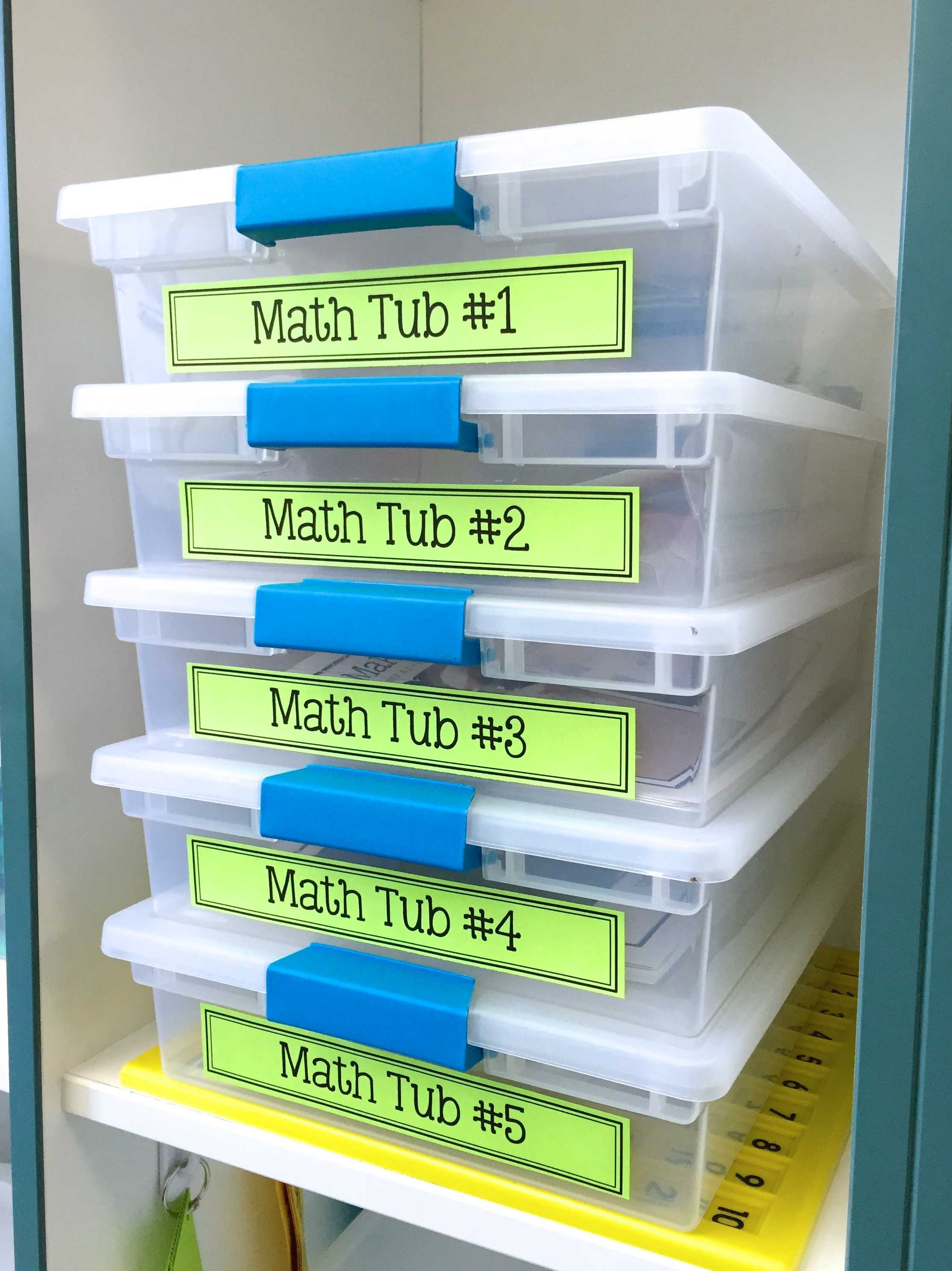
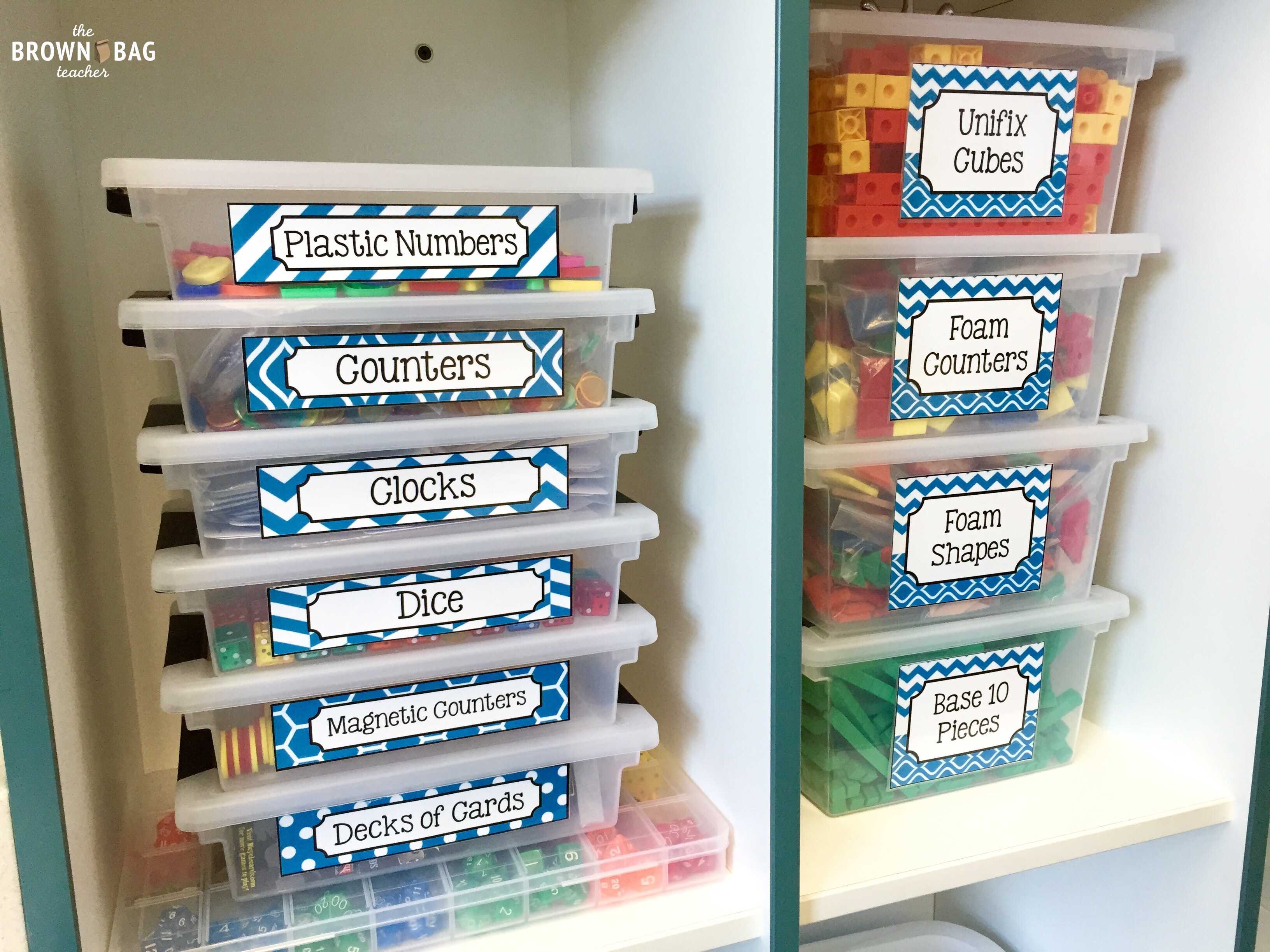
To make guided math work, I know I have to maximize my teacher table time. So if students at centers are asking me questions or interrupting, my friends at teacher-table are losing out on their core math time. Therefore, it is essential that students know where to find resources in the classroom and they know how to use them. Our manipulatives are stored to the left of the math tubs for easy access. Students know they can grab whatever math tool they need to do their work. (Labels can be found here.)
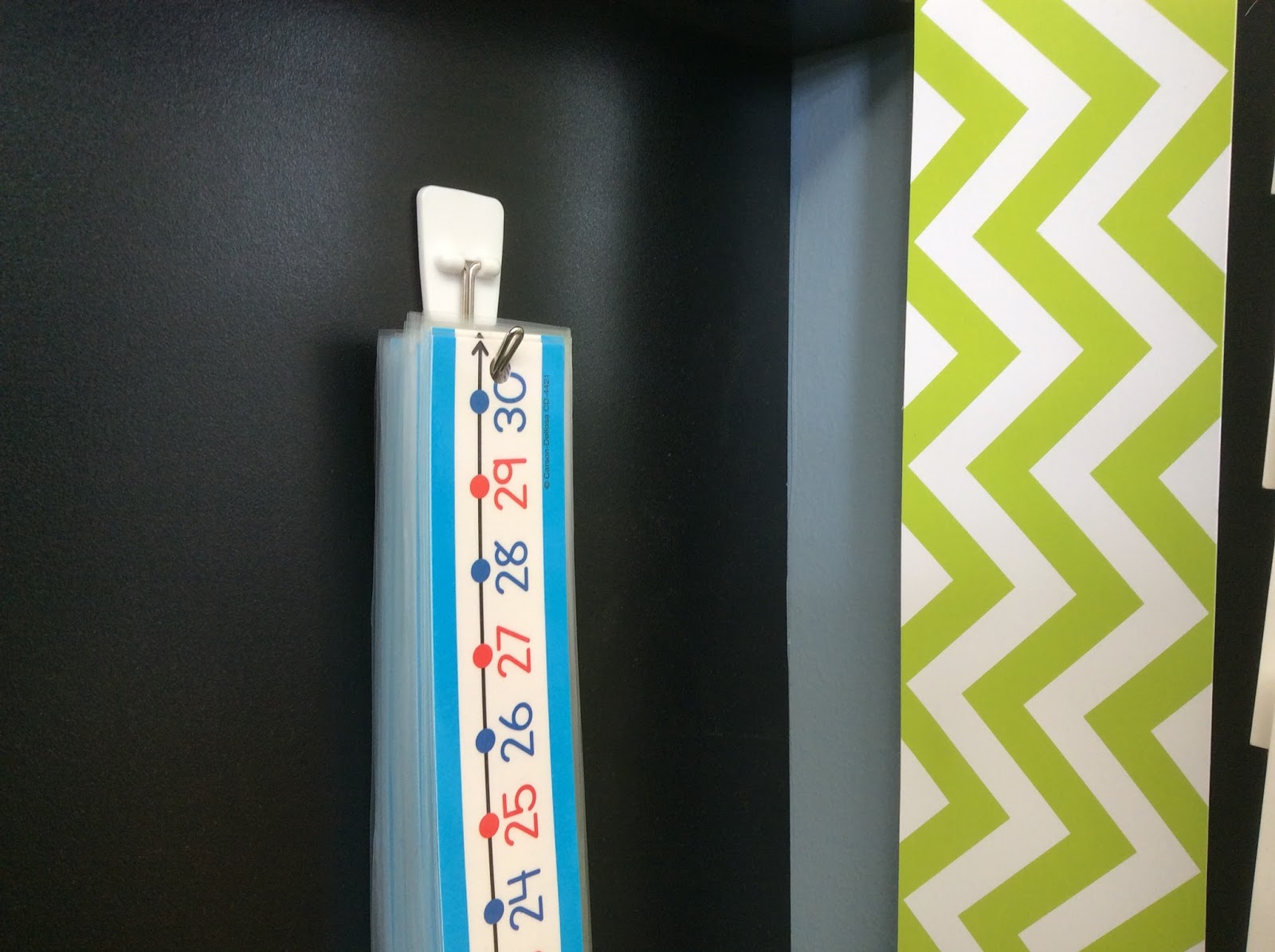
Additionally, our number lines are hung in the front of the room from a Command Hook. This keeps the number lines organized and easily accessible to my small friends.
How Do You Keep Students From Interrupting Teacher Table?
To help build independence, I also include visual directions on each of our math bins. These visual directions include an I Can statement, as well as, the center in action. This visual directions help students know how to set-up their materials, as well as, what materials they will need. (You can snag the Kinder visual directions, the 1st grade visual directions here and the 2nd grade here.)
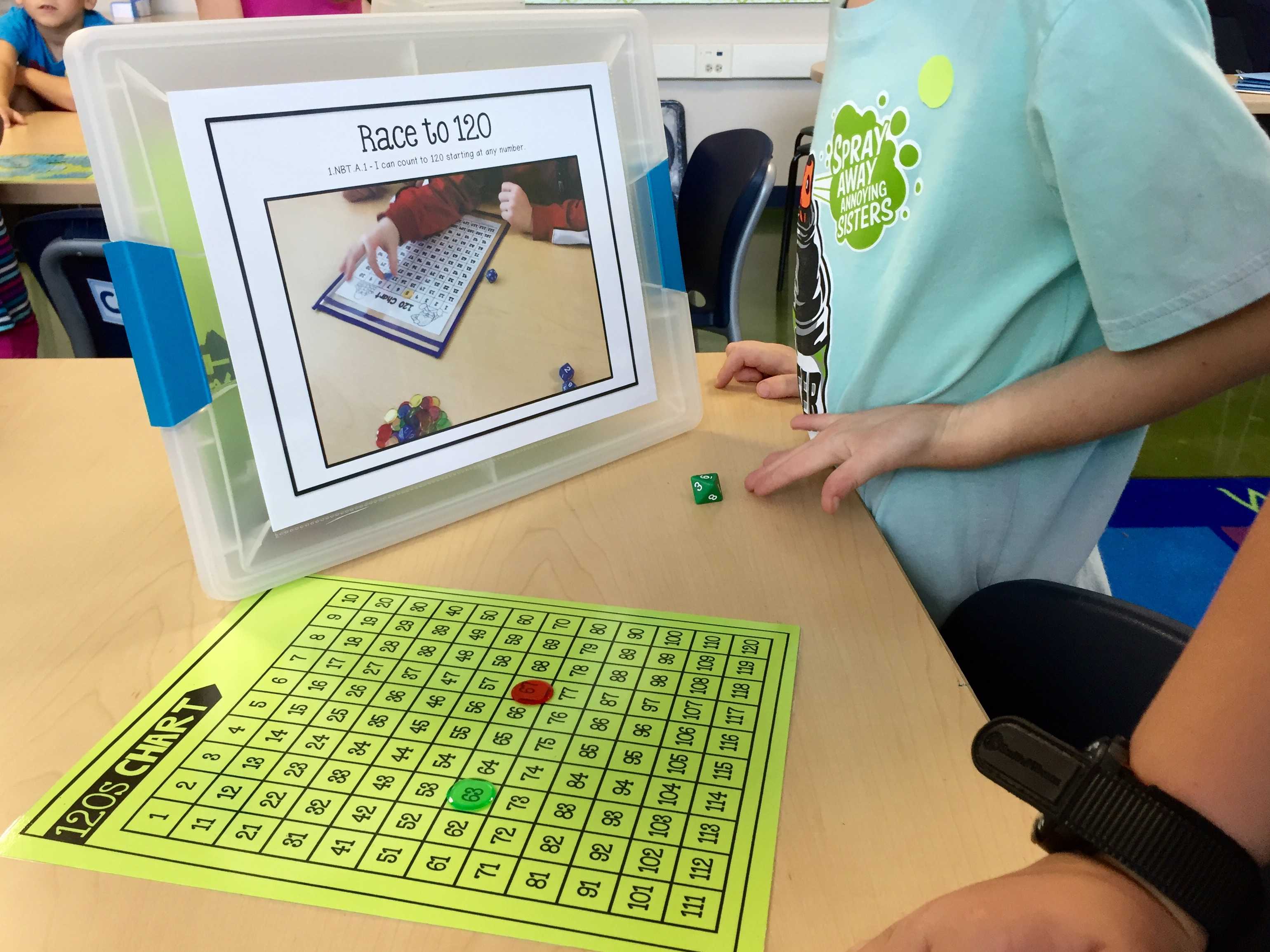
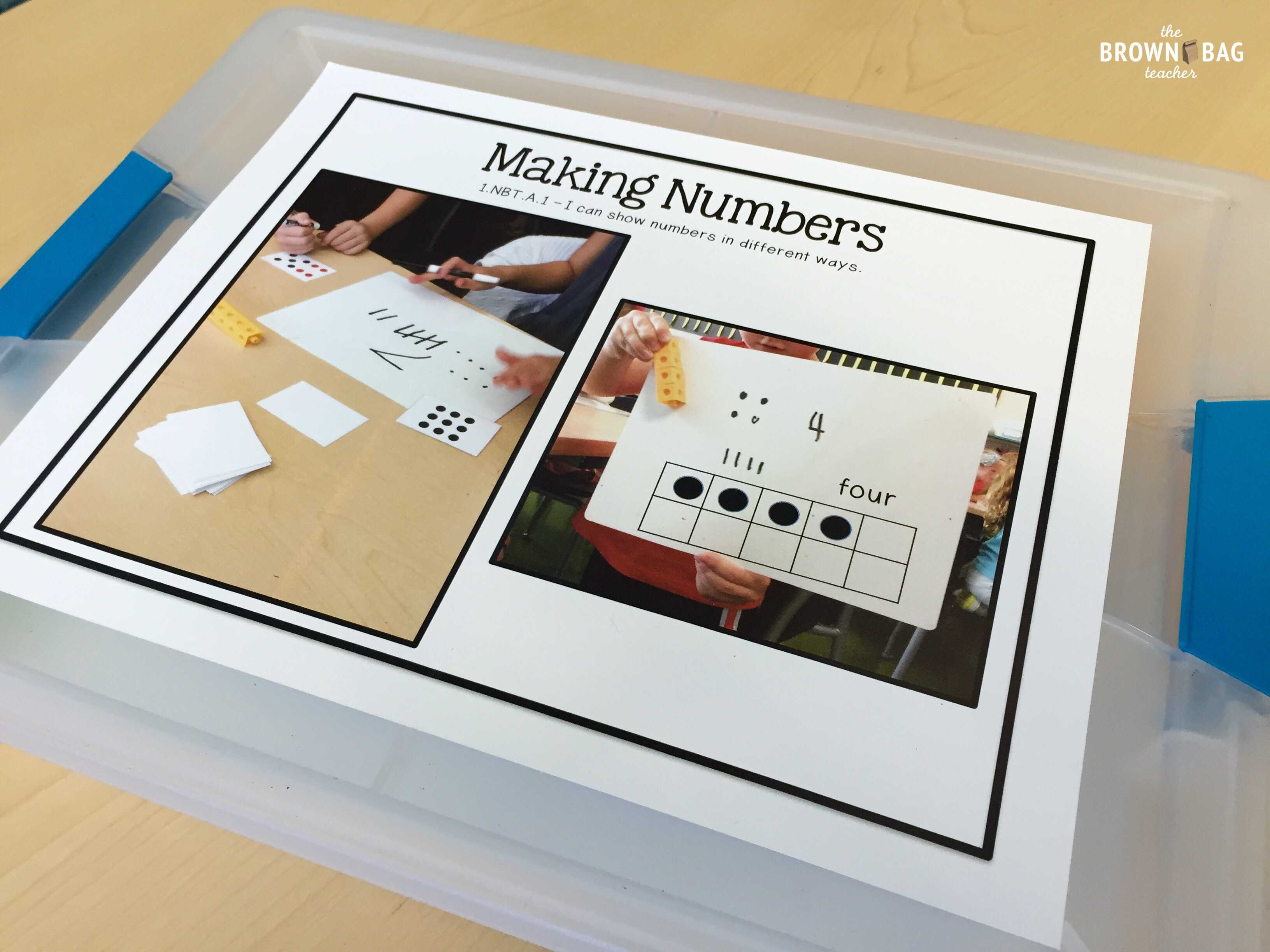
These Making Numbers and 120’s Chart Puzzles will be 2 of our first 5 math centers for the year. we’ll practice these activities with partners (whole group) before we start centers, and then, when we’re ready to start rotating, students will practice with a partner.
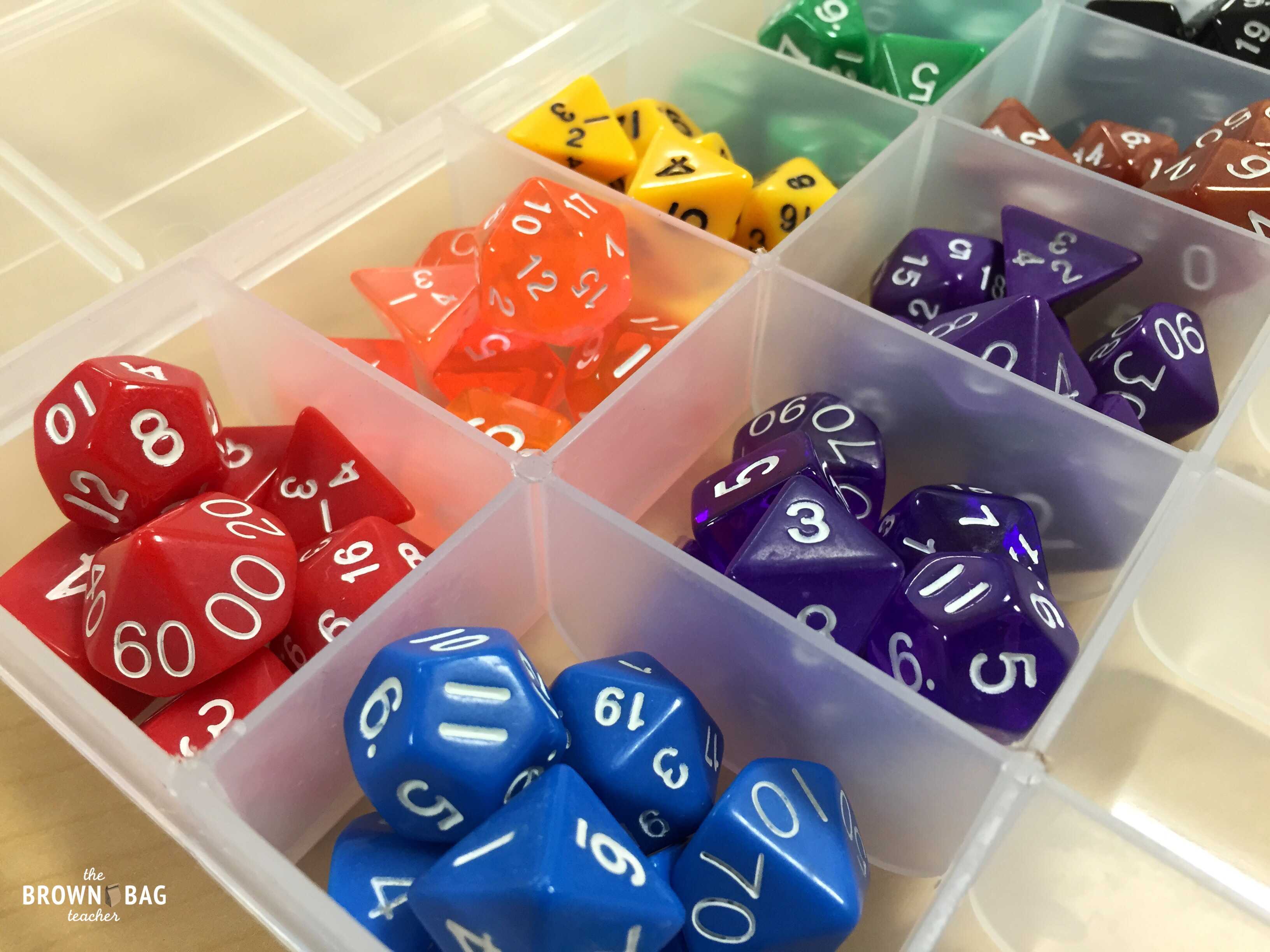
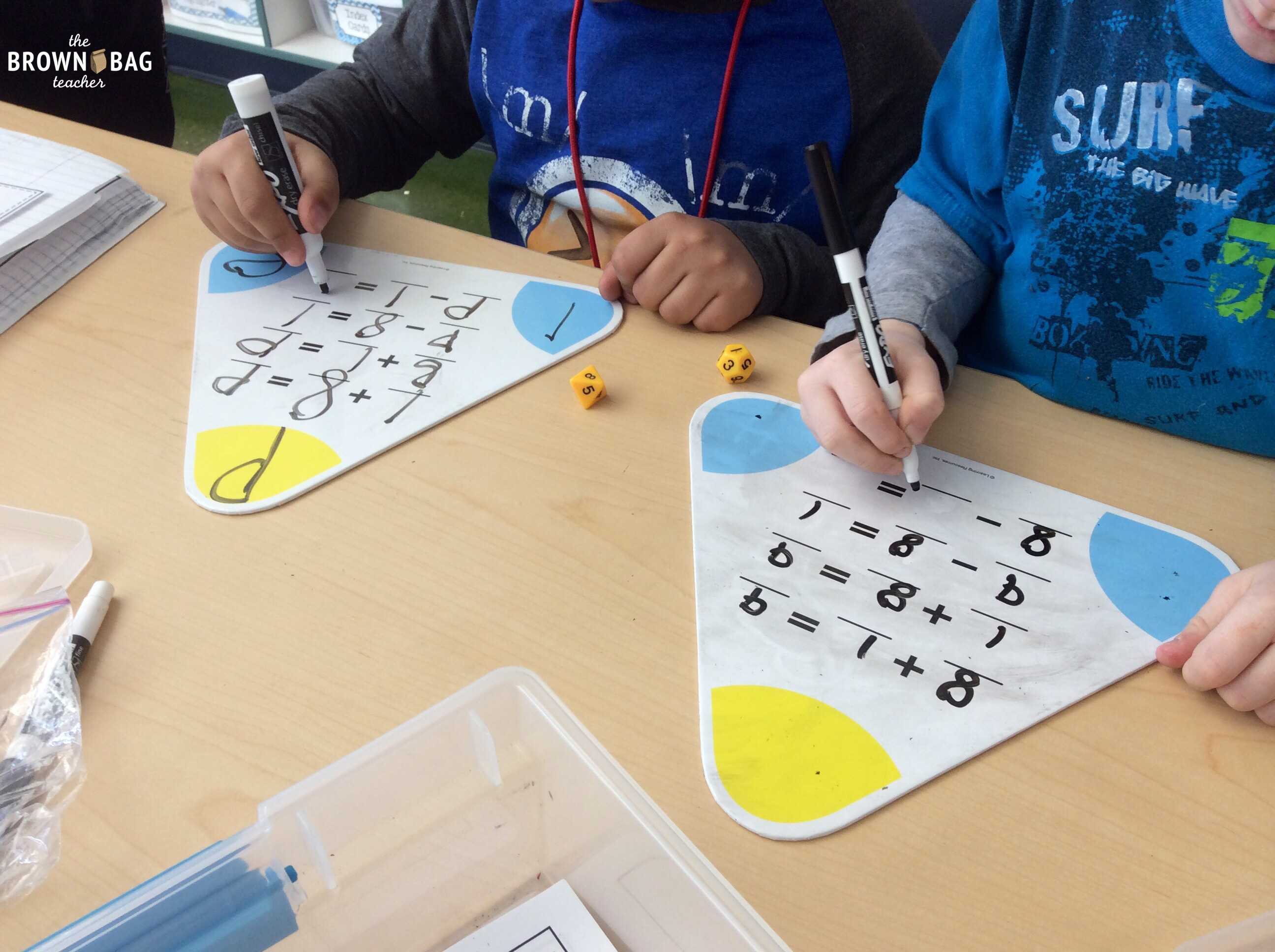
Students are trained to get the materials they need out of the bins and then, turn the bins on their sides. The large Sterilite containers will stand on their own and it makes a perfect focus for students. Below students are working with the Fact Family Triangles (from Amazon) and differentiated dice based on their math group.

How do you differentiate your math centers?
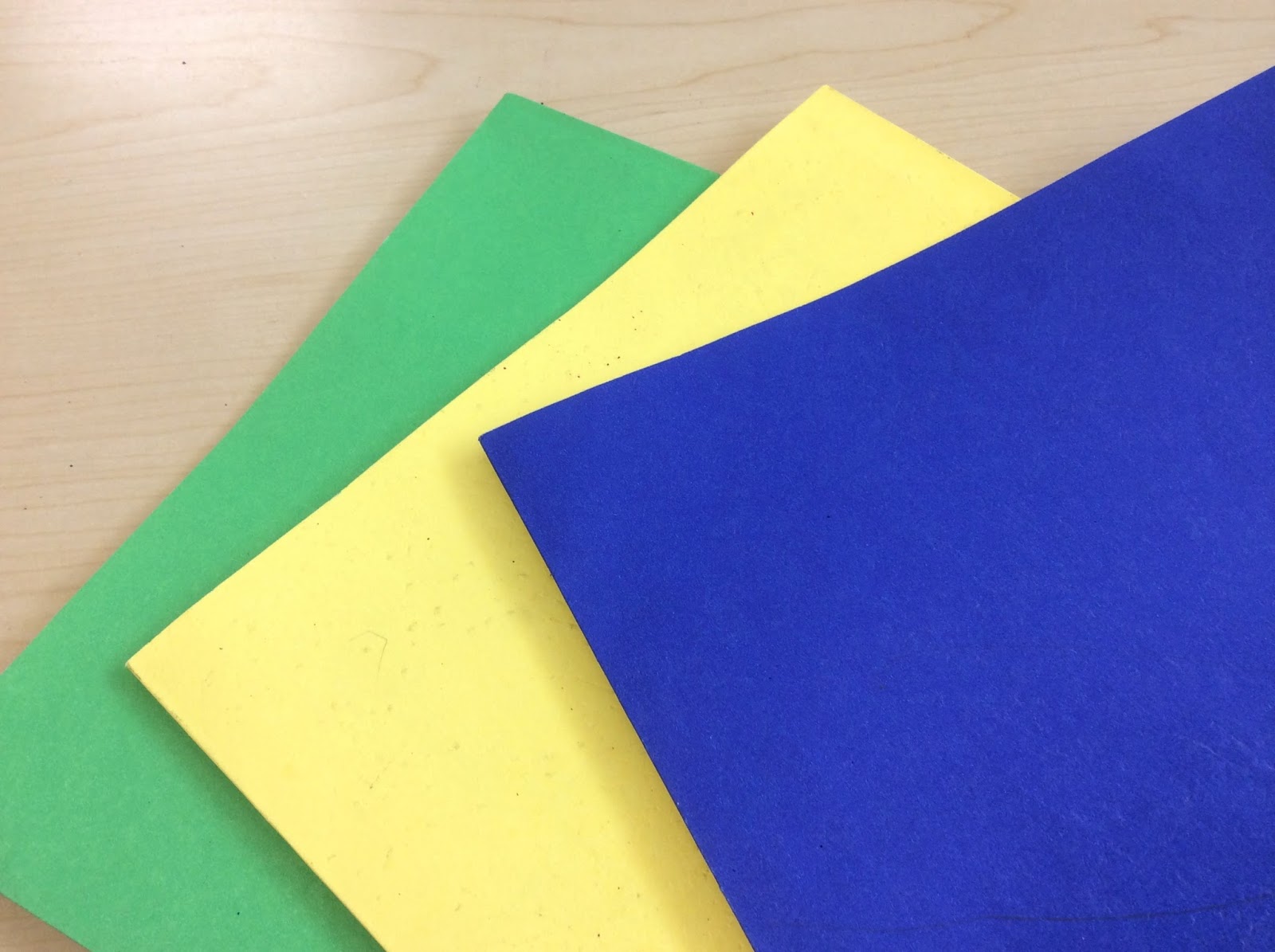
Another component of independence during The Daily 5 and The Daily 3 is making sure that students are actively engaged in valuable work that is challenging to them. Differeniation is a key part to this independence. When they visit the individual centers/pick a tub, they know to grab their colored folder. Each bin contains the same activity, just a different set of numbers or a different pack of dice. (Green = approaching grade-level, yellow = on-grade level, blue = above-grade level)
When planning math centers, I want to ensure that students are engaged and working with hands-on materials. Our grade-level plans together and we are fully committed to making sure our centers are not one-time-use print/cut/laminate activities. We work to create activities that allow for spiral review, use throughout the year, and provide fantastic practice. Below you see two friends learning to find missing addends with rekenreks.
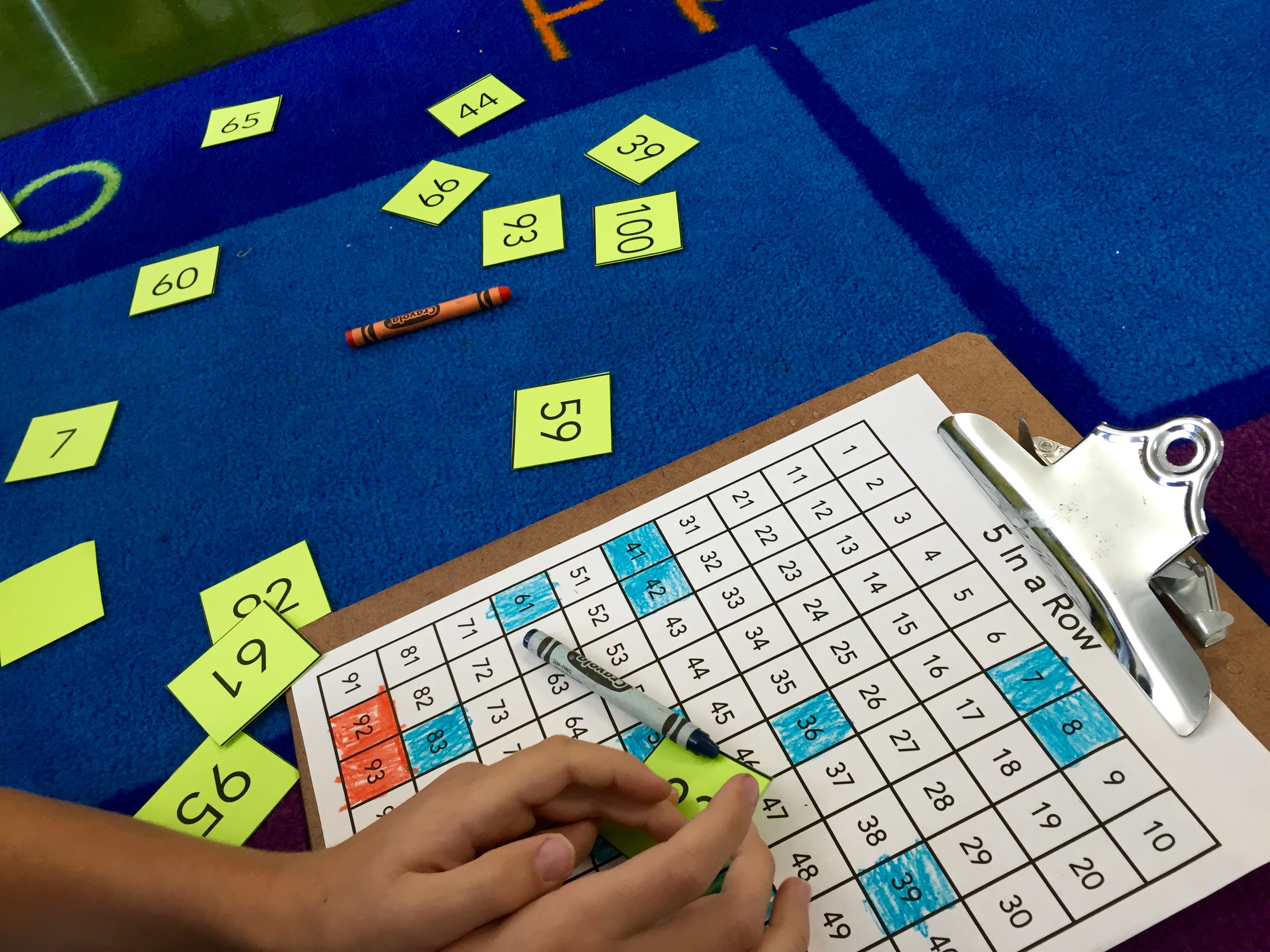
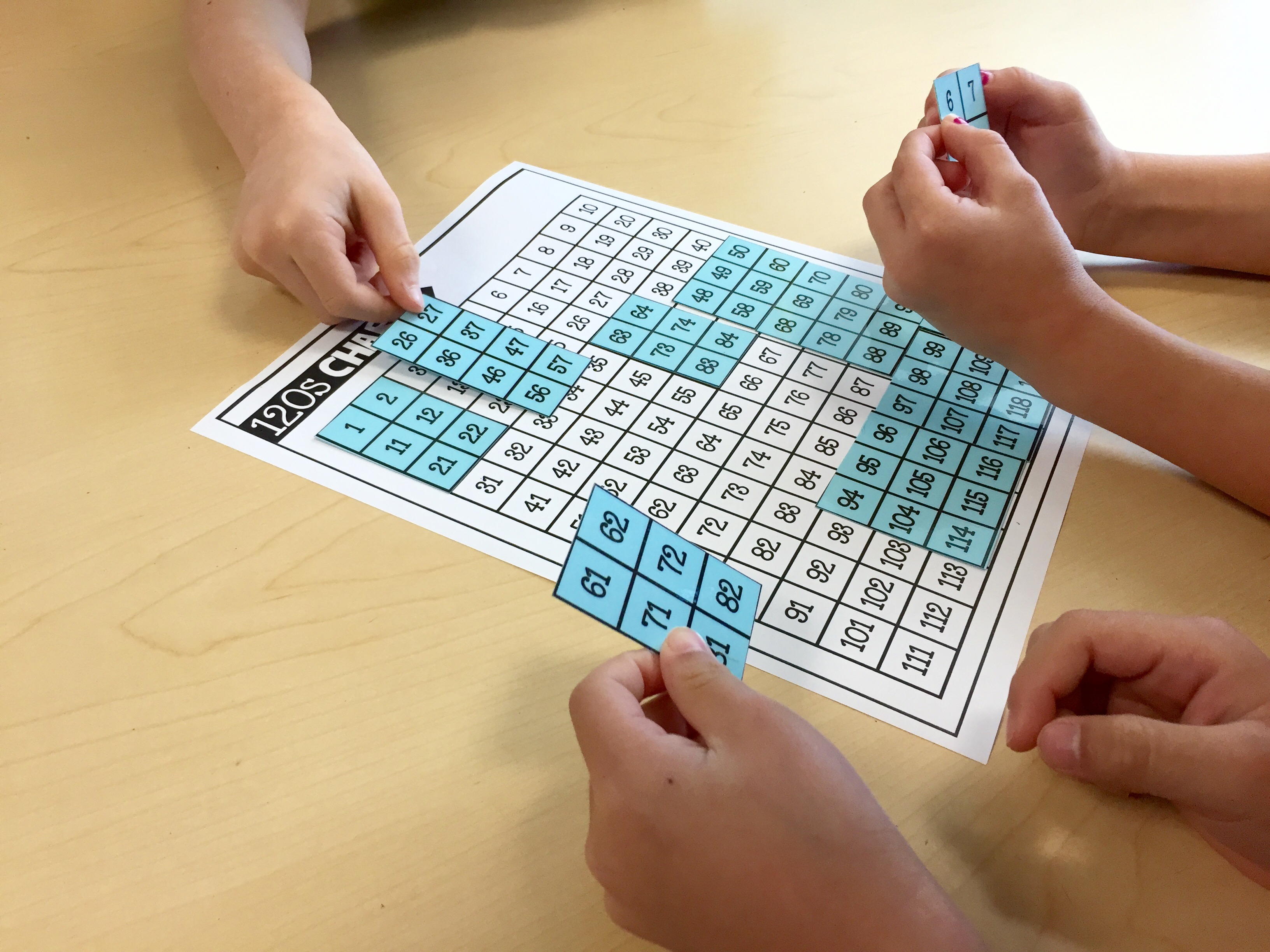
Students will see the same center 2-3 times a year (depending on the skill and if it’s needed). As a number-sense review, we often rebuild the 120s chart. I copy charts on colored card stock and then, cut them into pieces. I color-coded the puzzles ROY-G-BIV with red being the most difficult and purple being the simplest (the more pieces/the more intricate the cut the more difficult). My kids are so ‘gamey’ that they love the idea of leveling up!
We also love using our set of foam dominoes for sorts. They’re perfect for adding and sorting types of strategies we might use to solve the addition sentences. For my above-grade level friends, they will often use double dominos and then, create word problems to accompany the sorts.


Guided Math Question- How Do You Enrich/Extend for Gifted Students?
Making sure every friend in my class has access to materials that push and challenge them is so important to me. Using the three-colored differentiation system, I intentionally plan and choose activities that work for all of my learners. Later in the year though, I do like to step outside of my math centers pack and introduce other enrichment options – math journaling and math puzzlers – for my high-flyers. These are the friends that are working a grade-level (or two) above 1st grade and the ones who sometimes struggle to show growth on District Assessment programs (STAR, MAP, etc.).
As teachers, our initial reaction is to say – “Hey, these friends know the first grade content. I’m time to move on.” – only to repeatedly hear from math coaches and administrators – “Don’t teach another grade level’s math content!” So, the question for the ages – if I can’t teach 2nd or 3rd grade content, how do I challenge these students and move them forward?
Math journals build flexibility in our math thinking and really challenge my high=flyers to think-through their mathematical processes. Additionally, many of our math journal prompts require students to consider how someone else solved the problem and to explain/defend/critique their process.

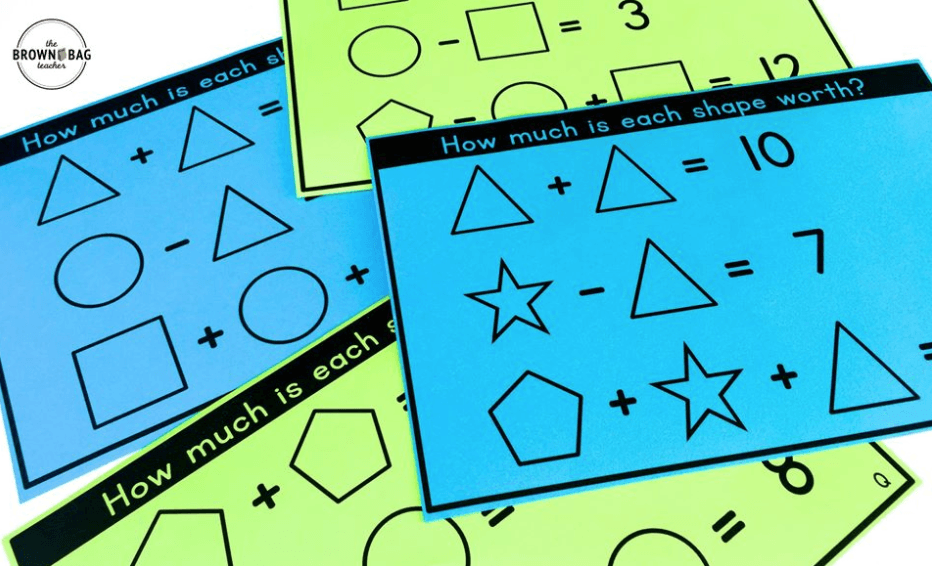
I’ll will also pull-out Math Puzzlers. These puzzlers require students to apply their math skills in flexible and unconventional ways. Additionally, all three avenues require students to ask themselves “Does my answer make sense?” as well as, be able to justify their answers.
So, tell me friends, how do you organize your math block? Do you use a Guided Math model with the meat of the mini-lesson happening in small groups or do you do more with whole group? What works in your classroom? Until then, you can sign-up here for Guided Math ideas and freebies to land in your inbox every month.
For more information and pictures about guided math and differentiation in my classroom, check out these posts!
Differentiating Math Centers with Dice
WATCH Math Centers in Math Classroom (FREE VIDEO)
Must-Have Materials for Guided Math
Building Conceptual Understanding with Rekenreks
Math Tools You Can Make at Home
How do you plan for what you will work on in the small groups with students? This is an area I struggle with the most. In a perfect world I would have time to plan my whole group mini lesson and my 3 small group, differentiated lessons but the reality is I just don't. I end up feeling like I'm scrambling when the kids come to the table with me and it's not an effective use of our time. I really want to change this but don't know where to get the time or resources to do it.
I just came across this post via Math Coach's Corner on Facebook and I'm intrigued. I currently use Investigations which I LOVE. It seems as though my district will be moving in a different direction soon and they are now asking that we implement "data driven" instruction time. The Daily 3 seems as though it might be the way to go. I have not yet purchased the book (I'm trying to get my school to purchase it). However, my big question is, when/how do you look over and grade all the center work? This has always been my biggest frustration with centers in reading and/or math.
Hello! Make sure to recheck the link. I just tried it out and it seemed to work fine. Sometimes DropBox can be touchy, so hopefully it's working again! 🙂
Thank you for the great rotation models in reading and math! I'm looki g forward to trying them this year 🙂 Do they come in another type of file, for some reason Dropbox will not let me download them. Thanks so much!
Your Organization is giving me life! I love it, I'm inspired. Really would love to set this up for myself.
I love your blog and all the information you share! I especially have been browsing your Math posts! Our school has been using "Investigations" for ages, and it is not aligning to well with Common Core or meeting standards. We were told that we could use it as a resource, so I am looking to re-vamp my Math curriculum. Your posts are so helpful, and I appreciate all the details and pictures you give. I have been collecting your resources on TPT. I was wondering if you would be willing to list out the progression of your Math curriculum-what you start with and what standards or units of study you progress with through the year! Thanks for your blog! I love it!
With DI remember, you don't have to have 3 completely different lesson plans for each group (reading is a definitely a bit more planning). For math, all 3 of my groups are working toward the same I Can (for the most part) but getting there in different ways. We always work CRA (concrete, representational, abstract). My green groups spends a bulk of their time in concrete and my blue group spends a lot of time in abstract. To differentiate the activities, I might give green base ten pieces, yellow a 100s chart, and blue an open number line. Also, the writing component to math is often forgotten but a great way to differentiate, too!
I love how you have everything organized! Its so cute! I need to get some of those bins. I will have a first grader in about a week and a half! Math is his favorite subject and we count foam blocks, but you have some much better ideas here! I found your post in my BlogLovin feed. I'd love if you stopped by to visit me over at mommyonlyhas2hands.org. Hope you are having a great weekend!
See! I never would have thought of that! Brilliant! Thanks!
Kelli
Thank you for linking where you get your bins from. I have been trying to find the right ones for a long time!
This is the most incredible post with so many tips and tricks! I have to find a way to combine all small group math materials near my small group area so that they're quickly accessible. More than anything I struggle to plan for every group every week. Hoping to have a better handle on this next year! : ) Any tips?
Hope
I definitely agree; I would love a book just about the Daily 3. So excited for your new journey this year. 🙂
Hi Kelli! We're a new school (we've only been open 3 years) and our desks are perfect for writing on with dry-erase markers. The kids use wash rags to wipe it off and at the end of the day our custodians clean the tables. It's fabulous and really helps cut down on the number of 'things' on our teacher table! 🙂
Awesome as usual! In your photo of your desk I noticed there is writing on what looks the table itself. Or is there something there that can be written on? Love all your ideas. I have a lot of work to do to get ready but it will be worth it!
Excellent post! I've been debating switching my math instruction around as well and this really motivates me. Thanks for sharing!
I knew you would have lots of ideas for this chapter! I felt like chapter 8 needs to be a book of its own. I love all of your organization, and you have given me more ideas about organizing and implementation. Last year I had a 2/3 combo and new curriculum, so I felt like I really rushed during my math block. Luckily, I had a really bright class, so I was able to teach one grade their concept, then they worked independently on a practice book page, then had a choice of a center, task cards, or other activity while I taught the other grade their lesson. I'm looking forward to having only one grade this year and diving deep into guided math.